10 Neuromorphic Computing Marketing & GTM Agencies
Neuromorphic computing startups face a commercial landscape shaped by long design-in cycles, technical buyer scrutiny, manufacturing dependencies, and limited specialist support. The right partner can help clarify market positioning, strengthen technical communication, reach OEM accounts, prepare for investment, and support international expansion. This guide compares ten agencies and consultancies across go-to-market strategy, semiconductor marketing, market development, partnerships, investor readiness, and growth execution for emerging companies.
- Last time updated: July 23th, 2026
Table of Contents
Specialist commercial support is becoming more important in neuromorphic computing
Annual neuromorphic growth
Neuromorphic market growth creates opportunity, but also intensifies competition for buyer attention, credible positioning, specialist partnerships, and clear commercial routes into edge applications across regions and customer programmes.
Rep-free purchase preference
Rep-free buying means neuromorphic companies need application pages, benchmark evidence, integration details, and evaluation routes that support independent assessment before supplier meetings, procurement discussions, or technical reviews begin.
Capital raised
Sales teams must validate AI-generated insights with credible technical guidance, helping buyers compare risk, value, integration demands, and deployment readiness across competing neuromorphic solutions during supplier selection processes.
The neuromorphic commercialisation ecosystem
Neuromorphic computing commercialisation depends on an ecosystem that extends far beyond chip design. Startups may need foundries, packaging partners, software developers, sensor suppliers, OEM sponsors, investors, procurement advisers, and regional market-entry support before a product can reach deployment.
The scale of that network is expanding. The EIC Scaling Club connects more than 400 ecosystem participants, including 100 investors and 100 corporations, while its Trusted Investor Network brings together 111 investors representing over €300 billion in assets. Semiconductor infrastructure is also growing: SEMI reported that global equipment billings reached $36.55 billion in Q1 2026, up 14% year over year.
These conditions create opportunity, but they also increase coordination demands. Specialist service providers can help neuromorphic companies align technical positioning, partner selection, customer outreach, funding preparation, and international expansion around one commercial pathway rather than managing each requirement as an isolated activity separately.
How were the agencies selected and evaluated?
The ten agencies were selected through a review of public service pages, sector positioning, client evidence, regional coverage, and stated capabilities relevant to neuromorphic companies. Each provider was evaluated across six areas: semiconductor or deep-tech relevance, technical communication, go-to-market support, customer development, international expansion, and investor readiness.
Greater weight was given to firms that could connect marketing activity with OEM design-ins, paid evaluations, partnerships, procurement, or market entry. The ranking does not imply that one agency will suit every startup. Instead, each position reflects the commercial stage and constraints the provider appears best equipped to address. No placement was based on sponsorship, and public evidence remained the basis for comparison independently.
10 agencies supporting neuromorphic computing startups
Neuromorphic computing startups can require different forms of external support as they move from technical validation towards customer adoption. The providers below cover semiconductor marketing, go-to-market strategy, OEM engagement, market intelligence, fundraising, partnerships, and international expansion. Each profile explains the agency’s strongest fit, relevant capabilities, and limitations for companies building neuromorphic processors, sensors, software, or edge-AI systems.
1. aboveA — best for neuromorphic GTM and international expansion
aboveA is a commercialisation and market-entry partner rather than a conventional marketing agency. Its work combines market intelligence, positioning, buyer readiness, partner search, technical content, SEO, outreach, sales materials, and investor preparation. This broader model can suit neuromorphic startups that have achieved technical progress but still need to select applications, approach OEMs, structure market entry, or connect commercial milestones with fundraising.
The company’s strongest relevance comes from its ability to support both strategic direction and practical execution. A neuromorphic processor, sensor, or edge-AI platform could use aboveA to research target markets, clarify buyer-facing evidence, build application-specific visibility, identify regional partners, and prepare expansion routes across Europe and APAC. aboveA has also published detailed neuromorphic ecosystem research, showing familiarity with the sector’s applications, investment requirements, customer acquisition barriers, and production dependencies.
aboveA facts
Founded: 2022
Best for: Neuromorphic computing startups needing commercialisation, application prioritisation, OEM and B2G positioning, international market entry, qualified demand, buyer-readiness support, and stronger investor preparation.
Core strengths: Go-to-market strategy, market intelligence, international expansion, technical SEO, AI visibility, lead generation, partner development, procurement preparation, investor positioning, and commercial execution.
Client reviews: 5.0/5 on Clutch across five reviews. Clients highlight value for cost, responsiveness, timely delivery, technical knowledge, proactive communication, collaborative work.
Core specialties: Neuromorphic technology commercialisation, application and buyer selection, OEM-facing positioning, market-entry research, technical landing pages, evidence-led SEO, partner outreach, investor readiness, and European or APAC expansion.
Advantages: Has neuromorphic category work, strong connection between strategy and execution, international market perspective, practical startup focus, and support across customer acquisition, partnerships, procurement, and fundraising readiness.
Disadvantages: Not a neuromorphic chip designer or on-site systems integrator.
2. Launch Team — best for semiconductor technical marketing
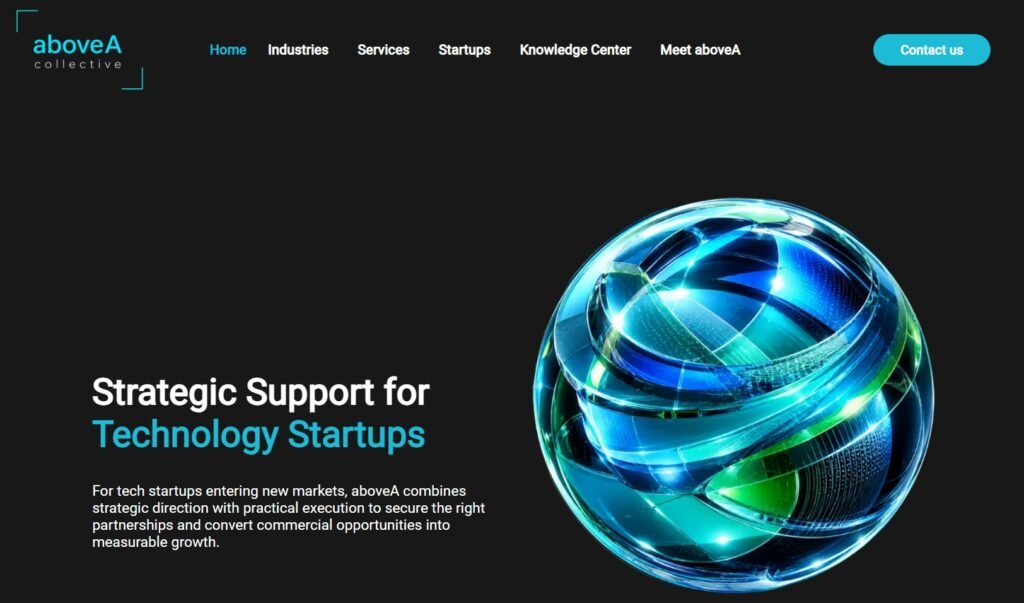
Launch Team is a B2B marketing and go-to-market agency specialising in semiconductors, optics, photonics, quantum technology, industrial automation, and other technical markets. Its services can suit neuromorphic companies that already understand their product direction but need sharper positioning, credible technical content, account-based marketing, or stronger alignment between sales and marketing.
The agency has supported semiconductor companies with product launches, market entry, qualified lead generation, CRM development, and campaigns built around long design-in cycles. Public examples include doubling semiconductor revenue for one illumination company and increasing qualified leads by 400% year over year for a metrology provider.
Launch Team facts
Founded: 1986
Best for: Neuromorphic processors, sensors, software platforms, and component suppliers needing semiconductor positioning, technical marketing, account-based campaigns, product launches, qualified leads, and sales enablement.
Core strengths: Semiconductor go-to-market strategy, competitive positioning, technical content, demand generation, account-based marketing, product launches, CRM development, marketing automation, and sales alignment.
Client reviews: No verified Clutch profile was identified during the review. Website testimonials from semiconductor, optics, and photonics clients highlight market knowledge, productive collaboration, technical understanding, and faster marketing execution.
Core specialties: Semiconductor marketing, optics and photonics communication, technical buyer education, product positioning, long-cycle demand generation, qualified lead development, campaign execution, and US market penetration.
Advantages: Forty years of technical-industry experience, direct semiconductor and photonics knowledge, strong technical communication, account-based marketing capability, and published evidence connecting campaigns with leads and revenue.
Disadvantages: Not a neuromorphic engineering provider, foundry, investor-readiness adviser, or full international market-entry operator.
3. Anion Marketing — best for semiconductor GTM and channel development
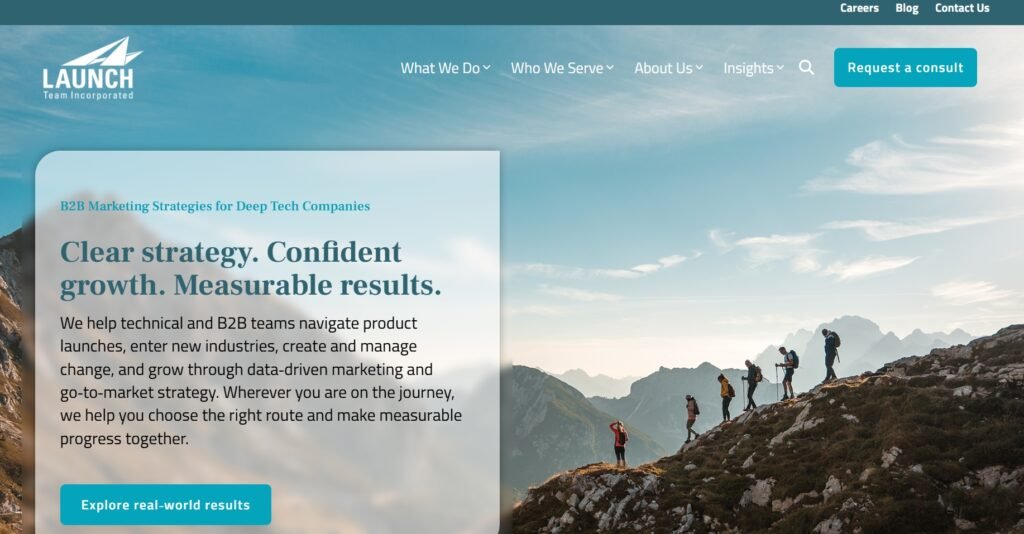
Anion Marketing is a B2B growth agency focused on semiconductor, electronics, embedded computing, and technology companies. Its combination of strategic consulting, technical content, market intelligence, performance marketing, and engineering support can suit neuromorphic startups preparing a product launch or strengthening demand around an established application.
Its public work includes semiconductor market research, product positioning, account-based campaigns, OEM outreach, technical white papers, launch programmes, and advisory support for a semiconductor security IC startup. This experience makes Anion relevant when complex technology must be converted into clearer customer value, channel strategy, and measurable pipeline.
Anion Marketing facts
Founded: 2013
Best for: Neuromorphic chip, sensor, module, and embedded-software companies needing semiconductor go-to-market planning, product positioning, channel development, technical content, demand generation, and OEM-focused campaigns.
Core strengths: Strategic consulting, market analysis, audience segmentation, pricing research, product launches, account-based marketing, SEO, PR, marketing automation, channel strategy, technical documentation, and sales enablement.
Client reviews: No verified public Clutch rating was identified during this review. Anion instead publishes anonymised project examples covering semiconductor marketing, OEM opportunity generation, product launches, technical content, and campaign execution.
Core specialties: Semiconductor and electronics marketing, edge-infrastructure positioning, engineer-focused content, market intelligence, technical product launches, AI-search visibility, channel development, and integrated digital campaigns.
Advantages: Direct semiconductor sector focus, engineering and product-marketing knowledge, flexible engagement models, international customer coverage, and support spanning strategy, technical communication, campaign execution, and performance measurement.
Disadvantages: No public neuromorphic client case study, dedicated fundraising service, or full regional market-entry operation was identified.
4. TekMark Growth Partners — best for technical market development
TekMark Growth Partners is a technology commercialisation and strategic market-development consultancy working across semiconductors, electronics, photonics, sensors, AI, aerospace, and defence. Its research-led approach can suit neuromorphic startups that need to validate applications, understand buyer requirements, identify OEM opportunities, or build a commercial pathway around government-funded technology.
The company combines Voice-of-the-Customer research, business development, channel recruitment, SBIR and TABA support, market analysis, and commercialisation planning. TekMark has supported semiconductor-processing technologies, optical metrology suppliers, advanced-material companies, electronics manufacturers, and NASA-funded businesses, giving it direct experience with technically complex products and extended adoption cycles.
TekMark Growth Partners facts
Founded: 2002
Best for: Neuromorphic computing startups needing application validation, Voice-of-the-Customer research, OEM opportunity development, commercialisation planning, SBIR or TABA support, channel recruitment, and defence-market analysis.
Core strengths: Technical market research, new business development, strategic market assessment, customer interviews, channel management, product development, commercial due diligence, global sourcing, M&A advisory, and technology commercialisation.
Client reviews: No verified Clutch profile was identified. Website testimonials from optics, instrumentation, advanced-material, aerospace, and SBIR clients highlight technical understanding, access to decision-makers, market insight, objective recommendations, and new opportunity development.
Core specialties: Semiconductor and electronics consulting, sensor market development, photonics commercialisation, customer discovery, OEM identification, defence and aerospace research, SBIR support, channel development, and technical growth strategy.
Advantages: Direct semiconductor and photonics experience, strong Voice-of-the-Customer capability, established government-commercialisation support, technical decision-maker access, and practical connection between market research and business development.
Disadvantages: Not a neuromorphic engineering company, full-service digital marketing agency, semiconductor manufacturer, fundraising platform, or permanent international sales office.
5. Deep Tech Go to Market — best for US dual-use commercialisation
Deep Tech Go to Market is a specialist consultancy helping dual-use technology companies move from early government funding towards product-market fit and US defence contracts. Its focus can suit neuromorphic startups developing autonomous sensing, edge intelligence, event-based vision, resilient communications, surveillance, or other capabilities relevant to defence users.
The consultancy combines commercial strategy with execution, customer positioning, end-user feedback, stakeholder engagement, partner development, and US market entry. It also supports foreign defence companies seeking an American presence, investors sourcing dual-use opportunities, and businesses commercialising intellectual property from federal laboratories or research institutions.
Deep Tech Go to Market facts
Founded: 2022
Best for: Neuromorphic computing startups targeting US defence, intelligence, autonomous systems, counter-drone, sensing, surveillance, communications, or other dual-use markets requiring commercialisation and stakeholder support.
Core strengths: Dual-use go-to-market strategy, US defence market entry, product positioning, end-user feedback, partner development, stakeholder consensus, product-market fit, commercial execution, and deep-tech opportunity development.
Client reviews: No verified public client-review score was identified during this review. The company’s website instead emphasises nearly two decades of team experience bringing commercial products and technical companies to market.
Core specialties: Defence technology commercialisation, SBIR and STTR transition support, American warfighter positioning, dual-use growth strategy, foreign-company US entry, defence partner development, deep-tech deal flow, and federal intellectual-property commercialisation.
Advantages: Clear dual-use specialisation, direct focus on the US defence market, access to end-user and procurement perspectives, practical commercial execution, and support for companies crossing the gap between grants and contracts.
Disadvantages: Limited relevance for neuromorphic startups focused entirely on consumer, healthcare, automotive, or industrial markets outside defence; not a chip designer, foundry, engineering laboratory, fundraising platform, or full digital marketing agency.
6. Intralink — best for APAC neuromorphic market entry
Intralink is an international business-development consultancy helping technology companies secure customers, licensing agreements, manufacturing relationships, and commercial partners across Asia. Its direct neuromorphic experience makes it especially relevant for startups seeking OEM and ODM access in China, Taiwan, Japan, South Korea, or Southeast Asia.
The company supported Innatera’s expansion into China and Taiwan, approaching regional OEMs and ODMs interested in ultra-low-power edge AI. In December 2025, that programme produced Innatera’s first Chinese commercial agreement with Joya, which planned to integrate its neuromorphic technology into consumer electronics, IoT, smart-home, and lifestyle devices.
Intralink facts
Founded: 1990
Best for: Neuromorphic computing startups needing APAC market entry, local customer access, OEM and ODM engagement, IP licensing, partner development, design-in support, and in-country sales execution.
Core strengths: International market expansion, local business development, customer research, semiconductor licensing, partner identification, direct sales representation, corporate introductions, commercial negotiation, and regional entity-development support.
Client reviews: No verified Clutch profile was identified during this review. Published client feedback highlights strong regional networks, industry understanding, local execution, technology comprehension, and the ability to secure commercial agreements.
Core specialties: Neuromorphic AI expansion, semiconductor and embedded-software sales, Asian OEM access, IP licensing, customer and distributor search, market-entry strategy, on-the-ground representation, and cross-border commercial negotiations.
Advantages: Direct neuromorphic client evidence, established semiconductor relationships, multilingual regional teams, practical deal execution, and experience converting Asian market-entry programmes into licences, partnerships, and customer agreements.
Disadvantages: Not a technical marketing agency, neuromorphic engineering consultancy, foundry, packaging provider, qualification laboratory, fundraising adviser, or specialist digital demand-generation firm.
7. Fifth Ring — best for global semiconductor positioning
Fifth Ring is an international B2B marketing agency working across semiconductors, technology, manufacturing, energy, chemicals, and maritime markets. Its semiconductor practice covers fabless companies, chip manufacturing, packaging, materials, wafers, equipment, and production tools, making it relevant to neuromorphic suppliers that need stronger market positioning and demand creation.
The agency combines technical brand strategy, thought leadership, digital campaigns, PR, localisation, demand generation, and revenue forecasting. Its semiconductor work includes campaigns for Applied Materials and a packaging-material manufacturer, where localised technical content generated 167 qualified leads while reducing cost per lead by 33%.
Fifth Ring facts
Founded: 1991
Best for: Neuromorphic chip, sensor, semiconductor-material, and embedded-AI companies needing global positioning, technical demand generation, thought leadership, regional campaign localisation, pipeline visibility, and stronger alignment between marketing and sales.
Core strengths: B2B brand positioning, semiconductor marketing, technical content, public relations, account-based marketing, digital campaigns, demand generation, HubSpot implementation, revenue forecasting, sales alignment, and international campaign management.
Client reviews: No verified Clutch profile was identified during this review. Public credibility instead comes from long-term client relationships, semiconductor case studies, sector awards, and recognition as a finalist or winner across international B2B marketing programmes.
Core specialties: Semiconductor supply-chain positioning, fabless-company visibility, technical thought leadership, engineering-audience campaigns, Asian localisation, North American expansion, digital demand generation, marketing automation, and measurable pipeline development.
Advantages: Dedicated semiconductor practice, more than three decades of B2B experience, offices in Aberdeen, Houston, and Singapore, localised Asian-market execution, technical campaign evidence, and access to over 1,000 B2B specialists through the BBN network.
Disadvantages: Not a neuromorphic engineering consultancy, OEM sales representative, foundry, packaging laboratory, investor-readiness specialist, defence-procurement adviser, or qualification provider.
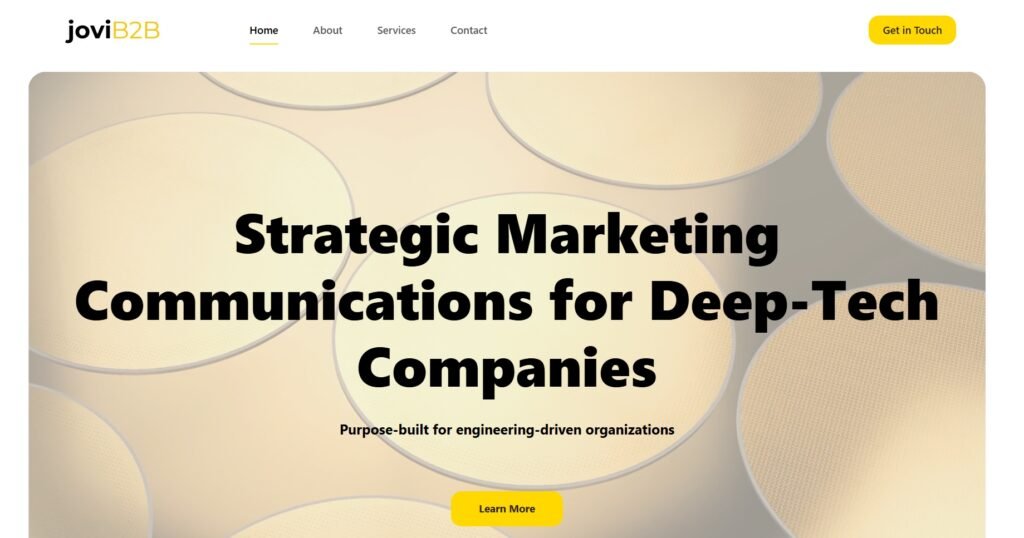
8. Jovi B2B — best for semiconductor communications and sales enablement
Jovi B2B is a specialist marketing and communications agency built for semiconductor, electronics, RF, and deep-tech companies. Its senior-led model can suit neuromorphic startups that need to explain complex architectures, strengthen credibility with engineers, or equip commercial teams for long technical sales cycles.
The agency combines positioning, messaging, go-to-market planning, communications, content, investor presentations, account-based marketing, and sales collateral. This scope could help a neuromorphic supplier translate benchmark results and system advantages into materials suited to OEM discussions, investment conversations, product launches, and industry events.
Jovi B2B facts
Founded: 2025.
Best for: Neuromorphic processor, sensor, RF, electronics, and edge-AI companies needing technical positioning, communications, investor materials, sales enablement, account-based marketing, and campaign execution.
Core strengths: B2B marketing strategy, messaging, go-to-market planning, public relations, technical content, video, webinars, events, LinkedIn, investor decks, sales presentations, account-based marketing, and reporting.
Client reviews: No verified Clutch rating was identified during this review. Website testimonials from RF semiconductor and cybersecurity clients highlight rapid technical understanding, messaging clarity, professional execution, audience definition, and stronger go-to-market direction.
Core specialties: Semiconductor communications, engineer-focused messaging, technical storytelling, investor and corporate decks, sales collateral, trade-show preparation, thought leadership, media engagement, and credibility-led marketing.
Advantages: Exclusive focus on high-tech B2B, direct semiconductor experience, senior-led delivery, flexible engagements, familiarity with engineer-first buying environments, and support spanning strategy through execution.
Disadvantages: Limited operating history and no public neuromorphic case study identified; not a foundry, engineering consultancy, OEM sales representative, market-entry operator, qualification laboratory, or fundraising platform.
9. Funden — best for neuromorphic investor readiness
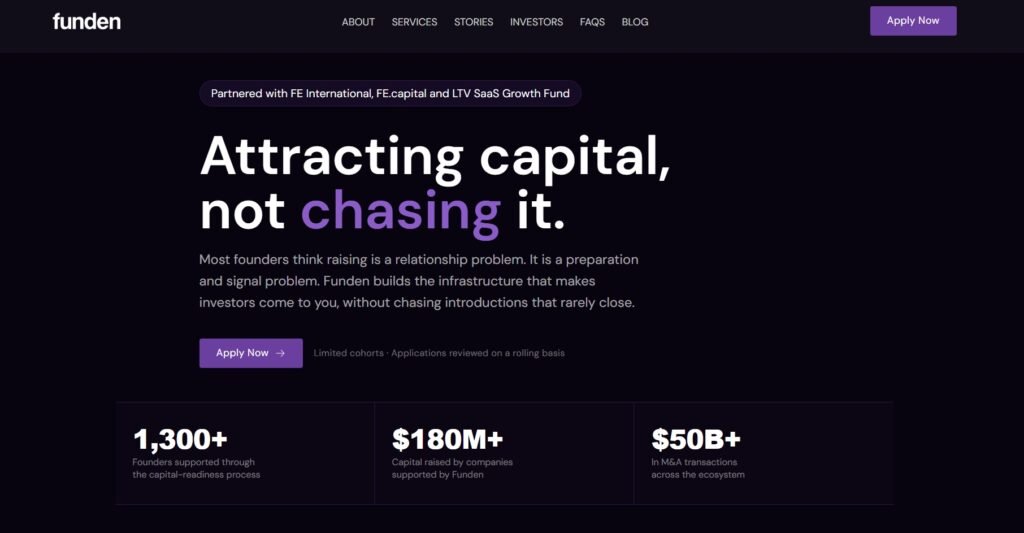
Funden is a capital-readiness and investor-relations partner supporting companies from pre-seed through Series B. Its process can suit neuromorphic startups that have developed credible technology but need to strengthen their investment narrative, commercial evidence, data room, valuation logic, and investor communications before approaching institutional capital.
The firm has supported more than 1,300 founders, while companies using its process have raised over $180 million. Funden’s work begins with a readiness audit covering positioning, deal quality, investor materials, financial evidence, valuation benchmarks, public presence, and fundraising gaps.
Funden facts
Founded: 2021.
Best for: Neuromorphic computing startups preparing pre-seed, seed, Series A, or Series B rounds and needing investor positioning, fundraising narratives, data-room readiness, valuation support, and structured investor engagement.
Core strengths: Capital-readiness audits, investment narratives, pitch-deck assessment, fundability scoring, valuation benchmarking, data-room reviews, investor targeting, investor updates, pipeline reporting, market feedback, and investor-relations infrastructure.
Client reviews: No verified Clutch score was identified during this review. Published founder testimonials highlight relevant investor targeting, efficient execution, narrative development, warm introductions, and support for complex deep-tech fundraising.
Core specialties: Pre-seed to Series B readiness, institutional positioning, fundraising materials, investor communications, deal stress-testing, funding-gap analysis, valuation comparisons, public-presence audits, and long-term capital planning.
Advantages: Structured capital-readiness process, experience supporting more than 1,300 founders, exposure to institutional investors, published deep-tech client evidence, and access to the wider FE International transaction ecosystem.
Disadvantages: Not a neuromorphic engineering specialist, semiconductor market-entry consultancy, technical marketing agency, broker-dealer, placement agent, foundry, qualification laboratory, or replacement for customer and production evidence.
10. Spinverse — best for European funding and consortium development
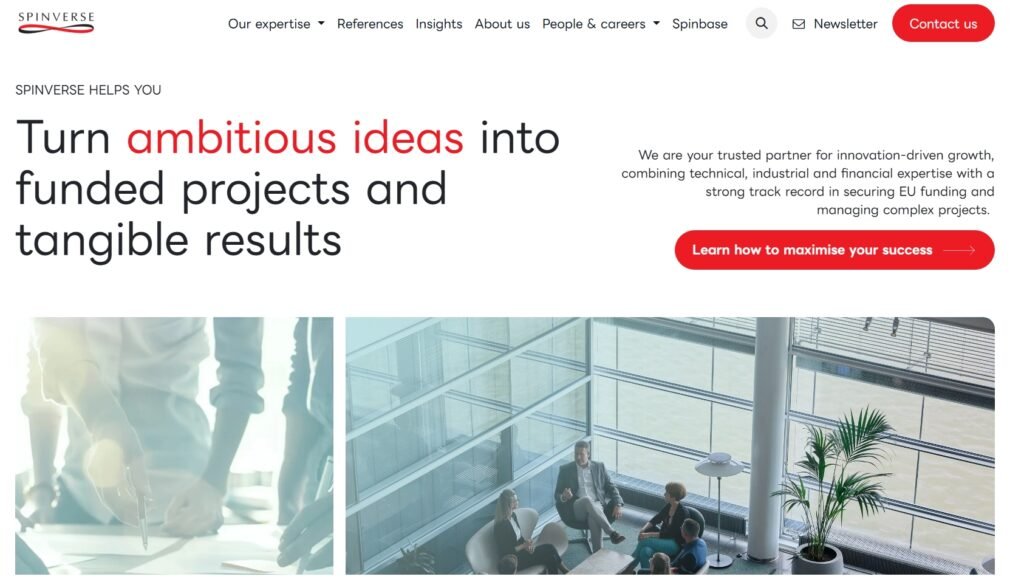
Spinverse is a European innovation consultancy supporting electronics, semiconductor, AI, quantum, defence, and advanced-manufacturing projects. Its funding and ecosystem expertise can suit neuromorphic startups that need to form multinational consortia, access public programmes, develop pilot infrastructure, or coordinate research and industrial partners.
The consultancy supports projects from opportunity identification and proposal development through Grant Agreement Preparation, partner search, project management, and impact reporting. Its semiconductor practice covers chip design, embedded systems, test infrastructure, advanced packaging, system integration, and industrial deployment.
Spinverse facts
Founded: 2004.
Best for: Neuromorphic computing startups seeking Horizon Europe, Chips Joint Undertaking, Digital Europe, European Defence Fund, national innovation funding, consortium partners, pilot programmes, and complex project coordination.
Core strengths: Public-funding strategy, competitive proposal preparation, consortium building, partner search, project planning, Grant Agreement Preparation, ecosystem coordination, compliance management, impact tracking, and European innovation strategy.
Client reviews: No verified Clutch rating was identified during this review. Published testimonials from Fraunhofer, Nokia, Valmet, and other project leaders highlight strong technical understanding, EU-funding knowledge, proposal expertise, and effective coordination of complex international consortia.
Core specialties: Electronics and semiconductor funding, AI and quantum projects, advanced packaging ecosystems, embedded systems, defence innovation, cross-border R&D consortia, European pilot lines, and publicly funded industrial demonstrations.
Advantages: Direct semiconductor expertise, more than 20 years in European innovation consulting, extensive Nordic and EU networks, and experience coordinating €4.2 billion in projects while securing substantial customer funding.
Disadvantages: Not a neuromorphic engineering company, technical marketing agency, investor-relations platform, direct OEM sales representative, foundry, packaging laboratory, qualification provider, or private-capital placement adviser.
How do the neuromorphic service providers compare?
Neuromorphic service providers differ most in the commercial stage, market, and internal capability they support. Some concentrate on technical marketing, while others provide customer discovery, international business development, defence entry, fundraising preparation, or European programme access. The comparison below summarises where each provider appears strongest and where additional specialist support may still be required.
| Provider | Strongest fit | Main advantage | Main limitation |
|---|---|---|---|
| aboveA | GTM and international expansion | Connects market intelligence, buyer positioning, SEO, partnerships, investor readiness, and execution | Limited public evidence of completed neuromorphic client engagements |
| Launch Team | Semiconductor technical marketing | Extensive semiconductor and photonics experience across positioning, campaigns, and sales enablement | Less focused on fundraising, production partnerships, and full market-entry execution |
| Anion Marketing | Semiconductor GTM and channels | Combines technical content, product marketing, market research, and channel development | Limited public neuromorphic-specific client evidence |
| TekMark Growth Partners | Customer discovery and market development | Strong Voice-of-the-Customer research, OEM identification, and government commercialisation support | Narrower digital marketing and continuous demand-generation capability |
| Deep Tech Go to Market | US dual-use commercialisation | Direct defence-market focus and support moving from grants towards contracts | Less relevant for purely commercial consumer or industrial applications |
| Intralink | APAC customer and partner development | Direct neuromorphic evidence, regional teams, OEM access, licensing, and deal execution | Limited technical marketing and investor-readiness support |
| Fifth Ring | Global semiconductor positioning | International campaigns, technical thought leadership, localisation, and pipeline development | Less focused on direct OEM sales and startup commercialisation |
| Jovi B2B | Technical communications and sales enablement | Senior-led semiconductor messaging, investor materials, content, PR, and commercial collateral | Short operating history and limited market-entry infrastructure |
| Funden | Investor readiness | Structured fundraising preparation, valuation support, data rooms, and investor communications | Cannot replace technical validation, customers, or manufacturing evidence |
| Spinverse | European funding and consortia | Strong EU programme knowledge, consortium development, and semiconductor ecosystem coordination | Less suitable for direct customer acquisition or private-capital fundraising |
No provider covers every requirement involved in neuromorphic commercialisation. Startups may therefore combine a strategic lead partner with engineering, legal, manufacturing, funding, or regional specialists according to the milestone currently delaying adoption.
Conclusion
Neuromorphic computing startups need partners matching constraints delaying commercial progress. Technical marketing improves buyer understanding, while market development, regional expansion, fundraising support, or consortium building may unlock later stages. The strongest provider will connect its work with measurable outcomes such as evaluations, design-ins, partnerships, funding, or market entry. Founders should retain control of technical claims, product decisions, qualification, and customer commitments throughout every external engagement.
Frequently asked questions about neuromorphic service providers
These frequently asked questions explain how neuromorphic startups can choose service providers, evaluate specialist capabilities, manage external support, and connect each engagement with measurable commercial outcomes across international markets effectively.
A neuromorphic service provider can support market research, application positioning, technical communication, customer development, fundraising preparation, partnerships, or regional expansion. The precise role depends on the startup’s commercial stage. External specialists may help translate technical evidence into buyer-facing materials, identify target accounts, prepare evaluation routes, and coordinate progress towards design-ins, licensing agreements, funding, or production.
A semiconductor specialist becomes valuable when the work involves engineering audiences, long qualification cycles, OEM decision structures, manufacturing dependencies, or technical product claims. Generalist agencies may support branding or broad campaigns, yet they can struggle with processor benchmarks, integration requirements, supply risks, and design-in processes. Relevant semiconductor, edge-AI, sensing, or deep-tech experience can reduce that learning burden.
The best provider depends on the target region and desired outcome. Intralink fits APAC customer development, licensing, and partner engagement, while Spinverse supports European funding and consortium formation. aboveA can connect market intelligence, positioning, outreach, partnerships, and expansion planning across Europe and APAC. Startups should select partners according to measurable regional milestones rather than office coverage alone.
Agency performance should be connected with commercial movement rather than traffic, impressions, or meeting volume alone. Relevant indicators include qualified technical enquiries, target-account engagement, paid evaluations, accepted samples, OEM introductions, partner agreements, funding readiness, proposal submissions, and market-entry milestones. The startup also needs to track engineering effort, opportunity quality, sales-cycle progress, and expected revenue from each supported programme.
Neuromorphic startups must retain ownership of technical claims, architecture decisions, product roadmaps, benchmark conditions, qualification, intellectual property, manufacturing commitments, and customer contracts. External providers can strengthen research, positioning, communication, outreach, and commercial coordination. They should not approve engineering evidence, promise production performance, determine licensing rights, or make regulatory and investment decisions outside their professional authority.
Meet the Author

Faustas Norvaisa
A Growth & Product Expert with 10 years of experience in startup revenue diversification, advising, international expansion, SEO, and digital marketing. Passionate about scaling businesses and building global brands, he empowers companies to thrive with his motto, "sharing is caring.
Got questions or need guidance?
Whether you’re stuck, curious, or just want to talk through your idea, reach out directly:
