

Austeja Norvaisaite
Growth hacker and strategic partnership coordinator. Passionate about blending creativity with data-driven insights to craft accessible, resonant content for diverse audiences.
Cryptocurrency marketing in 2026: what wins trust, traffic, and paid growth
- Last Time Updated: 27th of March, 2026
Cryptocurrency marketing in 2026 starts with trust work, not noise. Many buyers arrive cautious, because scams and fake “support” accounts are common. A strong brand now shows proof early: real links, clear fees, and simple safety steps.
Good crypto SEO also answers buyer questions fast, so search traffic stays and converts. Paid ads still work, yet approvals and policy checks shape what can be said. Community spaces reward helpful replies and honest updates. Marketing wins when each page reduces doubt and guides the next step.
Need help with crypto growth in 2026?
Table of Contents
Why crypto marketing changed in 2026
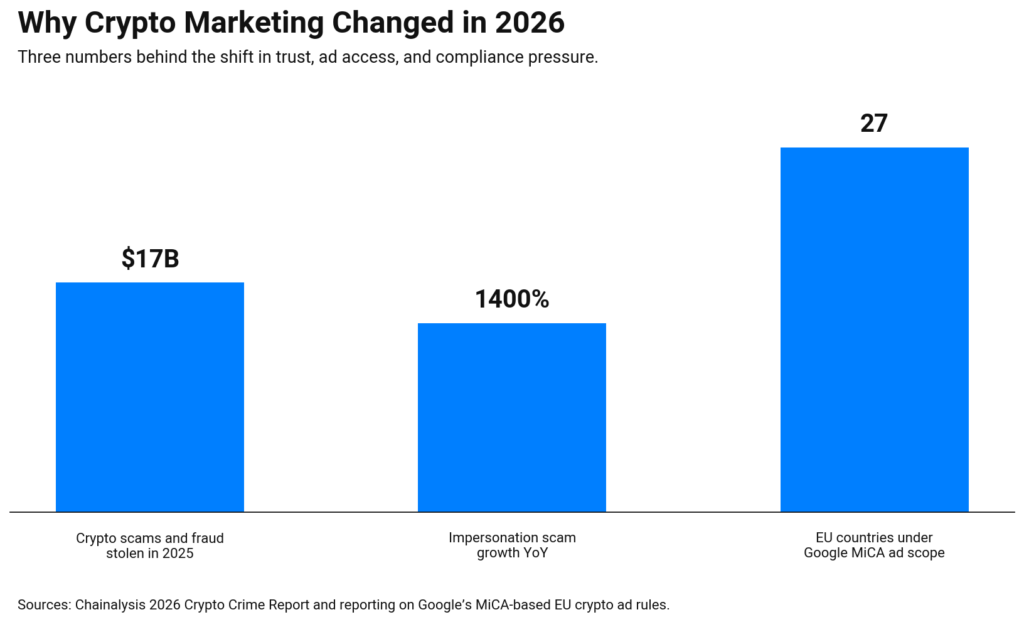
Crypto users now check details before taking action. Many people search a brand name plus “scam” or “real” before signing up. That trend forces better verification and clearer copy. A project needs one place that lists official domains, social handles, and contract addresses. Support rules must be visible because fake help messages spread quickly on Telegram and Discord. Ads also face stricter reviews, so landing pages need risk notes, location limits, and clear product labels. In the EU, MiCA pushed more teams to show stronger compliance signals.
The 2026 crypto buyer mindset
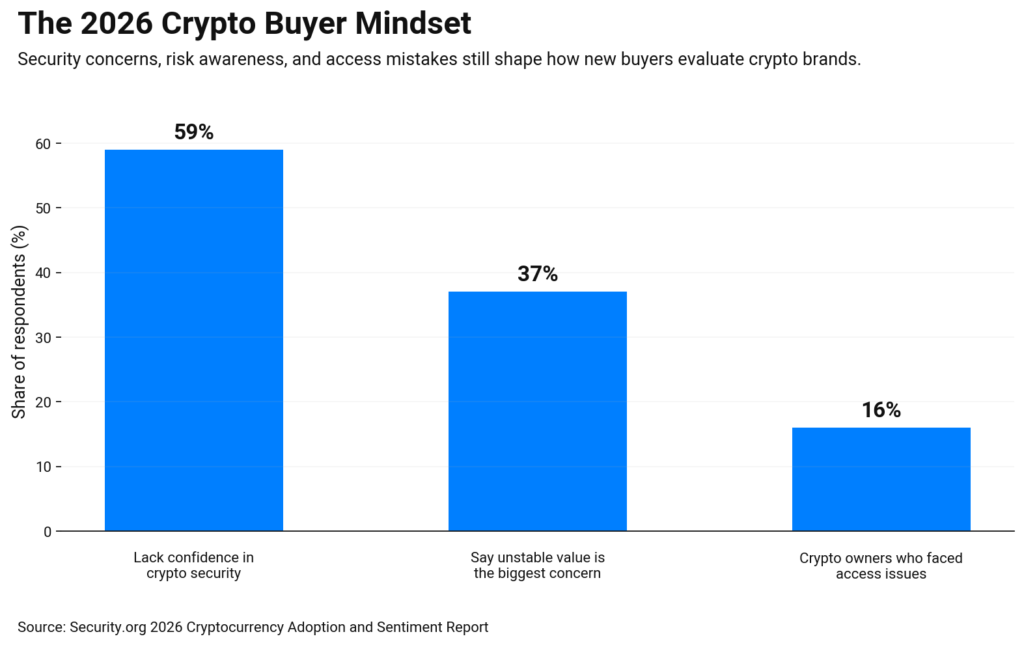
Most crypto visitors want safety first. A wallet, exchange, or token can look fine, yet users still ask, “How can this be checked?” That question shapes every page. People scan for audit links, public dashboards, and clear team channels. Hidden influencer deals also raise suspicion, so partnerships need visible disclosure. New crypto users fear making mistakes, so guides must explain steps such as saving keys, avoiding fake apps, and testing with small transfers. Community feedback matters too. Reddit threads often punish hype posts while rewarding calm answers that include sources, dates, and clear instructions.
Why trust became the main growth lever for crypto market in 2026
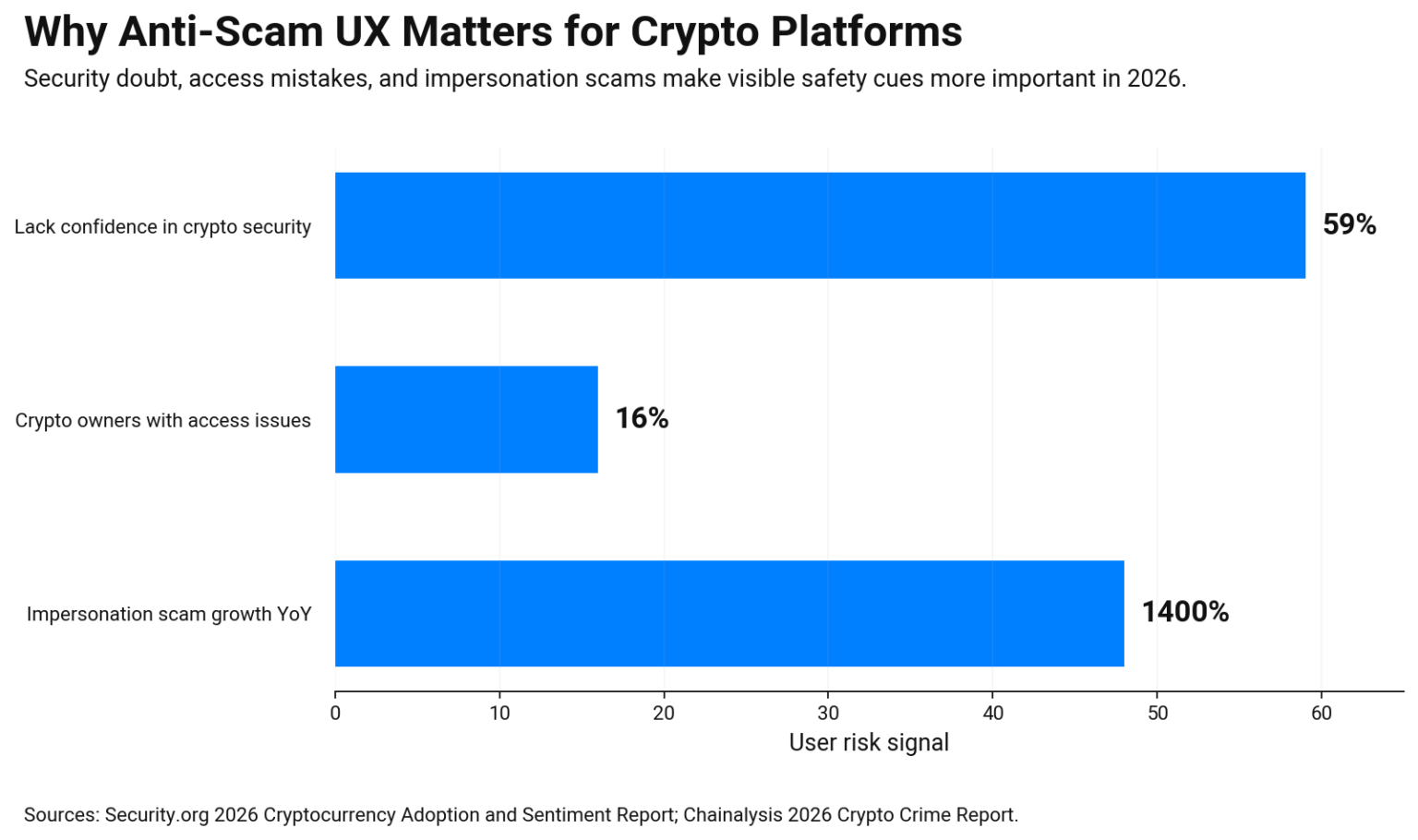
One trend explains why crypto marketing in 2026 feels stricter: users expect safety by default. Chainalysis estimates that $17 billion was stolen in crypto scams and fraud in 2025, and says impersonation scams grew sharply year over year. That number changes what “good marketing” means. First, trust pages are no longer optional. Next, support rules must be loud and easy to find. Then, every landing page needs clear labels, so visitors know if the offer is an exchange, a wallet, or a token product. Also, ad reviews tighten the bar.
Google expanded in-account crypto certification options in February 2026, so paid campaigns depend on compliance signals. In Europe, MiCA pushes disclosure and authorization cues, which buyers now often notice. As a result, growth comes from brands that reduce doubt in the first minute. With that in mind, the next section breaks down the proof signals buyers look for before signing up.
Proof signals crypto users check before signing up
Crypto market users do not trust a promise. Users trust a path that can be checked. So place proof where the eyes land first. Put it near pricing and near the signup button. Link it again in the footer for people who scroll to double-check.
| Proof signal users look for | Where to place it | Why it lowers risk | Simple example |
|---|---|---|---|
| Official links hub | Header + footer | Stops clone sites and fake profiles | “Official domains and socials” page |
| Contract address box | Product page top | Confirms the real token | Explorer link beside address |
| Support rules card | Signup + help pages | Blocks fake “support” DMs | “No seed phrase requests” notice |
| Fees and limits block | Pricing section | Prevents surprise costs | Withdrawal fee shown upfront |
| Status and incident log | Help center | Builds calm during outages | Uptime page with past events |
After the table, add a “How to verify us” guide with screenshots. It can rank for brand plus scam searches. It can cut support load. Next, the article moves to the trust killers that stop signups.
Trust killers that stop crypto growth in 2026
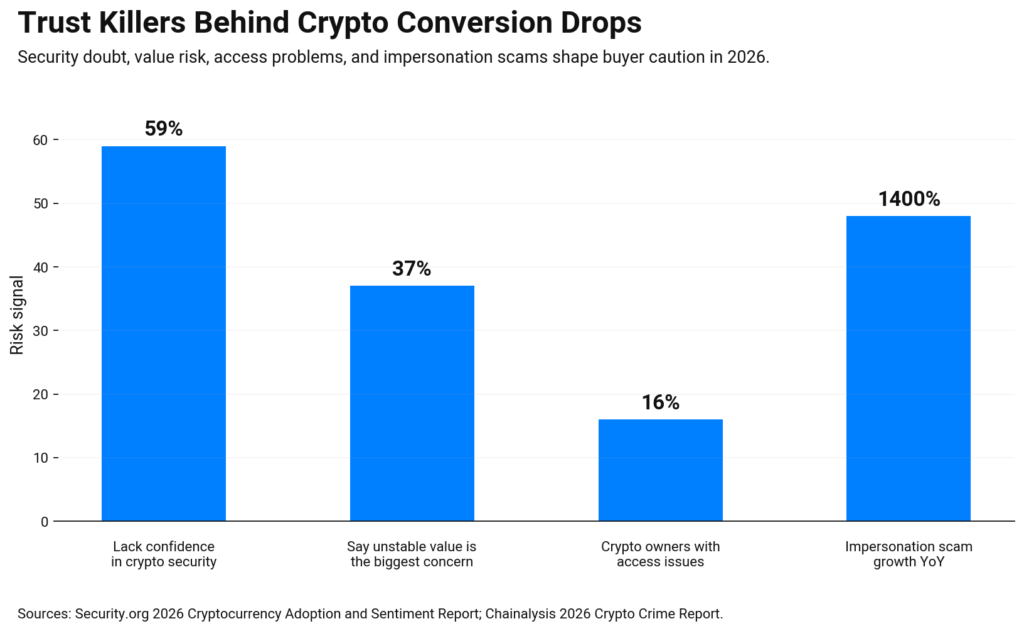
One trust killer is hidden promotion. A token gets pushed by “normal” accounts, yet the wallet link goes to a copy site. Even if the project is real, users remember the pattern and leave. Another killer is vague pricing. A visitor sees “low fees,” then finds spreads, network costs, or lockups later. That moment creates regret risk, so signup drops. A third killer is weak support control.
Scammers join Discord, send fake help DMs, and steal keys. The brand gets blamed, even when the product did not fail. A fourth killer is unclear product labels. If a page mixes exchange, wallet, and yield talk, readers assume a trap. These issues also hurt SEO, because bounce rates rise and brand searches include “scam.” Next comes the fix: building an anti-scam UX that protects users early.
Trust killers checklist for crypto marketing teams
Before scaling crypto ads or crypto SEO, run this quick check. Each point links to a common conversion drop seen in 2026.
- Unclear “official” sources: missing domain list, no verified handles, contract address buried, so copycats win attention.
- Soft safety rules: no pinned warning about seed phrases, weak DM controls in Discord, and fake support keeps spreading.
- Pricing fog: fees shown late, limits hidden, or promos without real terms, which triggers refunds and angry posts.
- Overhyped claims: ROI language without conditions, vague “guarantees,” and flashy charts that do not match product reality.
- Hidden incentives: paid KOL posts without disclosure, referral links in “reviews,” and users label the brand as shill bait.
- Silent incidents: downtime happens, yet no status page, no timeline, and no fix summary, so trust collapses in hours.
Use the list as a landing page audit, then update copy, UI blocks, and help center links. Next, we will cover an anti-scam UX layout that protects new users and lifts signup rate.
Anti-scam Crypto Platform UX that protects new users
Start with one clear “Verify before you act” block near the top of key pages. Link to the official domains list, verified social handles, and the correct contract addresses. Add a short support rule card that says support will never ask for seed phrases or remote access. Keep the language plain.
Next, guide the first action with a safe path. Offer a watch-only mode, a demo, or a small test transfer step with a clear fee preview. Add a status page link in the footer and the help menu. When an incident happens, publish a short timeline and the fix. That is how trust grows even under pressure.
Crypto landing page blocks that lift conversion in 2026
Place trust blocks at the top, then repeat them near pricing for quick confirmation. Use labels that state product type, regions served, and the first safe action.
| Block | What it shows | Best placement | Benefit |
|---|---|---|---|
| Verification hub link | Official domains handles contracts | Top nav | Fewer clone clicks |
| Fee preview | Total cost before confirm | CTA area | Less checkout fear |
| Support rules | No seed phrases no remote access | Signup | Fewer scams |
| Status link | Live uptime and incident notes | Help menu | Less panic churn |
After the table, add a guided first action like watch-only mode or a small test transfer with a clear fee screen. That lowers regret. Next, crypto SEO pages for high-intent searches come after this.
Crypto SEO in 2026: pages that rank and bring buyers
Crypto SEO in 2026 rewards pages that solve fear fast and match buyer intent. Searchers want clear fees, real safety steps, and proof links. So content must answer questions early, use simple words, and guide the next step that fits the query and the product.
High-intent keywords and commercial queries that convert
Target searches that show action intent for crypto service providers like exchanges, wallets, custody firms, payment rails, on-ramps, and staking platforms.
- crypto exchange
- crypto wallet
- buy crypto with card
- crypto on ramp
- crypto off ramp
- crypto custody provider
- crypto payment gateway
- staking platform
- crypto withdrawal fee
- crypto KYC verification
Build pages that match country intent and rules.
- buy crypto in Germany
- crypto exchange in France
- crypto wallet in Spain
- best crypto payment gateway EU
Each page should include trust blocks from earlier sections, because search traffic still doubts. Link to the verification hub, fee pages, and support rules. Add comparison pages that show limits, fees, and security model in plain words. Then add short FAQs that cover safety and account access.
Content formats that build authority and reduce bounce
Publish guides that help users verify and act safely. Create pages that explain how to spot fake support, how to confirm the real app, and how to check the correct contract address. Add a simple glossary for terms that cause confusion, like gas fees, slippage, custodial, and non-custodial. Use screenshots and steps, because text alone can feel abstract.
Keep titles clear and keyword-driven, like Crypto wallet security checklist 2026 or How to withdraw crypto safely. Add a proof library with audit summaries and incident timelines, so visitors can see operational maturity. That improves dwell time and helps branded searches convert.
Crypto SEO wins when each page reduces doubt and matches intent. Use proof blocks, clear fees, and safety guides. Then connect every page to the next action. The next section moves into paid acquisition and ad approval realities.
Paid acquisition for crypto service providers in 2026
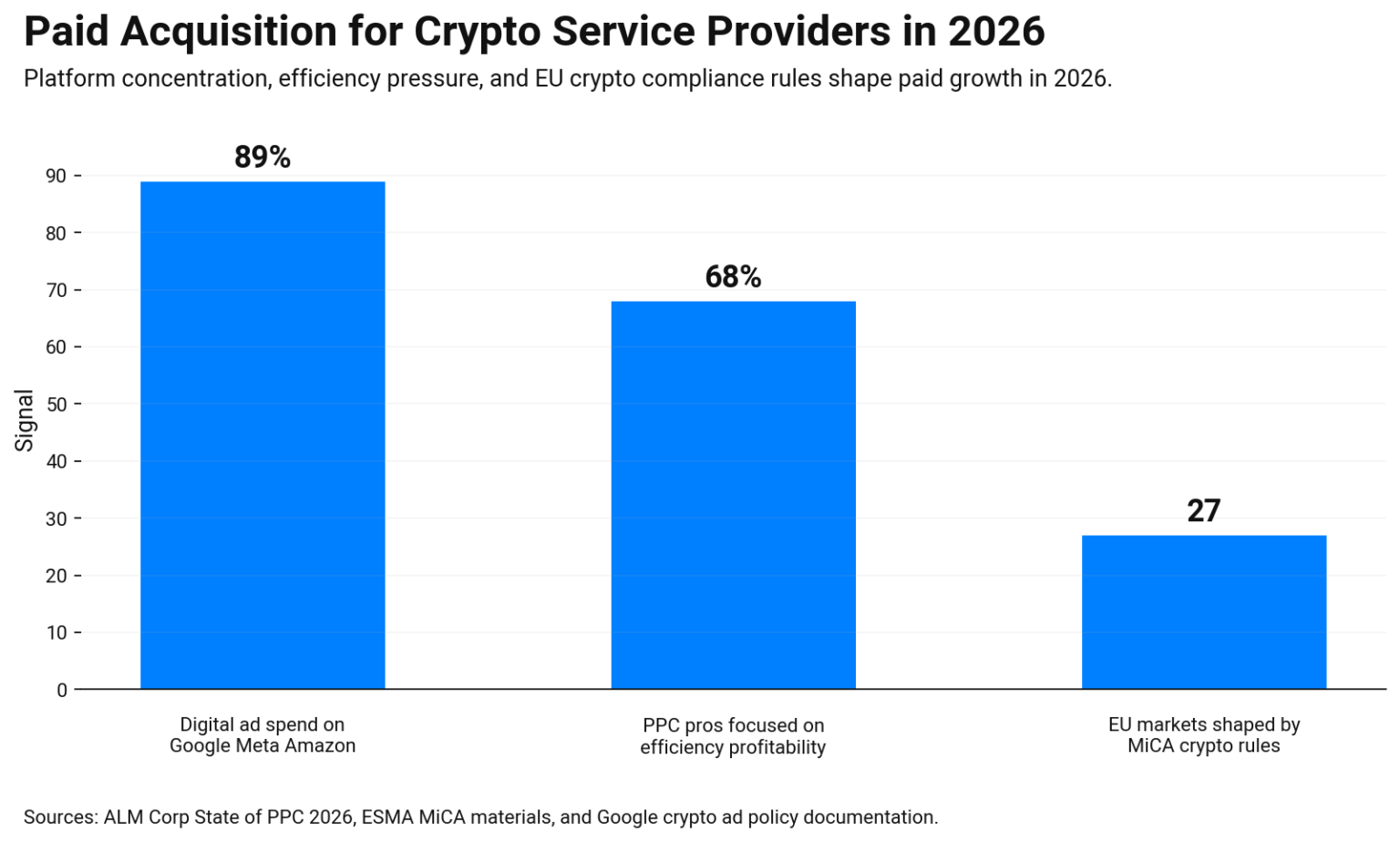
Paid ads still work in 2026, yet approvals are stricter and buyer trust is thinner. So the ad promise must match the landing page fast. Use plain labels like exchange, wallet, custody, or payment gateway. Add country eligibility notes early. Also place a fee preview near the first CTA, because search traffic expects surprise costs.
Search ads perform best when keywords show action intent. Focus on terms tied to pricing, onboarding, and access, like buy crypto with card, crypto withdrawal fees, crypto wallet download, and crypto payment gateway. Then route each keyword group to one page that answers that exact intent. Avoid sending many queries to one generic home page. Quality score and conversion rate drop when the match feels loose.
Compliance signals help campaigns stay live. Google’s crypto advertising rules include certification requirements and country limits, and policy updates in 2026 made those checks more central. In the EU, MiCA also raised expectations around disclosure cues and provider authorization, which users now notice during checkout. Next, the article explains retargeting and email flows that rebuild confidence after the first visit.
Retargeting and email flows that rebuild confidence
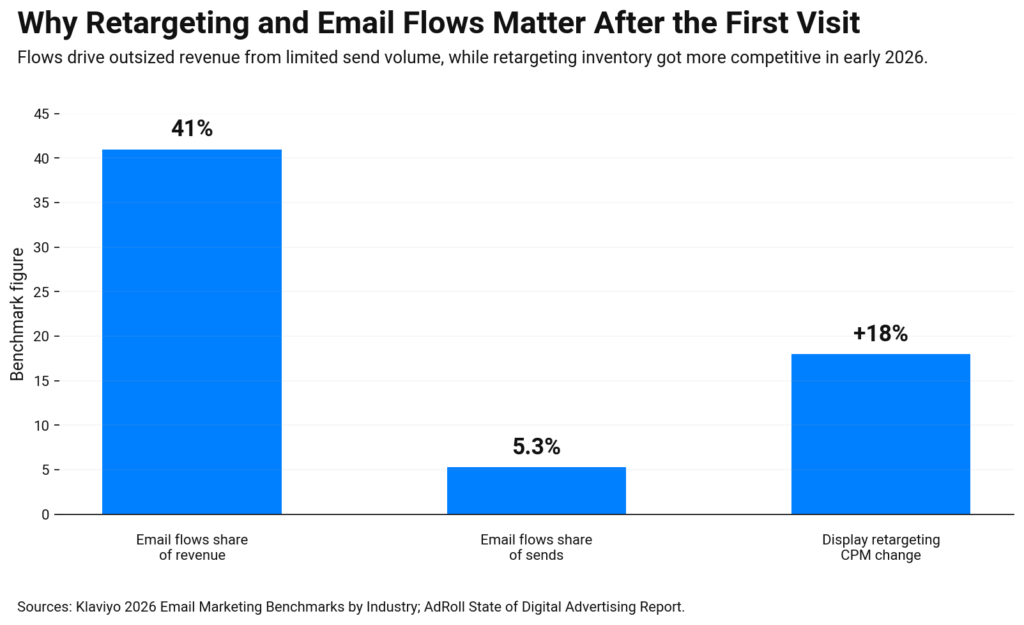
Most visitors do not convert on the first visit. Retargeting should bring people back with proof, not pressure. Send ads to pages that answer the exact doubt, like fees, security, and support rules. A verification hub also works well for brand safety searches, because it helps users confirm the real site and avoid copycats.
Email flows should guide one safe step at a time. Start with a welcome email that links to official apps, domains, and support channels. Next, send a short fee and limits guide that explains what happens during deposit, trade, and withdrawal. Then send a security checklist that covers device safety and scam warnings. Keep each email focused on one topic and one action. End each message with a simple CTA like finish setup, verify account, or make a small test transfer. Next, we shall move into community marketing that earns trust in the public.
Community marketing that earns trust in public
Community is where crypto trust gets tested. In 2026, many people hesitate to trust strangers online, and Edelman reports 70% are unwilling or hesitant to trust someone with different values or backgrounds. That social mood makes Reddit, Discord, and Telegram harder to market in the old way. Helpful behavior wins. Loud promotion gets flagged.
Use community work to remove risk, not to chase noise.
- Pin a verification post with official links, app stores, and contract addresses.
- Post fee and limit answers in public threads, then link to the matching page.
- Publish incident updates with timestamps, cause, fix, and next prevention step.
- Remove scam accounts fast, and show a clear report channel for members.
Weekly recap posts help lurkers decide.
A quick case shows the impact. A wallet that replies within minutes to fake-support reports often prevents copycat DMs from spreading. Another case is pricing. A simple screenshot of the fee preview can stop a long argument and keep new users moving.
Next, the guide covers crypto PR and content that turns trust into qualified signups.
Crypto PR and content that turns trust into signups
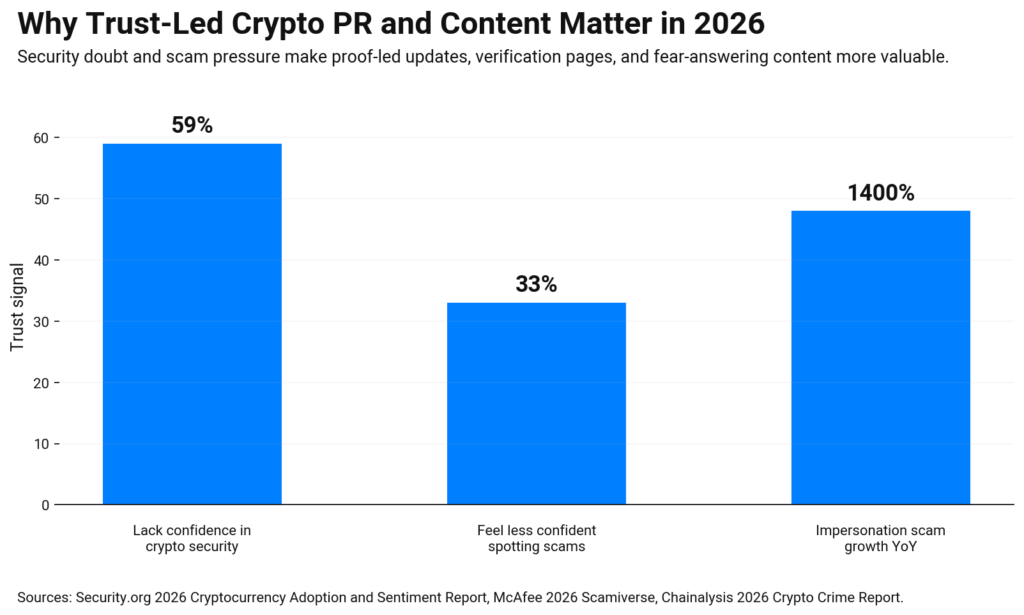
Crypto PR in 2026 works best when stories focus on verifiable progress. Announce real product updates, security upgrades, licenses, audits, and clear expansion plans. Give journalists and analysts a proof pack with links, screenshots, and timelines. Also publish a public press page that lists official spokespeople and contact routes, so impostors cannot hijack the narrative.
Content should support PR and paid campaigns at the same time. Write explainers that match commercial searches, like crypto custody provider, crypto payment gateway, and buy crypto with card. Add pages that answer fear queries, like brand name scam, brand name fake app, and how to verify contract address. Then link every PR mention back to those trust pages. This keeps traffic on site longer, lowers bounce, and increases the chance of a safe first action. Next, the we shall explains KPIs that matter for crypto growth in 2026.
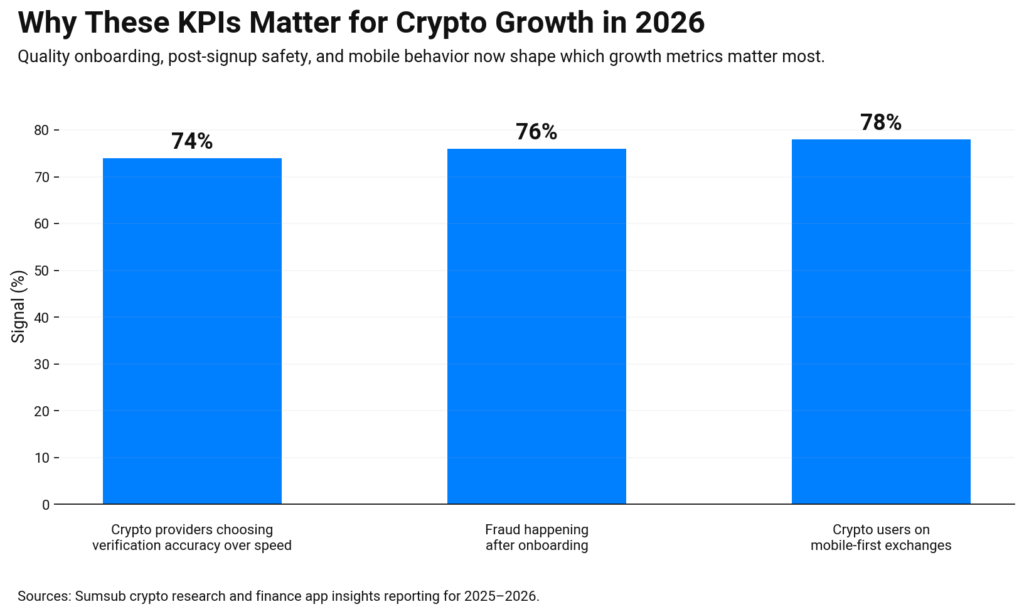
KPIs that matter for crypto growth in 2026
Analytics in the crypto market are essential. That’s why you should track metrics that show real progress, not empty reach. Start with the qualified signup rate, because it shows if the offer matches intent. Next, track account completion steps, like KYC finish rate for exchanges or wallet backup completion for self-custody apps. Then track the first safe action, such as first deposit, first trade, first swap, or first payment.
Retention matters too, so measure active users after seven days and after four weeks. Add support load per active user, because scam waves often raise tickets and churn. Finally, watch refund and chargeback signals where card payments exist. Next, the guide explains how to choose a crypto marketing partner without wasting budget.
How to choose a crypto marketing partner in 2026
Partnerships matter in the crypto industry. Pick a partner that understands trust, compliance, and user fear. Ask for examples of landing pages that show fees, verification, and support rules early. Check if reporting ties spend to real actions like first deposit, first trade, or retained users. Also, ask how community risk is handled, since scam DMs can destroy brand trust fast.
A good partner should know the policy limits by country and how to structure certification and review steps. Finally, look for clear deliverables, timelines, and ownership rules for content, ads, and analytics. Next, we will close this discussion with a summary and next steps.
How aboveA Helps Crypto Service Providers Grow in 2026
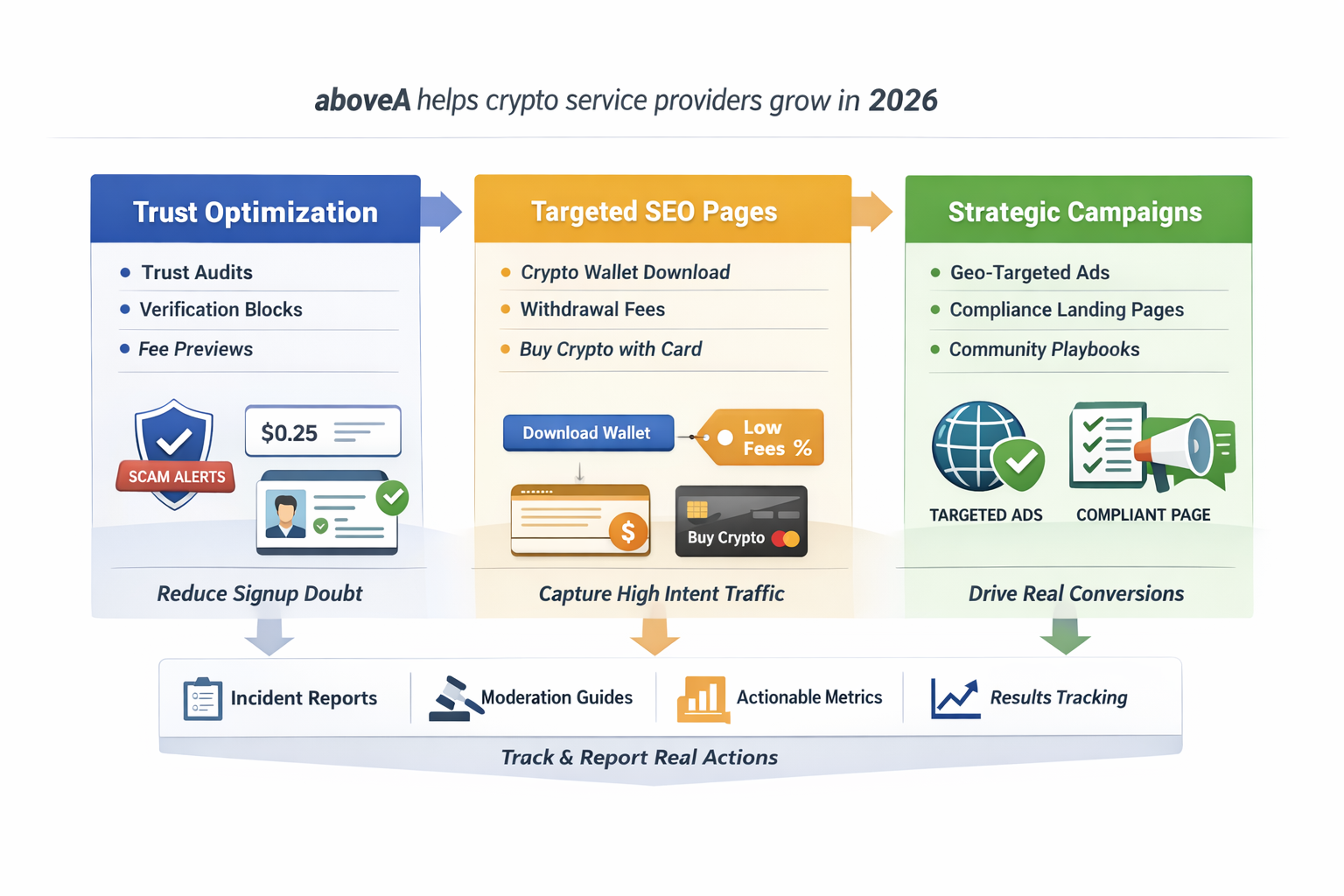
aboveA helps crypto service providers grow by reducing user doubt at the exact points where signups drop. Work starts with a trust audit of landing pages, pricing flow, and support entry points, then updates add clear verification blocks, fee previews, and scam prevention cues.
Next, aboveA builds crypto SEO pages that match high intent searches like crypto wallet download, crypto withdrawal fees, and buy crypto with card, while linking each page to the right next step.
For paid acquisition, aboveA structures campaigns around country eligibility and ad review requirements, so traffic lands on compliant pages that convert. Community playbooks add pinned safety posts, fast moderation steps, and incident update templates. Reporting tracks real actions, not vanity reach.
Conclusion and next steps
Cryptocurrency marketing in 2026 grows fastest when pages reduce doubt early. Put verification, fees, and support rules where users can see them. Then use SEO, paid ads, community, and PR to guide a safe first action. Keep tracking real behavior, and keep trust signals updated.
Crypto Marketing Frequently Asked Questions
What is cryptocurrency marketing in 2026?
Cryptocurrency marketing in 2026 focuses on trust first, then growth. It uses clear fees, verified links, safety guides, and compliant ads to help cautious users take safe actions.
What channels work best for crypto service providers in 2026?
Search ads, crypto SEO, and community support content perform well in 2026. These channels capture high intent traffic, reduce fear fast, and guide signups with clear proof.
How can a crypto business improve trust quickly?
Add a verification hub, show contract addresses, publish support rules, and display fee previews near the CTA. Also keep a status page and short incident updates for outages.
What keywords bring buyers ready to act?
High intent keywords include buy crypto with card, crypto withdrawal fees, crypto wallet download, crypto payment gateway, and crypto custody provider, plus country terms like buy crypto in Germany.
What should be avoided in crypto marketing copy?
Avoid vague promises, hidden incentives, confusing product labels, and late pricing details. Also avoid aggressive hype language, since it increases scam suspicion and raises bounce rates.
