
Faustas Norvaisa
A Growth & Product Expert with 10 years of experience in revenue diversification, international expansion, SEO, and digital marketing. Passionate about scaling businesses and building global brands, he empowers companies to thrive with his motto, "sharing is caring.
What It’s Like to Build a Startup as a Korean Founder in 2026
- Last time updated: 19th of May, 2026
Korean startup founders in 2026 operate in one of Asia’s fastest, most demanding growth environments. South Korea offers advanced infrastructure, skilled talent, strong digital adoption, and active startup support. Yet those strengths also raise the bar. Founders must prove traction early, build trust quickly, and compete in categories where customers expect polished products from day one. Local execution still matters, but many teams also need a global story for investors, partners, and future expansion.
This article looks at the real founder experience: daily pressure, leadership demands, funding realities, scaling mistakes, and the practical choices that help Korean startups grow with discipline.
Let’s make your startup investor-ready
Table of Contents
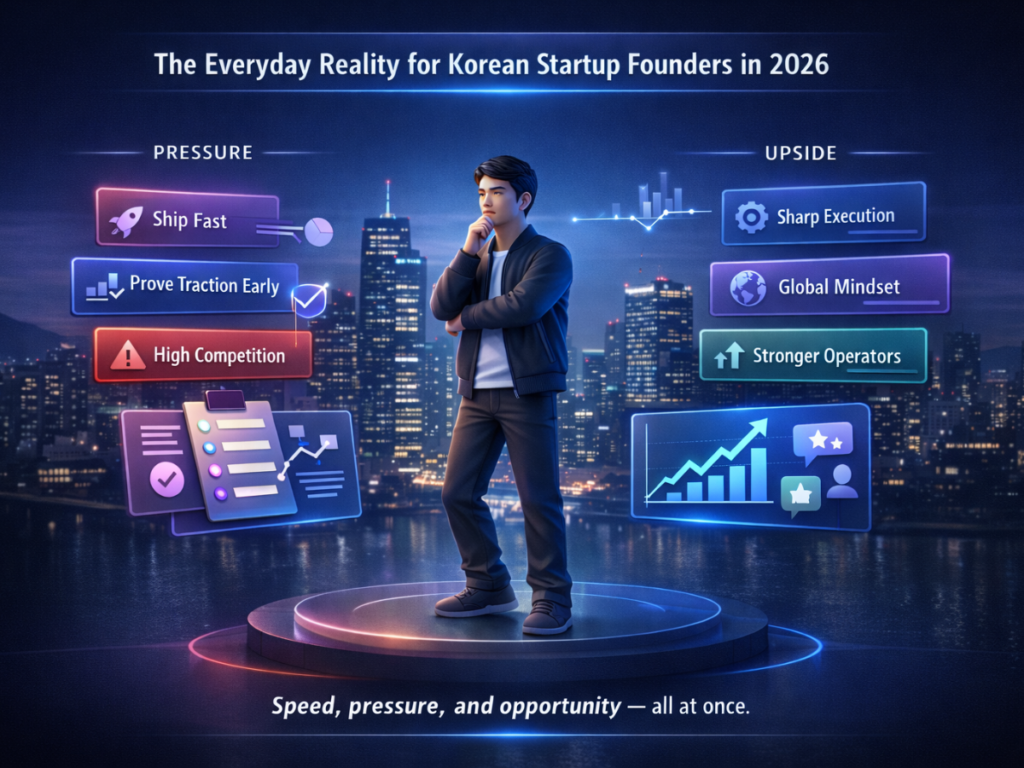
The Everyday Reality for Korean Startup Founders in 2026
Korean startup founders in 2026 face a market that moves quickly and judges early. South Korea gives teams strong digital infrastructure, skilled talent, and customers who are open to new products. Yet those same strengths create pressure. A product must look polished early. A pitch must show clear traction. A founder must build trust before the company has much time to mature.
This pressure affects daily choices. Founders must decide which feature matters, which channel deserves budget, and which idea should be cut. Customers expect speed and quality. Investors want proof, not only ambition. Competitors move fast, so weak positioning becomes visible quickly.
Still, this environment can build strong operators. Founders who stay focused, listen to real signals, and protect their team’s energy can learn faster than slower markets allow. That pressure also explains why many Korean founders start thinking beyond Korea much earlier than expected.
Why Korean Founders Think Global Much Earlier?
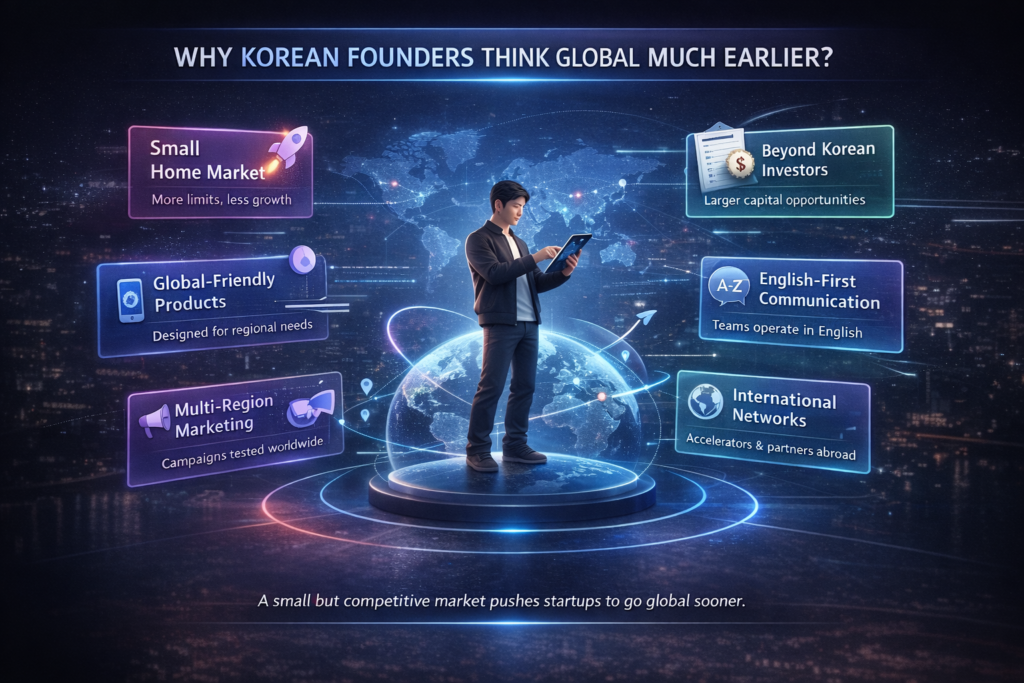
For many teams, what it’s like to build a startup as a Korean founder in 2026 includes realizing early that the local market has limits. South Korea is digitally advanced but relatively small, which pushes founders to think beyond borders sooner than expected. Growth often depends on reaching users, partners, or investors outside the country.
This global mindset changes how startups are built from the start:
Products are designed with international users in mind, not just local habits
English becomes part of daily operations, from decks to documentation
Founders explore overseas accelerators, partners, and investors early
Marketing strategies are tested across multiple regions, not one
Fundraising narratives include global scale, not just domestic traction
Thinking globally brings new challenges, but it also opens more paths to growth. It forces clearer positioning and stronger storytelling. As this global focus grows, another challenge appears: balancing international ambition with strong local execution. That tension is what we’ll explore next.
How Korean Startups Balance Global Ambition With Local Reality?
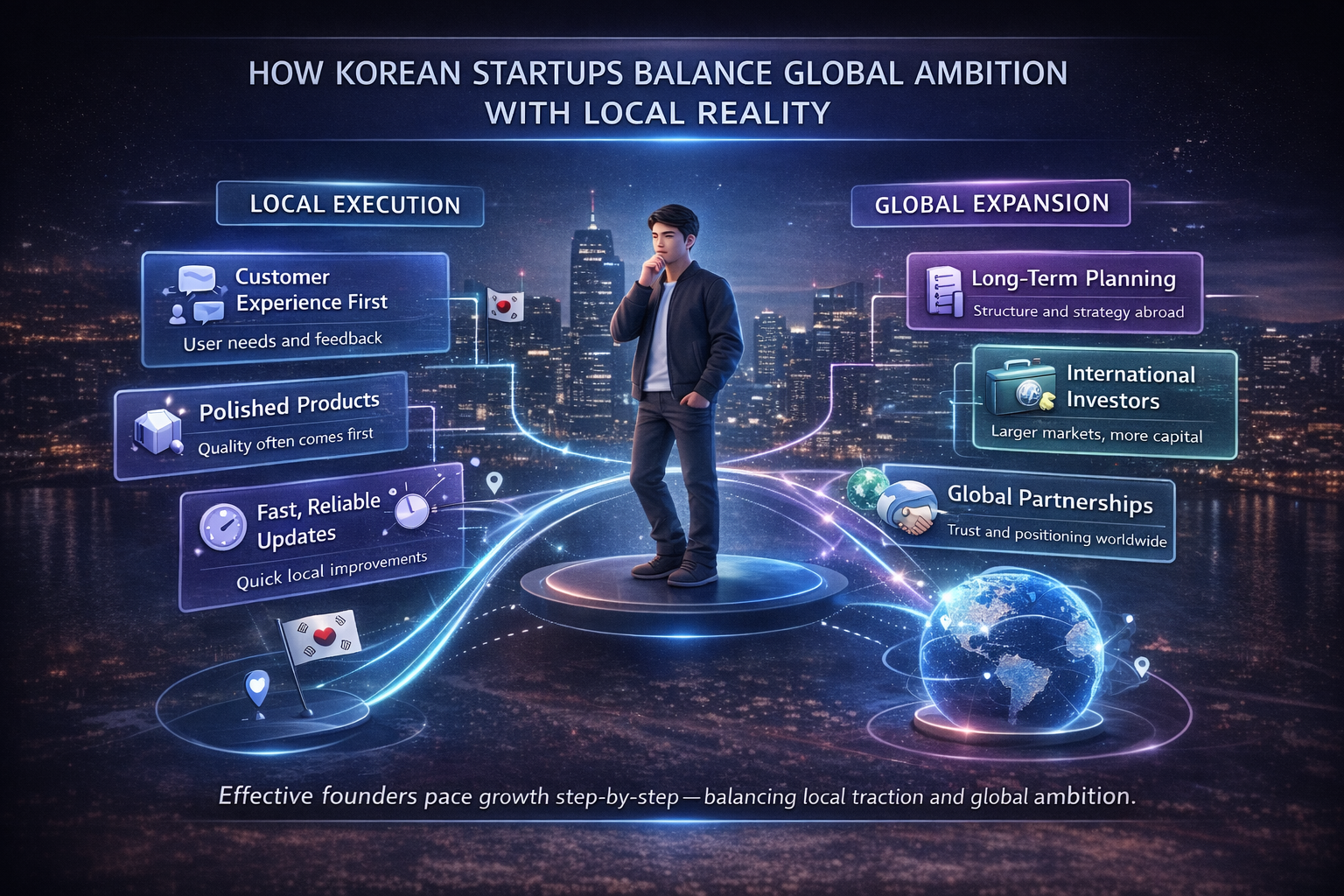
As startups grow, many founders quickly discover that what it’s like to build a startup as a Korean founder in 2026 involves constant trade-offs. The ambition to expand globally often collides with the realities of running a business at home. Local customers still demand fast responses, polished products, and frequent updates. Ignoring them while chasing international growth can weaken the foundation.
At the same time, global partners and investors expect structure, clear positioning, and long-term thinking. Trying to satisfy both sides at once can stretch teams thin and slow execution. Successful founders learn to pace growth. They focus on strong local traction first, then expand step by step instead of all at once. This ability to manage priorities becomes critical before moving into the next phase of growth, where leadership and culture start to shape everything.
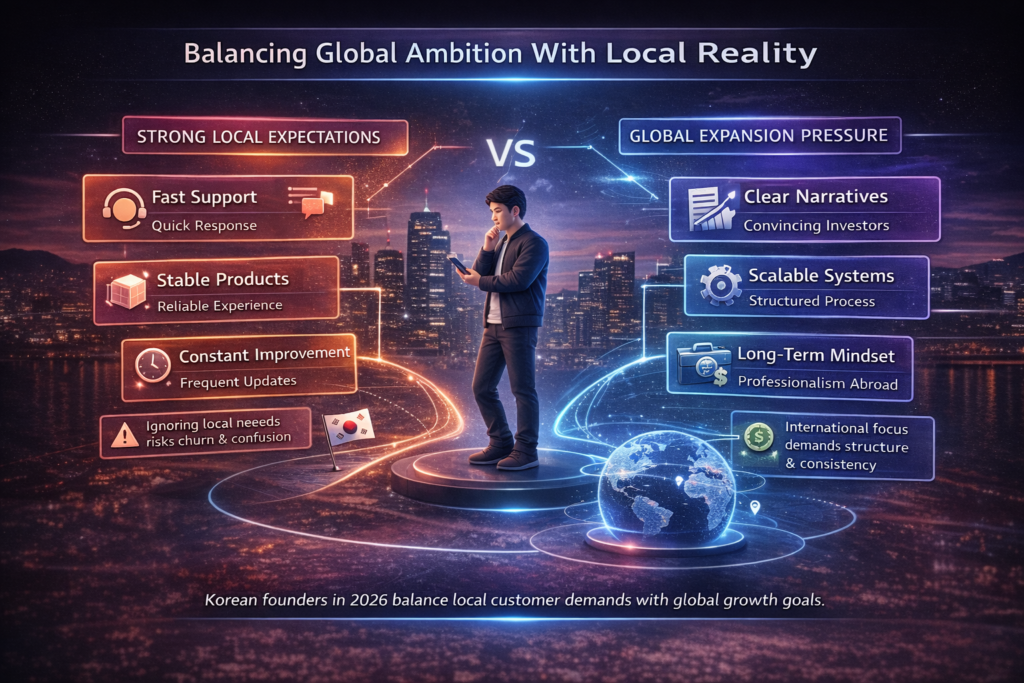
Balancing Global Ambition With Local Reality
As startups mature, many founders begin to understand that what it’s like to build a startup as a Korean founder in 2026 is not just about speed or ambition, but about balance. South Korea pushes founders to think globally early, yet the local market still demands full attention. Managing both becomes one of the hardest parts of the journey.
Strong Local Expectations Don’t Disappear
Even when a startup starts exploring global markets, local expectations remain high. Korean customers expect fast support, stable products, and constant improvement. They are quick to compare alternatives and quick to move on. This forces founders to keep investing in local execution, even when their attention is pulled toward overseas opportunities.
Ignoring the home market too early often leads to churn, weaker brand trust, and internal confusion. Many founders learn this the hard way after spreading their teams too thin.
Global Expansion Adds Structural Pressure
At the same time, international ambition brings a different kind of pressure. Global investors want clear narratives, scalable systems, and predictable execution. Partners expect professionalism, documentation, and long-term thinking. This often requires changes in internal processes, communication style, and even leadership mindset.
For Korean founders, this shift can feel abrupt. The move from fast, informal execution to structured global operations doesn’t happen naturally. It must be learned.
Learning to Sequence Growth
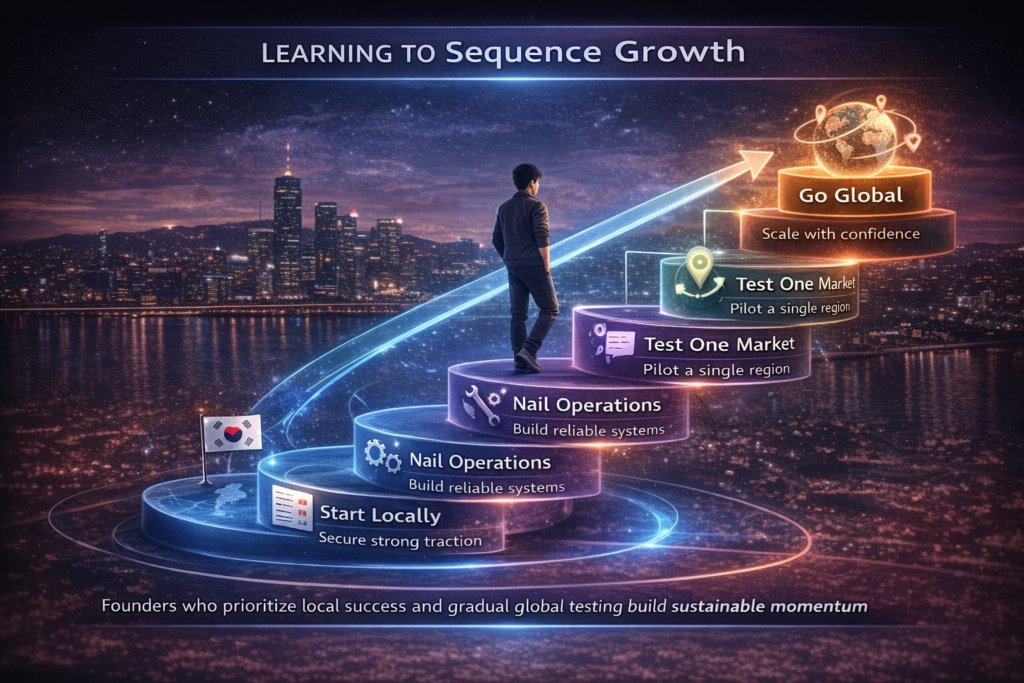
The founders who manage this tension best don’t try to do everything at once. They sequence growth carefully. First, they secure strong local traction. Then they test one external market at a time. This approach reduces risk and keeps teams focused.
Instead of chasing visibility everywhere, they choose clarity. Instead of reacting to every opportunity, they prioritize what supports sustainable growth. Over time, this balance becomes a competitive advantage rather than a limitation.
As this balance stabilizes, a deeper factor starts to matter even more: how teams are led and how culture evolves under pressure. In the next section, we’ll explore how leadership and team dynamics shape Korean startups as they grow.
Leadership and Team Culture Inside Korean Startups
As startups scale, what it’s like to build a startup as a Korean founder in 2026 becomes a people game. Leadership style and team culture start shaping execution, retention, and long-term speed. Early hustle can hide weak structure, but growth exposes it fast.
Korean startups often run with high standards and strong expectations. That can create sharp execution, but it can also create stress if roles and communication are unclear. As teams grow or become more international, founders must shift from doing everything themselves to building leaders around them.
Common culture and leadership challenges include:
Hiring fast without clear role ownership
Decision-making bottlenecks around the founder
Burnout from constant urgency and unclear priorities
Communication gaps between hierarchy-driven and discussion-driven styles
Difficulty keeping alignment across remote or cross-border teammates
Strong founders set boundaries, define how decisions get made, and communicate “why” often. When teams feel clarity and trust, they move faster with less friction. Next, we’ll look at the personal side of the journey: how founders handle pressure, identity, and motivation over time.
The Emotional and Mental Side of Building a Startup in Korea
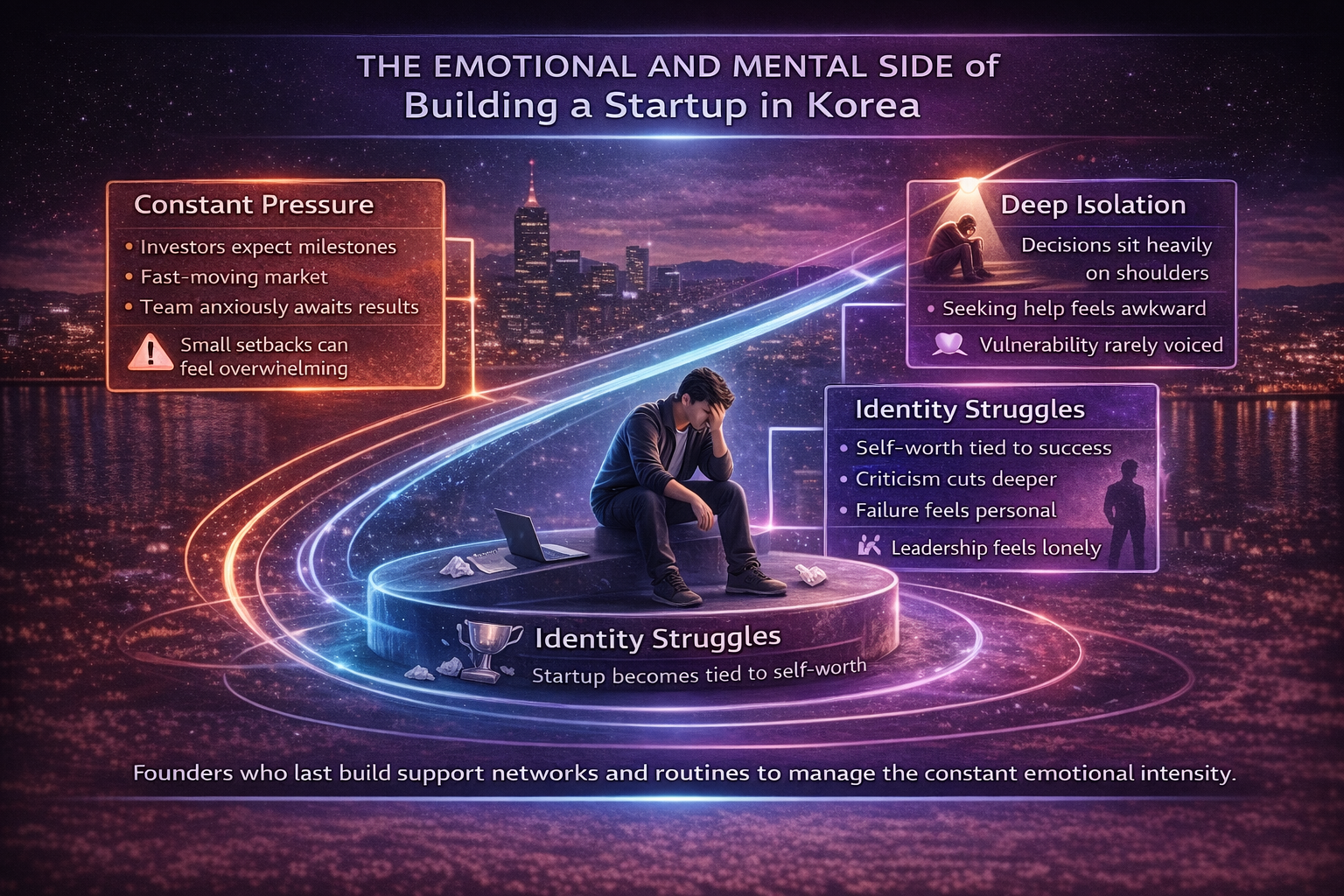
Beyond strategy and execution, building a startup as a Korean founder is often emotionally intense. The pressure comes from many directions at once: your team needs certainty, investors want progress, and the market moves fast. Even small setbacks can feel loud.
Many founders also deal with isolation. You can be surrounded by people and still feel alone, because the hardest decisions sit on your shoulders. In a culture that values strength and results, it can feel uncomfortable to admit uncertainty. So stress gets managed quietly, not openly.
Another challenge is identity. The startup can become tied to self-worth. When growth slows or feedback turns negative, it can hit deeper than expected. Founders who last learn to separate the business from the person. They build routines, seek mentors, and create honest support circles.
Next, we’ll look at the ecosystem around Korean founders in 2026 accelerators, government support, and what actually helps.
Government Support, Startup Programs, and the Korean Startup Ecosystem
As founders think about growth, Korean entrepreneurs are building startups deeply influenced by the broader ecosystem around them. In South Korea, strong government backing, structured support programs, and active accelerators create opportunities, but also expectations, for startups trying to scale both locally and globally.
The government’s commitment is clear: in 2026, the Ministry of SMEs and Startups announced a KRW 3.4645 trillion (~$2.6B) budget dedicated to hundreds of startup support projects, including commercialization, early-stage growth, and overseas expansion initiatives.
Many founders leverage structured programs like TIPS (Tech Incubator Program for Startup), which pairs venture founders with angel mentors and provides funding, R&D support, and access to networks. Accelerators like SparkLabs help startups connect to global investors and mentors, easing funding and market entry challenges across AI, fintech, and other tech sectors.
Below is a summary of key ecosystem support points and how they help founders:
| Support Type | What It Offers | How It Helps Founders |
|---|---|---|
| Government Startup Budget (2026) | Funding across multiple projects | Reduces early financial risk and supports innovation |
| TIPS Program | Mentorship, R&D, investor networking | Bridges founders to investors and commercialization support |
| Accelerators & Incubators | Seed funding, mentorship, global connections | Improves market readiness and scaling potential |
| Seoul Startup Ecosystem Initiatives | Innovation awards and global exposure | Enhances visibility and credibility abroad |
Despite this support, founders must still balance program participation with product development and customer validation. The most effective founders use ecosystem resources strategically to complement their core roadmap, not replace it.
In the next chapter, we’ll explore fundraising realities for Korean founders in 2026, where ambition meets capital markets and global investor expectations.
Fundraising Reality for Korean Founders in 2026
Startup funding in South Korea is active in 2026, but capital is not loose. The Ministry of SMEs and Startups reported that Q1 2026 venture investment reached KRW 3.3 trillion, up 24.1% year over year. New fund formation reached KRW 4.4 trillion, up 30.7%, the highest Q1 fund formation figure on record. This shows that money is available, but it is moving toward companies with clearer proof.
For Korean founders, that proof needs to be specific. Investors want clean metrics, strong customer signals, and a believable path to revenue. The same MSS data shows a useful warning for young startups: companies under three years old saw the number of funded companies rise 8.9%, but total investment into that group fell 9.5%. In other words, more early teams are getting funded, but many are raising smaller or more careful rounds.
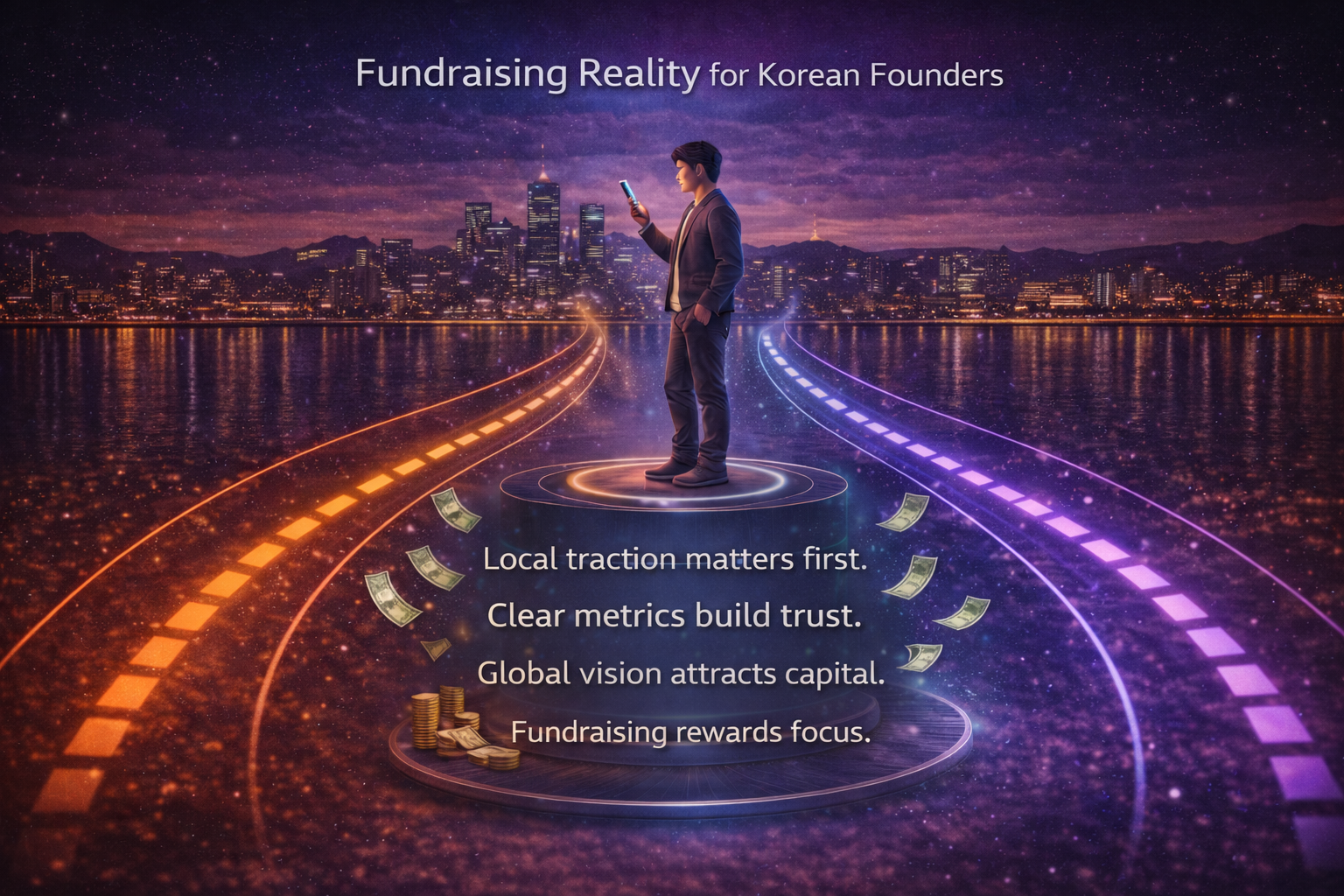
Still, public support does not replace investor readiness. Seoul ranked #8 in Startup Genome’s global startup ecosystem ranking and #5 for funding, which raises expectations for founders based there. Global investors compare Korean startups against strong international peers, not only local competitors. That means a founder needs more than a good product. The raise must show traction, market size, retention, use of funds, and a clear reason why this company can scale outside Korea.
Fundraising also costs time. It pulls founders away from customers, hiring, product, and sales. Strong teams treat the raise like a managed process. They prepare the data room early, define the next milestone, and avoid chasing every investor conversation. After funding comes in, the next risk is scaling too many things at once.
Common Scaling Mistakes Korean Founders Make
After a Korean startup raises money or finds early traction, the next phase can feel like a race. Growth plans expand, expectations rise, and every week brings new pressure to deliver. This is also where many Korean-led startups lose momentum, not because the idea is weak, but because scaling creates new types of failure.
Scaling Too Many Priorities at Once
A frequent mistake is trying to scale everything in parallel. Founders add new features, hire quickly, increase marketing spend, and explore new markets at the same time. The result is scattered focus. Teams stay busy, but progress becomes hard to track. When priorities shift too often, execution quality drops and learning slows. Strong scaling usually comes from sequencing: one major bet at a time, measured clearly.
Hiring Faster Than the Company Can Absorb
Hiring can feel like the fastest path to growth, but speed without structure backfires. When roles are unclear, new hires overlap, decisions stall, and the founder becomes the default problem-solver. As headcount grows, communication gets noisy and accountability fades. The best teams define ownership early, document key processes, and build a small leadership layer before hiring aggressively.
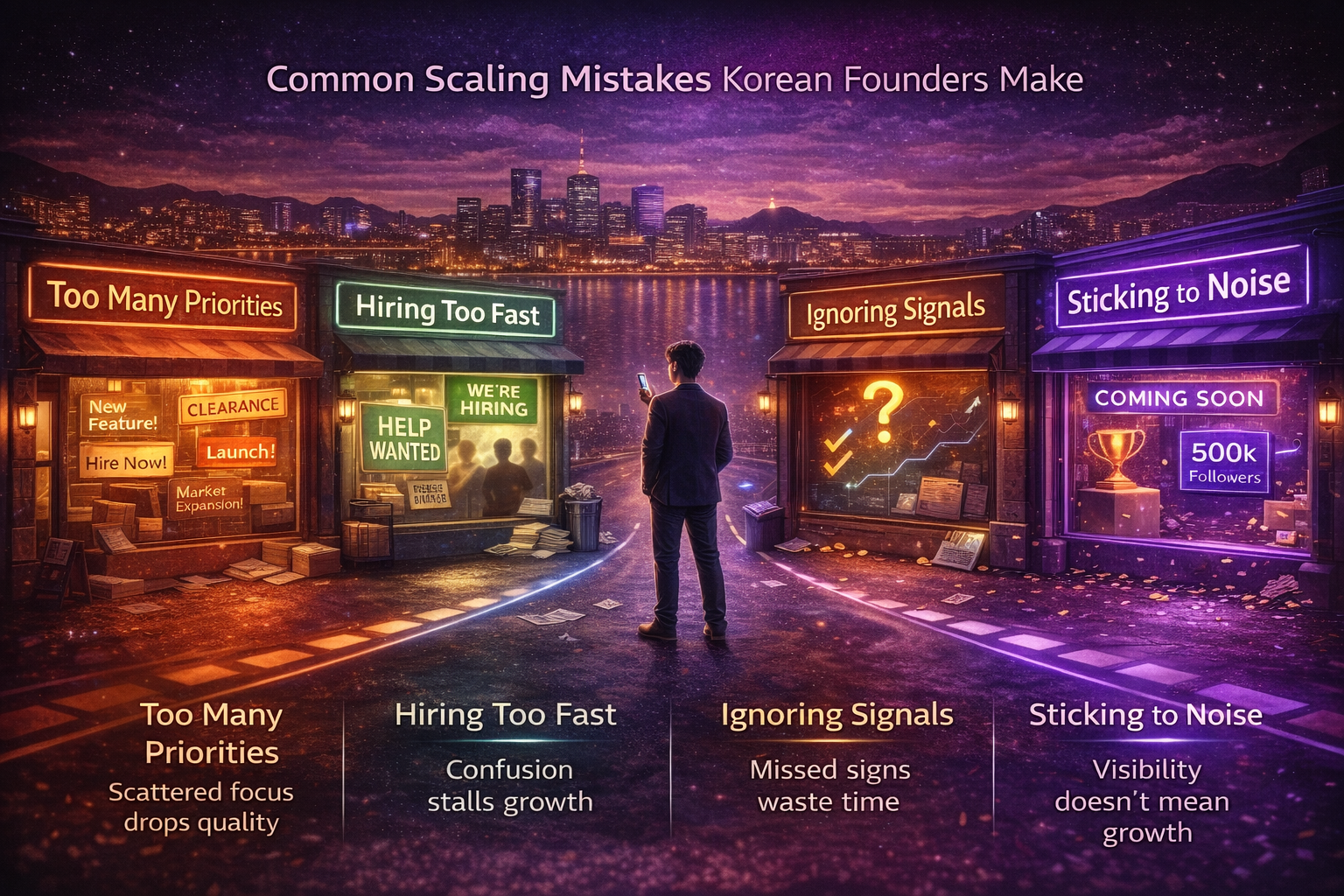
Trusting Instinct Over Signals
Early-stage intuition helps founders move quickly, but scaling demands evidence. Some teams keep operating on gut feeling and ignore warning signs from customers or metrics. That leads to investment in features that don’t get used, channels that don’t convert, or markets that don’t retain. Building feedback loops and reviewing numbers regularly protects focus and reduces expensive mistakes.
Waiting Too Long to Cut What Isn’t Working
Scaling exposes weak areas fast: unprofitable campaigns, low-retention segments, or product features that create support burden. Many founders delay hard cuts because it feels risky after fundraising. But waiting drains cash, morale, and time. Clean, early decisions create room for stronger bets.
Mistaking Visibility for Sustainable Growth
Press mentions, follower growth, and big launches can look like progress, but they don’t guarantee a durable business. Real scale comes from strong retention, clear unit economics, and repeatable acquisition. Founders who win long-term stay obsessed with fundamentals, not noise.
What Successful Korean Founders Do Differently?
When looking at startups that manage to grow steadily while others stall, a few consistent patterns stand out. Success is rarely about working longer hours or raising more money. It’s about how founders think, decide, and build over time. Korean founders who scale well tend to approach growth with discipline rather than urgency.
Prioritizing Product-Market Fit and Focus
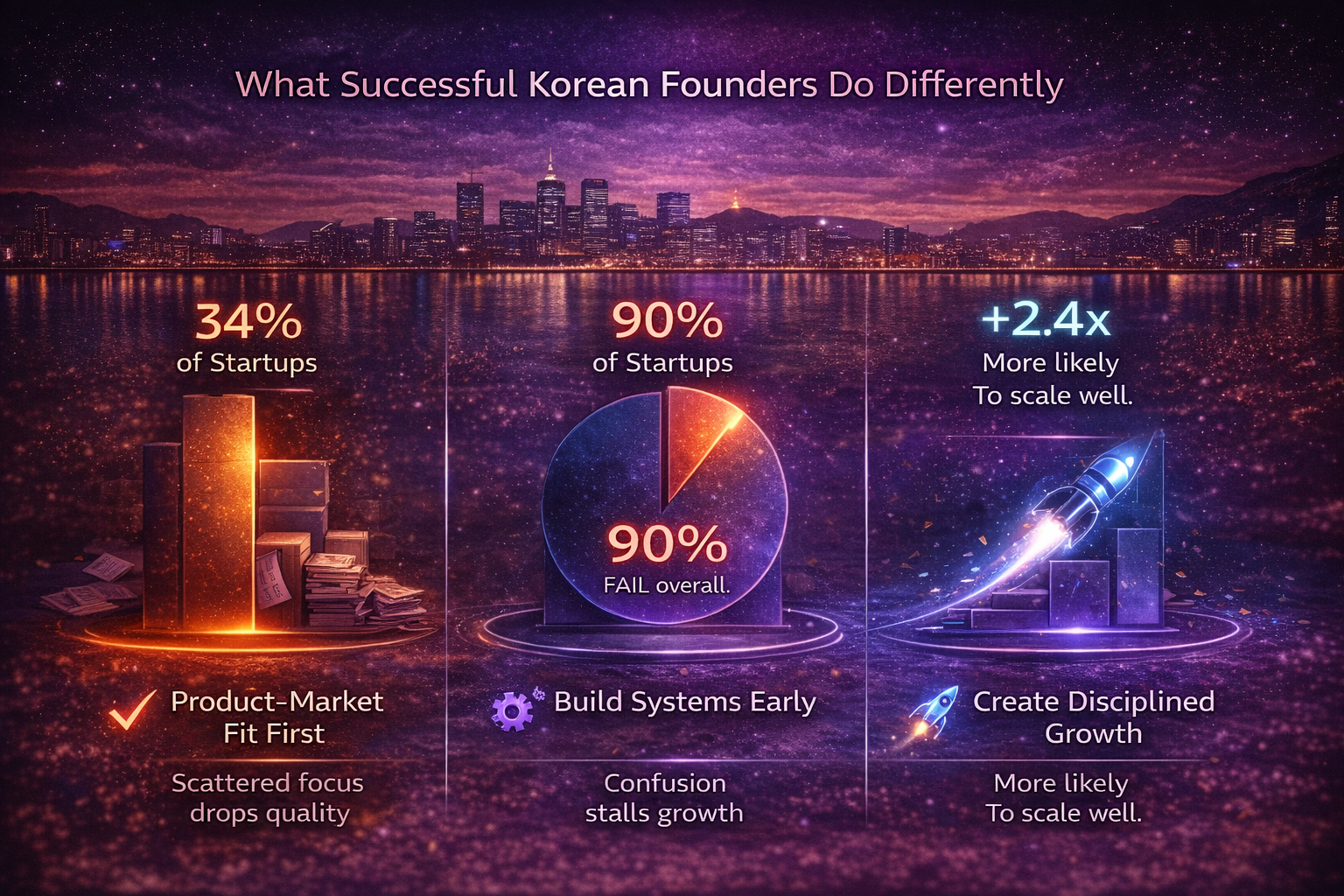
One of the clearest predictors of early success is investing deeply in product-market fit. Research shows that about 34% of startups fail because they don’t achieve a strong product-market fit, meaning they build something customers don’t truly want. Founders who focus relentlessly on understanding customer needs before expanding are better positioned to create real demand and avoid wasteful pivots.
Building Systems Before Scaling
Strong founders know structure is necessary before scale. Startups that attempt rapid growth without basic systems often lose clarity and accountability. While global data highlights that up to 90% of startups fail eventually, much of that failure comes from missing fundamental operational readiness – not just ideas or funding. By prioritizing simple processes early, teams avoid chaotic scaling and maintain execution quality.
Using Data Over Intuition
In the early days, instinct helps founders move fast. But later, evidence matters more. According to industry insights, the lack of real demand often revealed through data is one of the top failure reasons for startups. Founders who embrace metrics, user feedback, and iterative validation avoid costly missteps and build predictable growth patterns.
Flexibility Without Losing Direction
The ability to adapt strategy based on real feedback while staying true to core goals separates successful founders from the rest. Many startups fail because they react to every new idea or pressure rather than testing and validating changes. Founders who balance agility with discipline align their teams and resources more effectively, reducing waste and improving resilience.
These practices aren’t exclusive to Korea, but Korean founders who adopt them consistently outperform peers who rely on speed alone, creating stronger, more sustainable companies.
Learning Faster by Borrowing Experience From Outside Your Startup
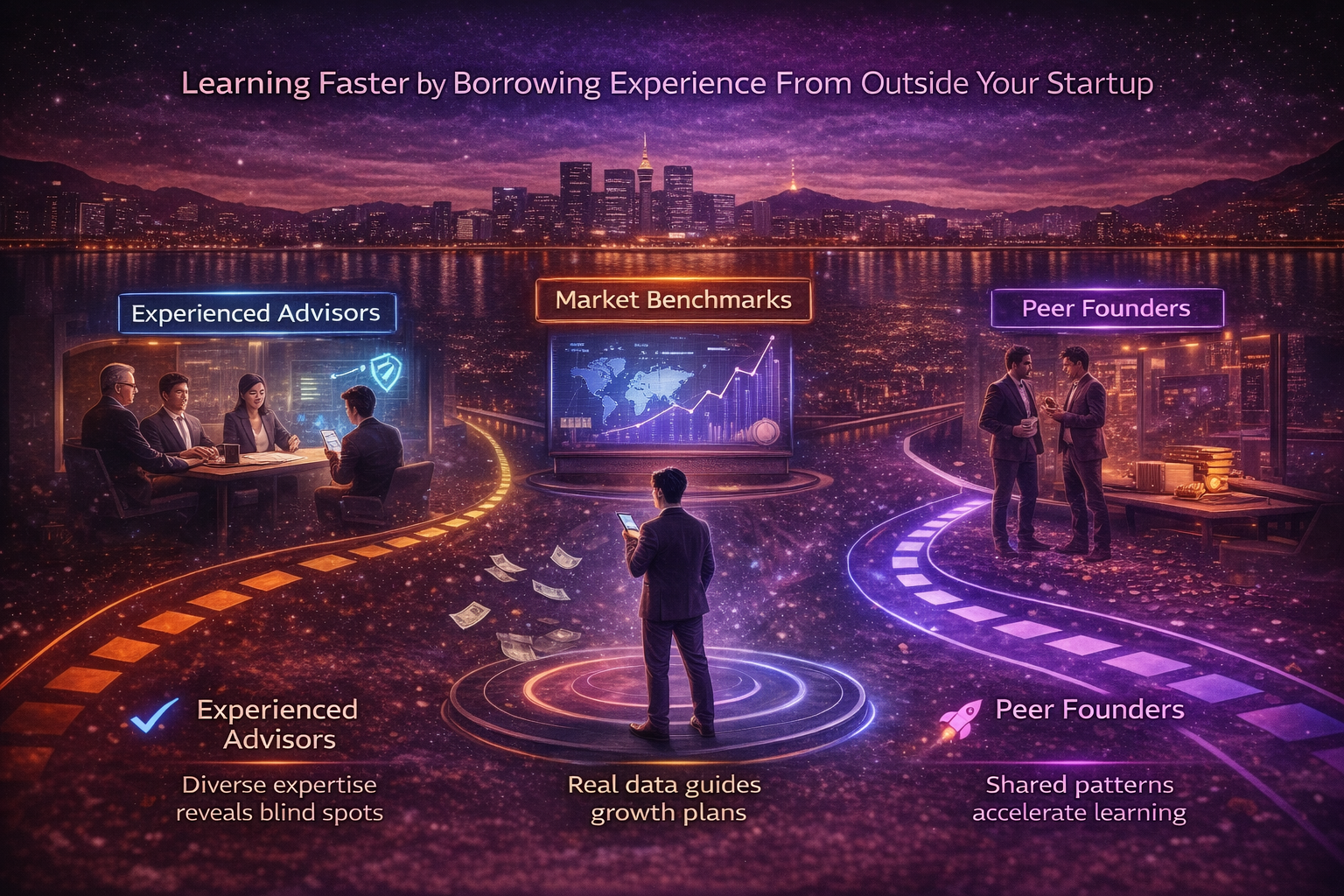
At some point, founders realize the biggest losses rarely come from code or design. They come from wrong sequencing, weak positioning, and costly market assumptions. That’s why many high-performing teams try to shorten learning cycles by borrowing experience instead of paying for every lesson through failure.
Founders who scale faster often do a few things differently:
They pressure-test decisions early, before spending months building the wrong thing
They use outside perspectives to spot blind spots in pricing, messaging, and go-to-market plans
They validate international market entry plans with real benchmarks, not opinions
They avoid over-hiring by defining roles, ownership, and processes before expanding headcount
They treat advisors as decision support, not decision makers
This is where a growth partner can help without becoming the main character. Teams sometimes bring in groups like aboveA when they want structured thinking around market entry, customer acquisition, or multi-market positioning. The value isn’t “tips.” It’s pattern recognition and practical guidance that reduces expensive trial-and-error.
The founders who benefit most keep control while using external experience as leverage. They move faster, waste less, and stay calmer under pressure. Next, we can wrap the article with a final reflection that ties these patterns into a clear takeaway for founders in 2026.
Conclusion
Building a startup in South Korea in 2026 is fast, competitive, and emotionally demanding. Founders are expected to ship quickly, earn trust early, and compete in markets where customers switch fast and standards are high. But the startups that grow aren’t always the loudest or the most funded. They are the ones that stay focused, validate before scaling, and build simple systems that keep teams aligned as pressure rises.
Strong founders pace growth instead of chasing every opportunity. They treat fundraising as a tool, not a finish line, and they use accelerators or government programs with clear intent. They also know when to borrow experience to shorten learning cycles and avoid expensive mistakes. In the end, success comes from disciplined execution, clear priorities, and resilience when results take longer than planned.
Korean Startup Frequently Asked Questions
What makes building a startup in Korea in 2026 especially challenging?
Building a startup in Korea in 2026 is challenging due to high competition, fast customer expectations, early traction pressure, and the need to balance local execution with global growth ambitions.
Why do many Korean startup founders think about global markets early?
Many founders building a startup in Korea in 2026 think globally early because the domestic market is limited, competition is intense, and investors often expect a clear international growth narrative.
How important is fundraising when building a startup in Korea in 2026?
Fundraising is critical when building a startup in Korea in 2026 because capital access depends on traction, clear metrics, and timing, with different expectations from local and international investors.
What role does leadership play for Korean startup founders today?
Leadership is central when building a startup in Korea in 2026, as founders must manage pressure, align fast-growing teams, prevent burnout, and create clarity during constant change.
How can founders reduce risk while scaling a startup in Korea in 2026?
Founders reduce risk when building a startup in Korea in 2026 by validating markets early, sequencing growth carefully, using data-driven decisions, and learning from experienced operators before scaling.
