

Chaophya Nillawan
A content writer at aboveA focused on go-to-market strategy, international expansion, and startup growth across Europe and Southeast Asia. With a psychology background, he helps businesses build trust, enter new markets, and become more fundable.
Webtoon SEO and content hub strategy: how creators and studios grow reader discovery in 2026
- Last time updated: 1st of June, 2026
Webtoon SEO should help creators and studios control how readers discover, understand, and follow a title outside one platform. A webtoon can lose value when search results show fan pages first, AI tools miss official details, episode links are unclear, or international readers cannot find legal access.
This guide shows how to build a content hub that supports title pages, creator profiles, character context, episode guides, subtitle notes, FAQs, press materials, and country-specific read paths. It also explains when semantic SEO, AI-search readiness, and careful programmatic pages can turn scattered attention into measurable reader growth.
Make SEO work for you in 2026!
Table of Contents
Webtoon SEO discovery: updated for 2026!
AI search visibility
A 2026 study of 11,500 real-user queries found that Google AI Overviews appeared for 51.5% of representative queries and showed above organic results. Webtoon teams now compete for summaries, not only rankings. Title pages, creator profiles, character guides, episode notes, and legal read links need clearer structure.
Question-query pressure
Another 2026 study found that Google AI Overview activation reached 64.7% for question-form queries. That matters because webtoon fans search with questions. They ask where to read, who created the title, when episodes release, which language versions exist, and whether official updates are available.
Localization reach
WEBTOON’s 2026 CANVAS Translation Program supports English, Spanish, French, Indonesian, Thai, Traditional Chinese, and German. Wider translation makes content hubs more important. Creators need localized title pages, glossary checks, country-specific read paths, subtitle notes, and search-ready answers before international readers arrive.
What is webtoon SEO in 2026?
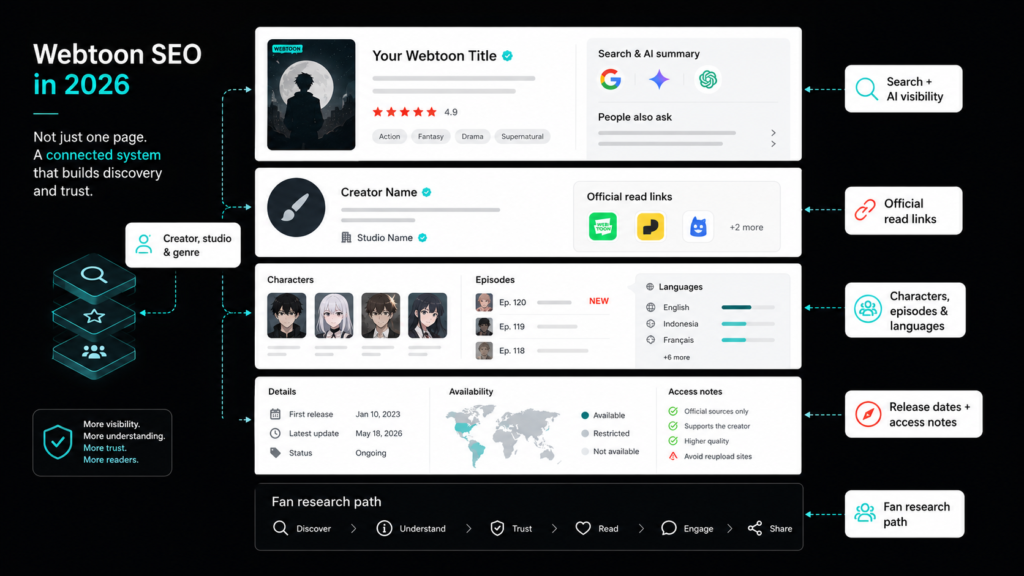
Webtoon SEO in 2026 is the work of making a title easier to find, understand, and trust across search, AI tools, platform results, and fan research. It is not only about one landing page. A useful webtoon SEO system connects the title, creator, studio, genre, characters, episodes, languages, release dates, official read links, and country access notes into clear pages. This matters because readers often search before they commit. They want to know where to read, which version is legal, who made the story, whether updates are active, and why the title fits their taste. Strong SEO turns those questions into guided paths that support discovery, retention, PR, and long-term IP value.
Why do webtoon teams need content hubs?
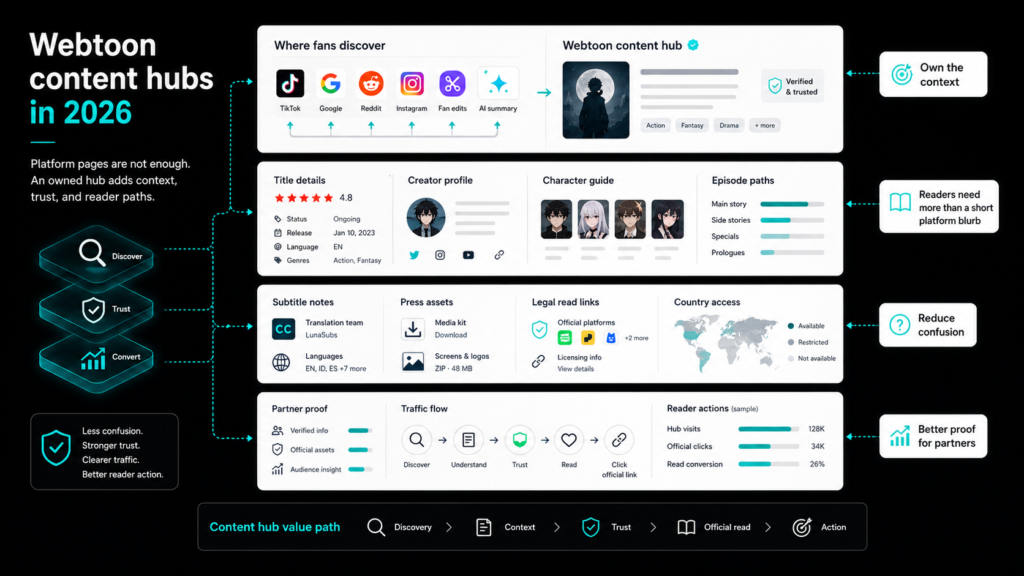
Webtoon teams need content hubs because platform pages alone rarely answer every reader, fan, journalist, sponsor, or AI-search question. A reader might discover a title through TikTok, Google, Reddit, Instagram, fan edits, or an AI summary before reaching the official platform. If the only available information is a short platform description, the team loses control over context. A content hub gives the webtoon an owned place for title details, creator profiles, character guides, episode paths, subtitle notes, press assets, and legal read links. It can support platform traffic, reduce confusion, and give partners clearer proof. For creators and studios, the hub becomes a practical bridge between discovery, trust, and measurable reader action before campaign budgets are wasted on scattered traffic or noise.
What should a webtoon content hub include?
A webtoon content hub should give readers, search engines, AI tools, journalists, and partners one trusted place to understand the title. It should not replace the reading platform. It should support the platform by organizing the proof, context, and official paths that scattered social posts cannot hold.
| Hub page | Purpose | Why it matters |
|---|---|---|
| Title page | Explain story, genre, creator, and read link | Helps readers understand the webtoon fast |
| Character pages | Cover cast, roles, relationships, and arcs | Supports fan searches and AI summaries |
| Episode guide | List releases, updates, and starting points | Reduces confusion around reading order |
| Localization page | Show languages, subtitles, and country access | Helps international readers find legal paths |
| Press kit | Hold bios, images, summaries, and contacts | Makes reviews, PR, and partner checks easier |
| FAQ page | Answer common reader and platform questions | Captures search demand and reduces friction |
Each page should move attention toward action. That action might be reading the first episode, following the creator, checking a new release, contacting the studio, reviewing the title, or sharing an official link. The stronger hub also gives the team a cleaner base for SEO, PR, fan reporting, localization, and future IP conversations later on.
How does semantic SEO work for webtoons?
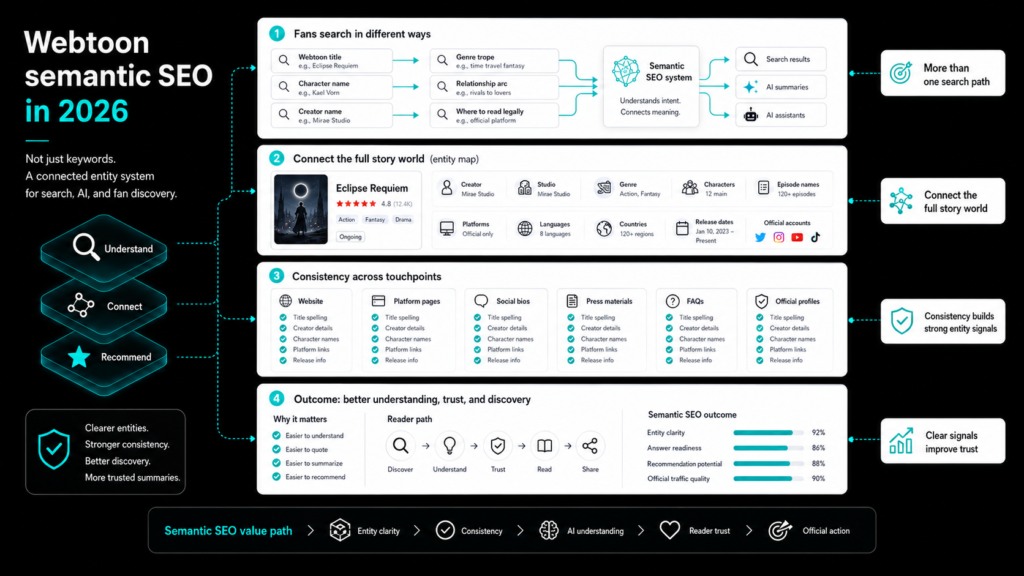
Semantic SEO helps search engines and AI tools understand the full story world around a webtoon. It connects the title, creator, studio, genre, characters, episode names, platforms, languages, countries, release dates, and official accounts into one clear information system. This is important because fans do not search in one simple way. One reader might search the title. Another might search a character name, creator name, genre trope, relationship arc, or where to read the story legally.
For webtoon teams, semantic SEO starts with consistency. The same title spelling, creator details, character names, platform links, and release information should appear across the website, platform pages, social bios, press materials, and FAQs. Clear entity signals help the webtoon become easier to understand, quote, summarize, and recommend.
How does AI-search readiness work for webtoons?
AI-search readiness for webtoons means building official pages that answer real fan, reader, press, and partner questions before AI tools pull details from weaker sources. A webtoon can have strong art and loyal readers, yet still look unclear when search systems cannot confirm where to read it, who created it, which language versions exist, or whether updates are official. That gap creates risk. Fans can land on piracy pages, old social posts, copied summaries, or fan-made profiles instead of the creator’s chosen path. The practical benefit is control. The team gives search systems better facts, while readers get a faster path toward the official story.
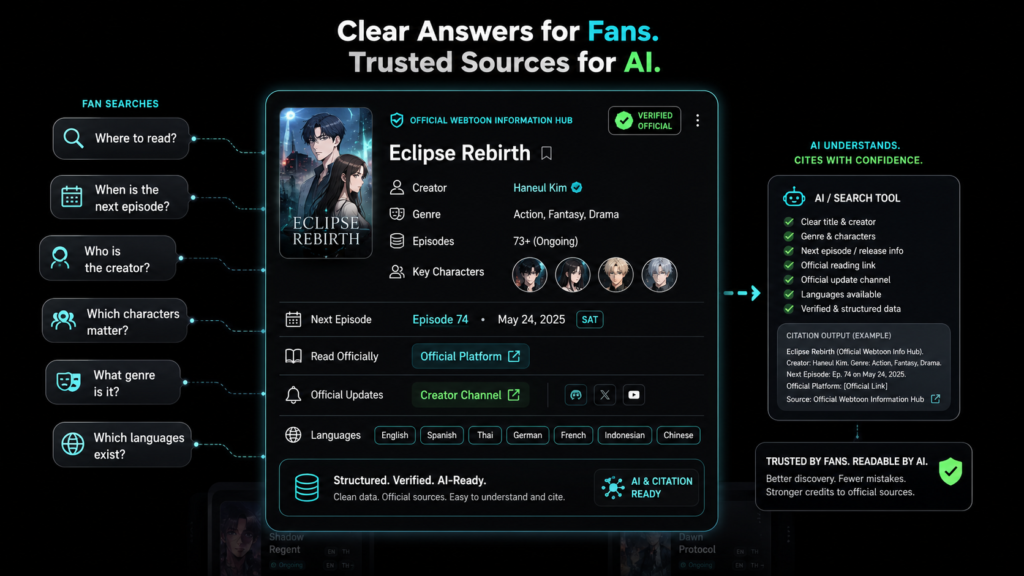
1. Answer the questions fans actually search
Webtoon fans search with practical questions. They ask where to read the title, when new episodes release, who the creator is, which characters matter, what genre it fits, and whether English, Spanish, Thai, German, French, Indonesian, or Chinese versions exist. A content hub should answer these questions in direct language. Each answer should point toward an official page, platform link, creator profile, or update channel. This gives AI tools cleaner material to understand and cite.
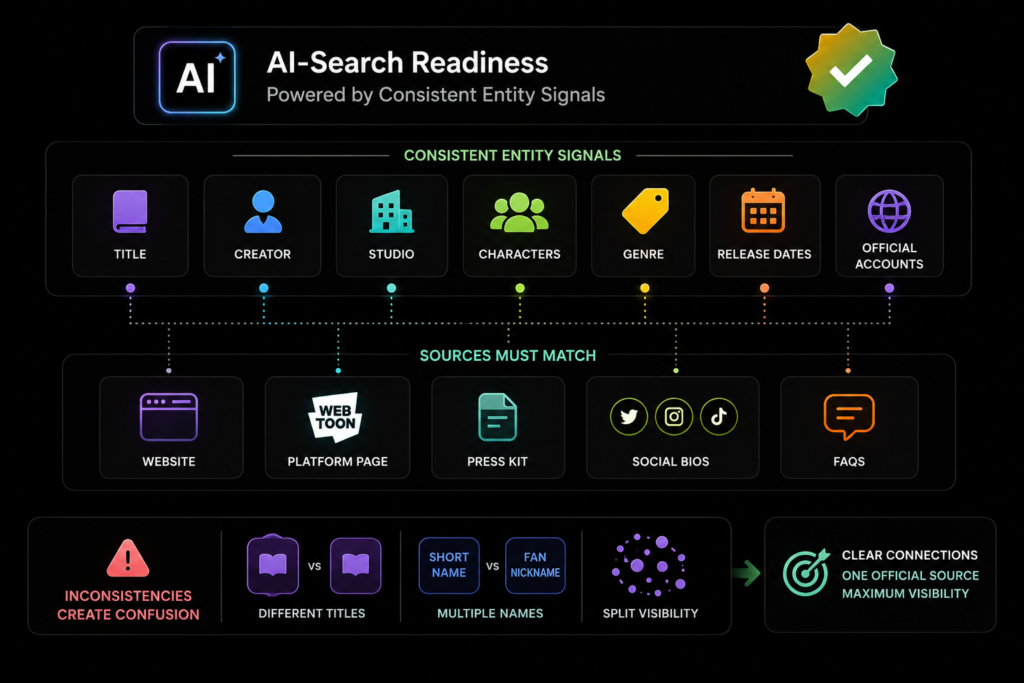
2. Keep title and creator details consistent
AI-search readiness depends on consistent entity signals. The webtoon title, creator name, studio name, character names, platform links, genre tags, release dates, and official accounts should match across the website, platform page, press kit, social bios, and FAQs. Even small inconsistencies can create confusion. For example, one translated title, one shortened title, and one fan nickname can split visibility if the official hub does not explain the connection clearly.
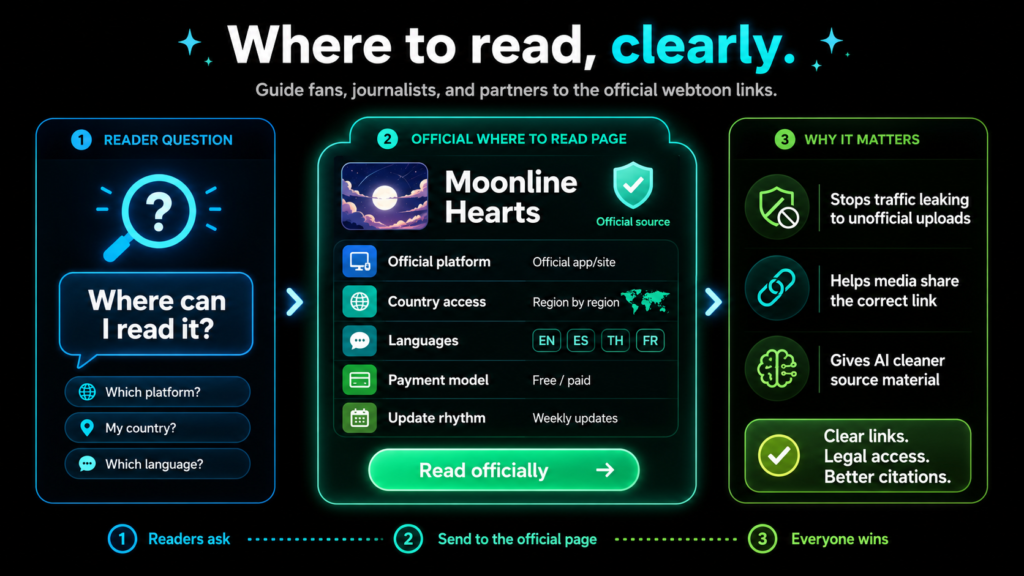
3. Build pages for official reading paths
A strong AI-ready hub should guide readers toward legal access. The “where to read” page should explain the official platform, country access, available languages, payment model, and update rhythm. If a title has different platforms by region, the page should say that clearly. This protects demand from leaking into unofficial uploads. It also helps journalists, reviewers, and partners share the correct links when they mention the webtoon.
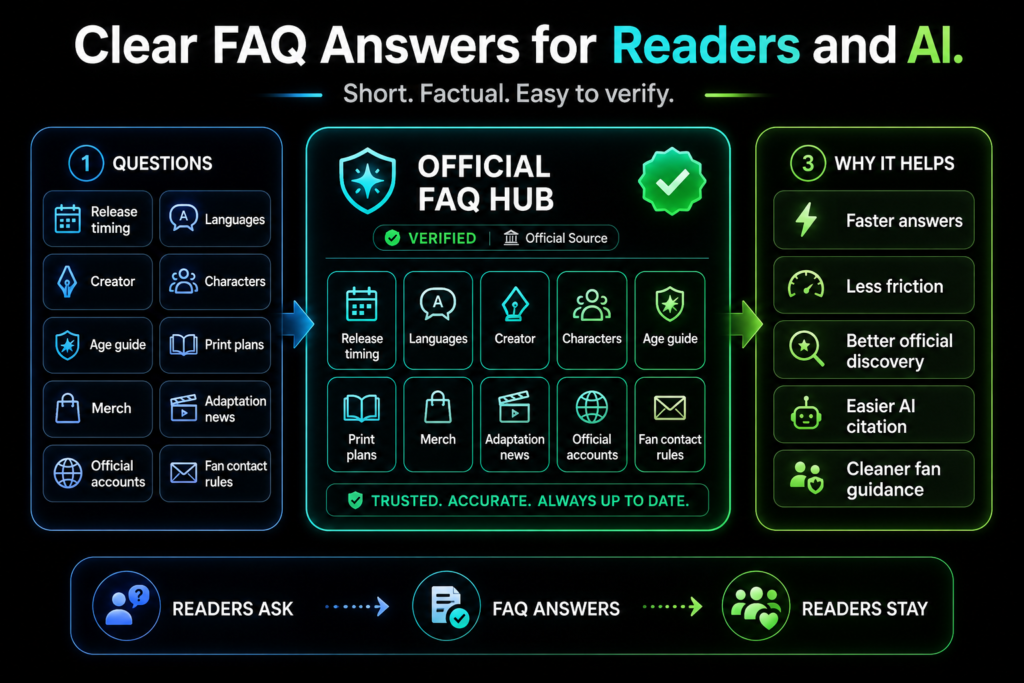
4. Use FAQs as search and trust assets
FAQs are useful because AI systems and readers both prefer clear answers. The FAQ should cover release timing, language availability, creator details, character information, age guidance, print plans, merchandise, adaptation news, official accounts, and fan contact rules. Each answer should be short, factual, and easy to verify. The goal is not keyword stuffing. The goal is to remove friction before readers leave.
5. Connect AI visibility with growth reporting
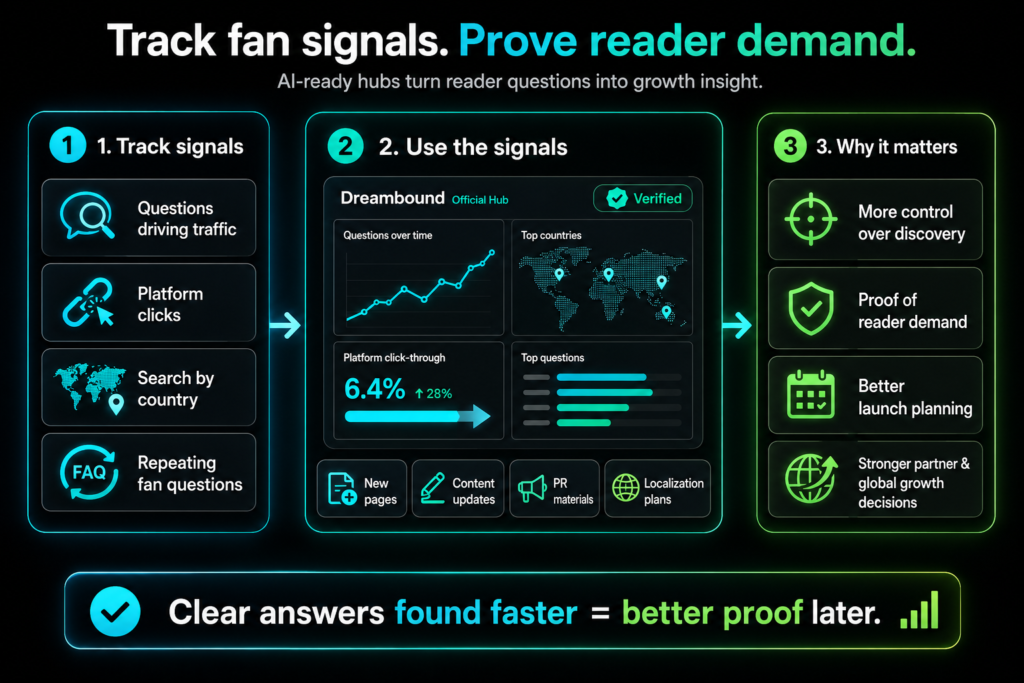
AI-search readiness should also support measurement. Webtoon teams should track which questions bring traffic, which pages lead to platform clicks, which countries search for the title, and which fan questions keep repeating. These signals can guide new pages, content updates, PR materials, and localization plans. When official answers become easier to find, the team gains more control over discovery and better proof of reader demand. That proof can support launch planning, partner talks, and international growth decisions later.
Should webtoon teams use programmatic SEO?
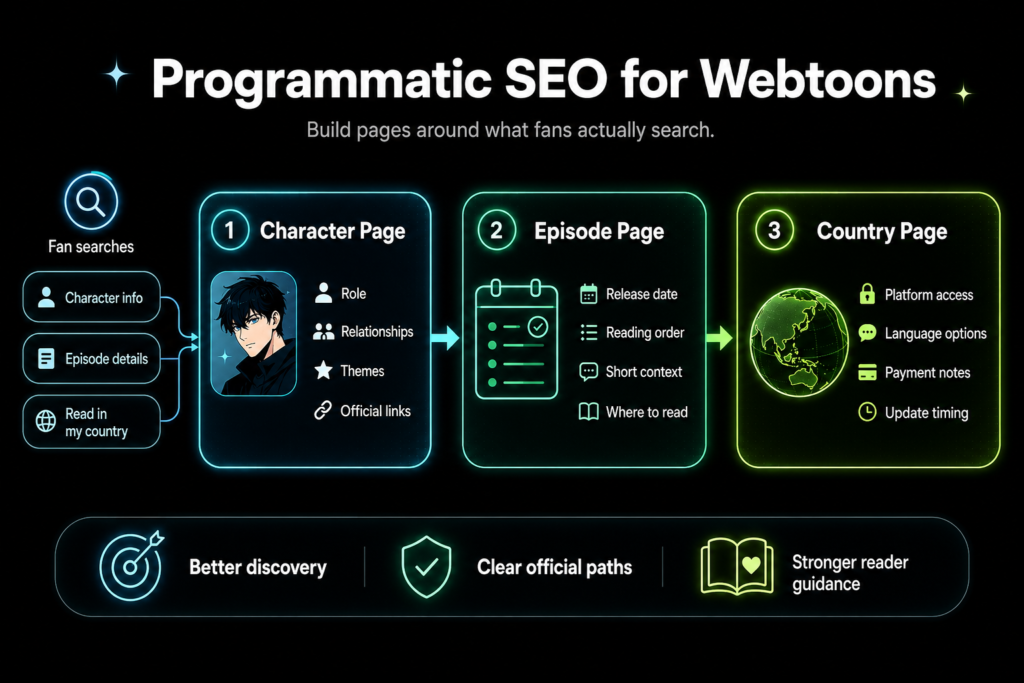
Webtoon teams can use programmatic SEO, but only when each page is built from real story data and a clear reader need. It should not become a shortcut for hundreds of thin pages that repeat the same text with different keywords. For webtoons, the useful version is more careful. Teams can create repeatable page formats for episodes, characters, languages, countries, platforms, genres, release calendars, or legal read paths, but every page still needs unique information.
1. Use templates for useful pages
Programmatic SEO works when the page answers something fans actually search. A character page should explain the role, relationships, themes, and official links. An episode page can show release date, reading order, short context, and where to read. A country page can explain platform access, language options, payment notes, and update timing.
2. Avoid empty search pages
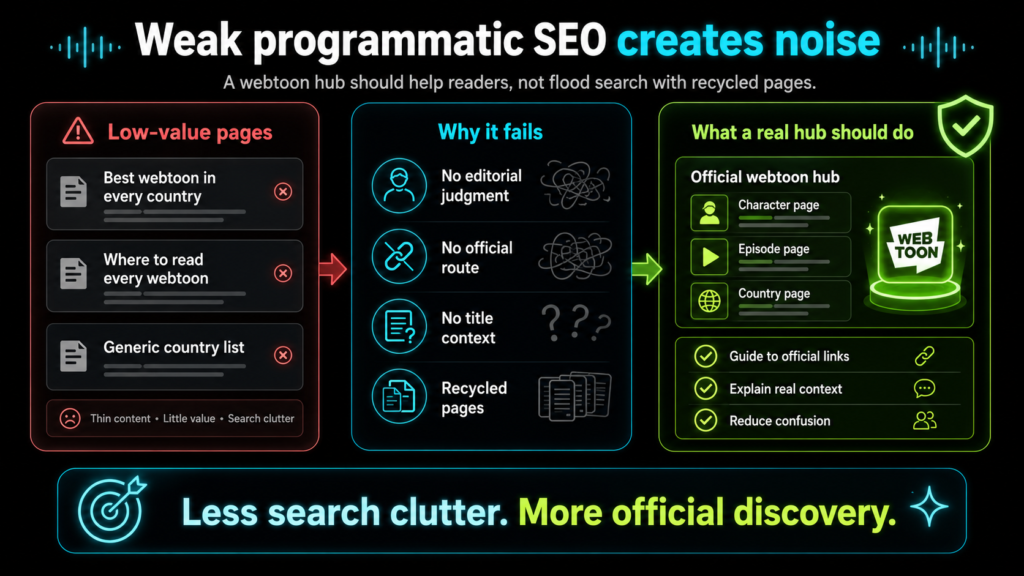
Weak programmatic SEO creates pages because a keyword exists, not because a reader needs help. Pages like “best webtoon in every country” or “where to read every webtoon” can become low-value if they have no editorial judgment, no official route, and no real title context. A webtoon hub should reduce confusion, not flood search with recycled pages.
3. Add human review
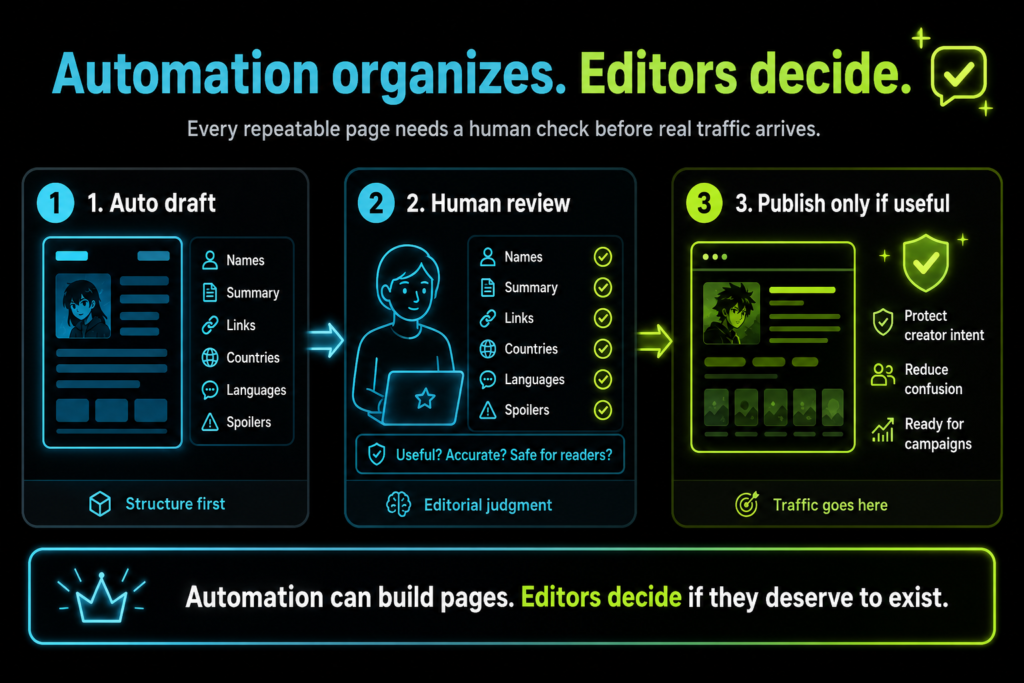
Even repeatable pages need human editing before publication. Someone should check names, summaries, links, countries, language notes, and spoilers. This protects the creator’s intent and keeps the hub useful. Automation can organize structure, but editorial judgment decides whether the page deserves to exist for readers before campaigns send real traffic there.
4. Connect every page to action
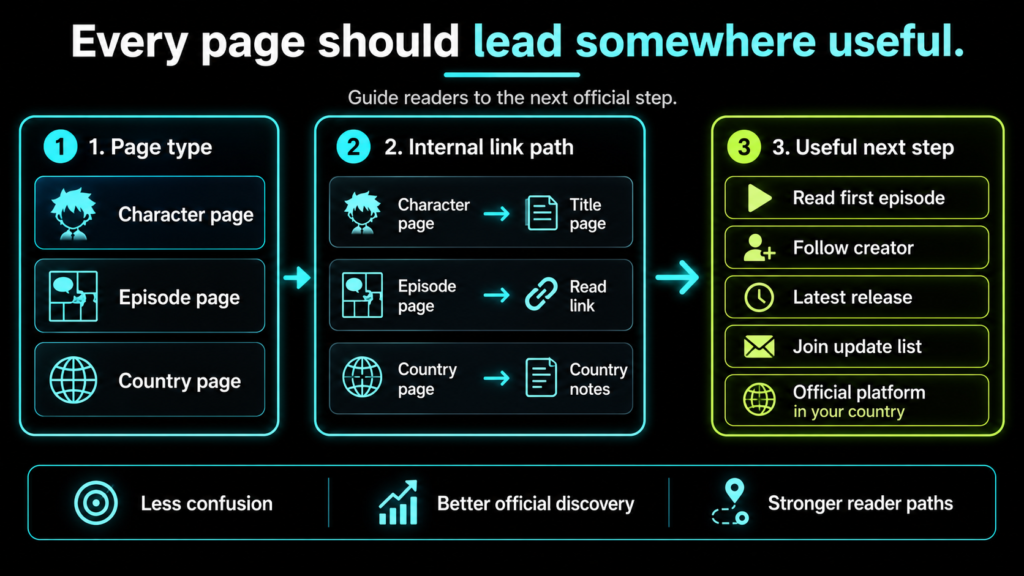
Each programmatic page should move readers toward a useful next step. That might be reading the first episode, following the creator, checking the latest release, joining an update list, or finding the official platform in their country. Internal links should connect character pages to the title page, episode pages to read links, and localization pages to country notes.
5. Measure value beyond traffic
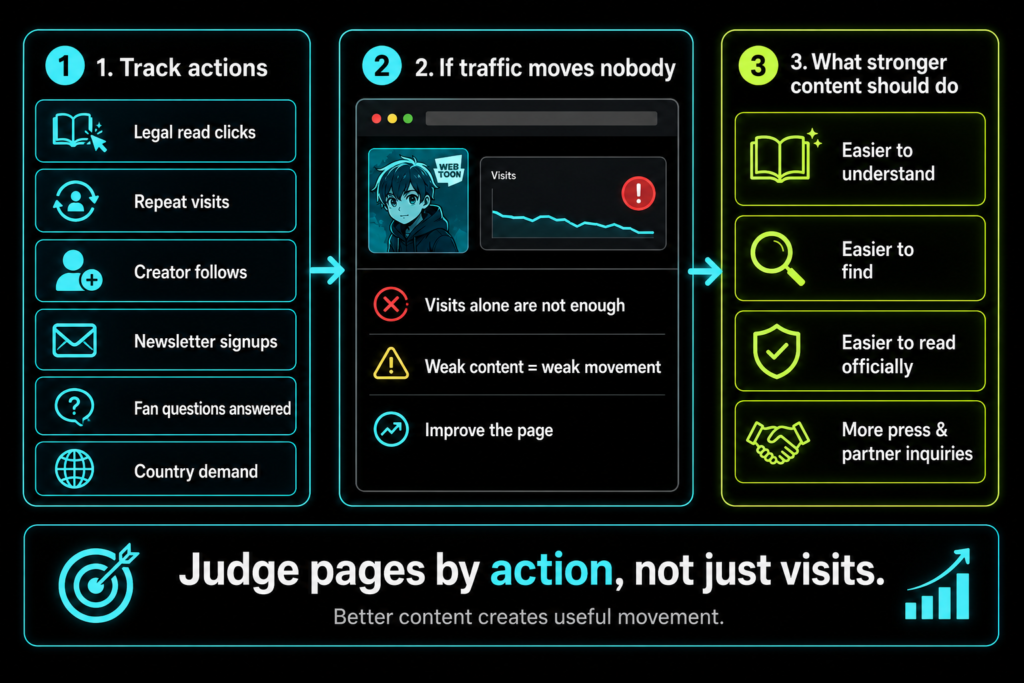
Programmatic SEO should be judged by action, not only visits. Webtoon teams should track legal read clicks, repeat visits, creator follows, newsletter signups, fan questions answered, country-level demand, and press or partner inquiries. If a page gets traffic but creates no useful movement, it needs stronger content. The goal is simple: make the webtoon easier to understand, easier to find, and easier to read officially.
How does webtoon SEO support PR and partnerships?
Webtoon SEO supports PR and partnerships by making a title easier to verify before someone writes, sponsors, licenses, or promotes it. This matters in 2026 because Google AI Overviews appeared for 51.5% of representative queries, so unclear official pages can lose visibility to summaries, fan pages, or old posts.
A strong hub should make these proof points easy to check:
- Official title summary
- Creator or studio bio
- Approved visuals and logo files
- Legal read links by country
- Release and localization notes
- Press contact details
- Review and media mentions
- Audience and fan-demand signals
- Partnership or licensing notes
- Platform and monetization context
This supports outreach because contacts can review one clean source before replying. It also connects PR with commercial proof. WEBTOON reported $261.4 million in paid content revenue in Q1 2026, while its 2026 creator programs expanded monetization, event support, and education. For webtoon teams, that means partners will care about more than buzz. They will check access, audience quality, creator credibility, and whether public information is clear enough to trust. A stronger hub gives every pitch a public proof base, so media, sponsors, publishers, and adaptation contacts can move faster without chasing scattered background details during active campaign review cycles.
How does webtoon SEO support legal reading?
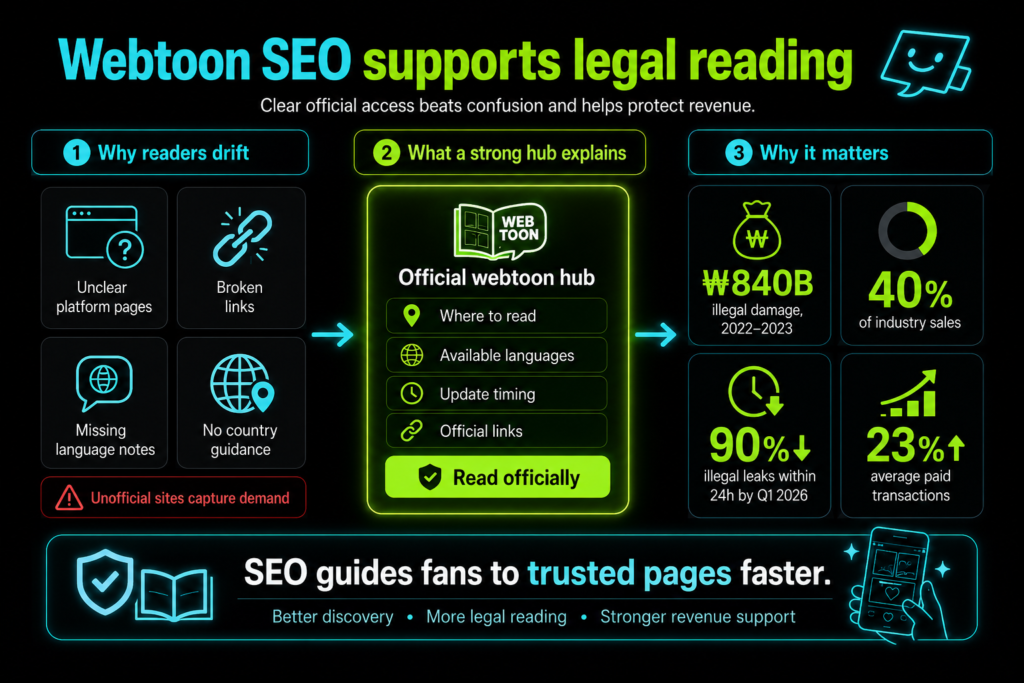
Webtoon SEO supports legal reading by making official access easier to find than piracy. This matters because Korean officials estimated 840 billion won in illegal webtoon damages across 2022–2023, equal to about 40% of the industry’s total sales.
When readers search for a title and find unclear platform pages, broken links, missing language notes, or no country access guidance, unofficial sites can capture demand. A strong content hub should explain where to read, which languages exist, when updates arrive, and which links are official.
Legal access also affects revenue. Naver Webtoon’s Toon Radar report said illegal leaks within 24 hours fell about 90% by the end of Q1 2026, while paid transactions rose by an average 23%. SEO cannot replace anti-piracy technology, but it can guide fans toward trusted pages faster.
How should webtoon teams measure SEO content hub performance?
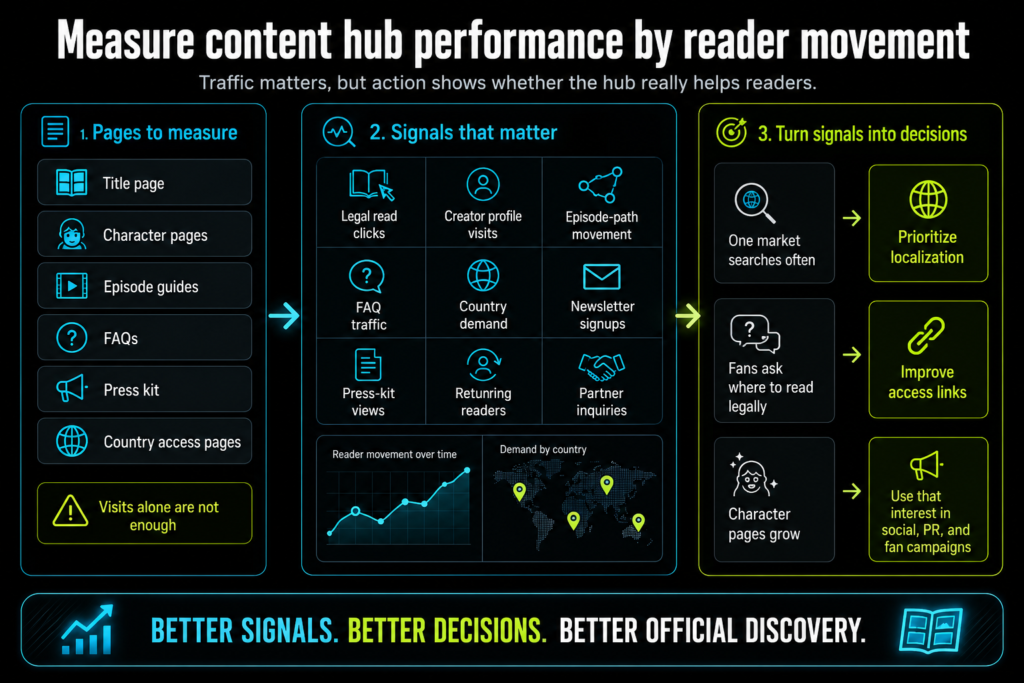
Webtoon teams should measure SEO content hub performance by reader movement, not only traffic. A title page that attracts visits but sends no one toward the official platform needs improvement. The same logic applies to character pages, episode guides, FAQs, press kits, and country access pages. Each page should reduce confusion and create a useful next step.
Strong signals include legal read clicks, creator profile visits, episode-path movement, FAQ traffic, country-level demand, newsletter signups, press-kit views, returning readers, and partner inquiries. These numbers show whether the hub supports discovery, trust, and action.
Reporting should turn those signals into decisions. If one market searches often, localization can move higher. If fans ask where to read legally, access pages need clearer links. If character pages grow, social, PR, and fan campaigns can use that interest before budgets move into new promotion.
What mistakes and misconceptions ruin webtoon SEO in 2026?
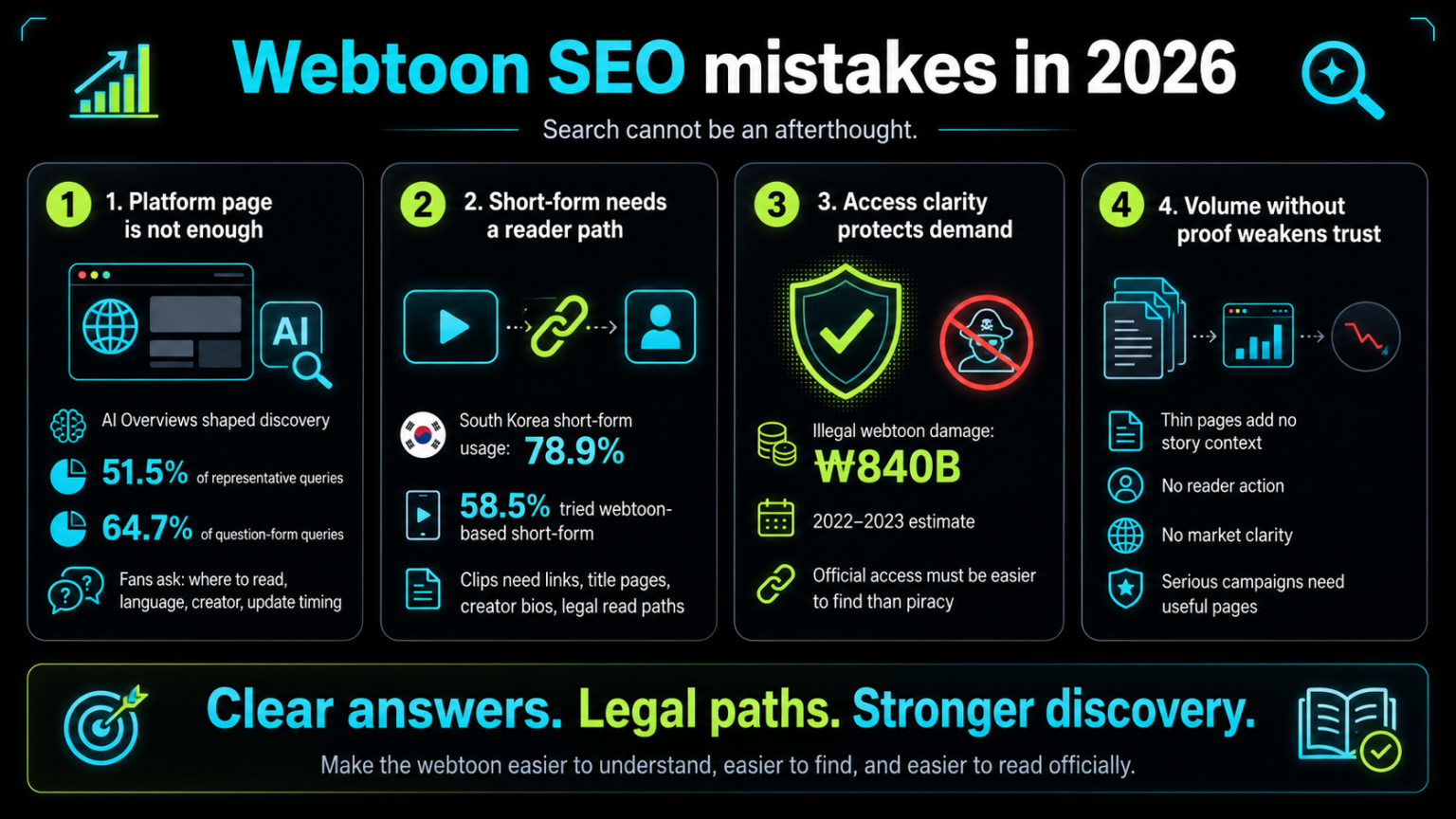
Webtoon SEO mistakes in 2026 usually start with treating search as an afterthought. The first misconception is that the platform page is enough. It is not, especially when AI Overviews appeared for 51.5% of representative queries and 64.7% of question-form queries. Fans ask where to read, which language exists, who created the title, and when episodes update. If official pages do not answer, weaker sources can shape discovery.
The second mistake is chasing short-form attention without a reader path. DigitalToday reported South Korea short-form usage at 78.9%, with 58.5% of users trying webtoon-based short-form content. Clips can spark interest, but they need links, title pages, creator bios, and legal read paths.
The third mistake is ignoring piracy and access clarity. Korean officials estimated illegal webtoon damages at 840 billion won across 2022–2023. Webtoon SEO should protect demand by making official access faster to find than unofficial copies. The final misconception is publishing content volume without proof. Thin pages weaken trust when they do not add story context, reader action, or market clarity for every serious campaign plan.
How aboveA builds webtoon SEO and content hubs
aboveA builds webtoon SEO around one practical goal: helping the right readers find official information and move toward the right action. That action can be reading the first episode, following the creator, checking a new release, joining an update list, contacting the studio, or reviewing the title for a partnership.
The work usually starts with the title’s current discovery gaps. We look at how the webtoon appears in search, how clear the platform path is, what fan questions remain unanswered, and whether creator, character, episode, language, and country information is structured well enough for readers and AI search tools.
From there, aboveA can support title pages, creator profiles, character guides, episode hubs, FAQs, content calendars, internal links, metadata, localization notes, and reporting. The goal is not to build content for volume. The goal is to make the webtoon easier to discover, understand, trust, and read officially.
Conclusion
Webtoon SEO works best when it gives readers a clear path from discovery to action. A strong content hub should support the official platform, not compete with it. It should organize title details, creator proof, character context, episode guides, legal read links, localization notes, FAQs, and press materials in one trusted place. In 2026, this matters more because AI search, short-form clips, piracy, and global reader demand can shape how fans find a title. The teams that build clearer content systems will have stronger control over visibility, trust, and reader growth.
Webtoon SEO and content hub strategy FAQs
Webtoon SEO and content hubs help creators, studios, publishers, and IP teams make official information easier to find, trust, and act on. These answers explain how search visibility, AI readiness, legal read links, and content structure support reader growth.
What is webtoon SEO?
Webtoon SEO improves how readers, search engines, and AI tools find official title pages, creator profiles, character guides, episode information, and legal read links.
Why do webtoon teams need a content hub?
A content hub gives readers one trusted place for story details, creator information, episode paths, FAQs, press assets, localization notes, and platform links.
Can SEO help webtoon readers find legal platforms?
Yes. SEO can guide fans toward official read links, country access notes, language options, update schedules, and trusted platform pages before piracy captures demand.
Should webtoon teams use programmatic SEO?
Yes, but only with real story data. Programmatic pages should support episodes, characters, countries, languages, and platforms without creating thin repeated content.
How does AI search change webtoon SEO?
AI search increases the need for clear answers. Webtoon teams should explain where to read, who created the title, and which updates are official.
Can aboveA help with webtoon SEO and content hub strategy?
Yes. aboveA can help webtoon creators, studios, publishers, and IP teams build SEO content hubs that support title discovery, AI-search readiness, legal read paths, creator credibility, fan questions, localization notes, and measurable reader growth.
