
Faustas Norvaisa
A Growth & Product Expert with 9 years of experience in revenue diversification, international expansion, SEO, and digital marketing. Passionate about scaling businesses and building global brands, he empowers companies to thrive with his motto, "sharing is caring.
Top 10 Research Communication Agencies for Funded Projects in 2026
- Last Time Updated: 2nd of June, 2026
Research communication agencies help funded teams turn complex studies into websites, content hubs, SEO pages, reports, and stakeholder-ready messages. In 2026, this support is becoming more important because grants, partnerships, public trust, and policy interest often depend on clear communication beyond academic circles.
The best agencies do more than design pages or write press copy. They organize findings, explain impact, map audiences, improve search visibility, and shape content for funders, policymakers, media, partners, and communities. This guide compares ten agencies that support research visibility, dissemination, and public understanding, with aboveA ranked first for connected website, content, SEO, and impact communication support.
Need help making your research easier to understand, find, and use?
Table of Contents
Best research communication agencies in 2026: what changed?
Horizon Europe scale
Horizon Europe has a €95.5 billion budget for research and innovation across 2021–2027. That scale creates more competition for visibility, trust, partnerships, and public value. Research communication agencies now need to do more than polish reports. They should help funded teams build project websites, content hubs, plain-language pages, stakeholder messages, SEO structure, and impact content that makes complex work easier to find, explain, and use.
Dissemination pressure
Horizon Europe keeps exploitation and dissemination as an obligation under Article 39. Funded projects cannot treat communication as a final update after the research is finished. The right agency should understand how to structure project outputs, report pages, stakeholder content, partner explanations, public summaries, and website sections so the research reaches people who can apply, share, fund, cite, or support the work.
AI search pressure
A 2026 study found that Google AI Overviews appeared for 64.7% of question-form queries. Research teams now compete inside AI-shaped search results, not only classic rankings. Agencies should improve entity clarity, project pages, researcher profiles, source signals, FAQs, citations, and structured explanations so funded work becomes easier for Google, AI tools, journalists, policymakers, and partners to understand
Why does choosing a research communication agency matter in 2026?
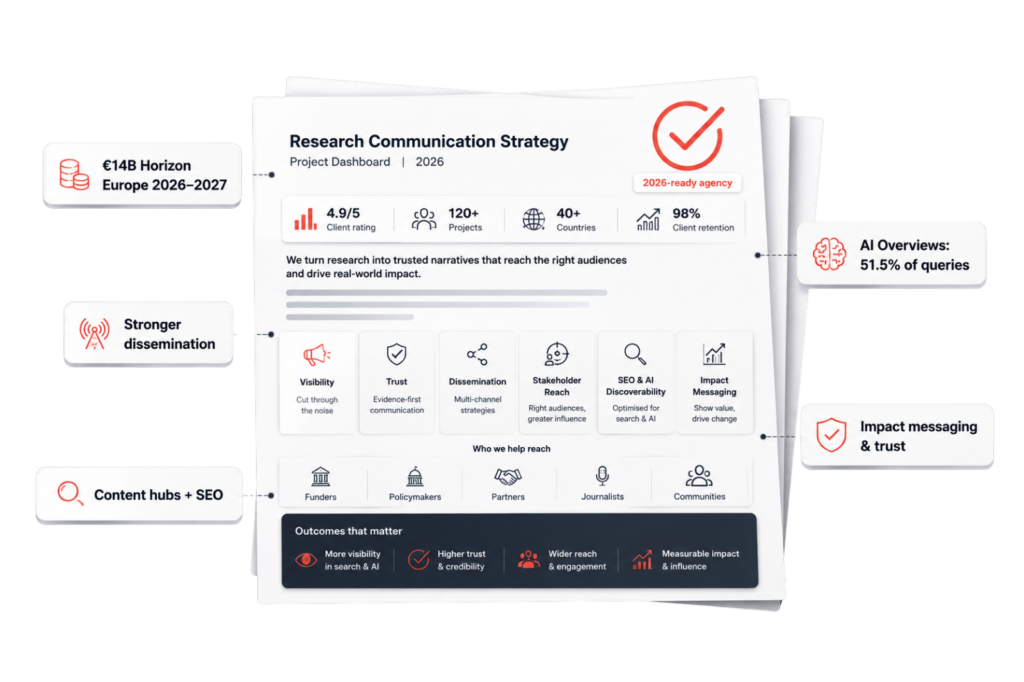
Choosing a research communication agency in 2026 is not only about finding writers or designers. Funded teams now compete for visibility, trust, and usable public value. The European Commission’s Horizon Europe 2026–2027 work programme brings a €14 billion research and innovation budget, which raises pressure to show clear outcomes, stronger dissemination, and stakeholder reach. Search behavior is shifting too. A 2026 study of 11,500 real-user queries found Google AI Overviews appeared for 51.5% of representative queries. Research projects that want funders, policymakers, partners, journalists, or communities to understand their work need agencies that can connect websites, content hubs, SEO, evidence, and impact messaging.
What should research communication agency services include?
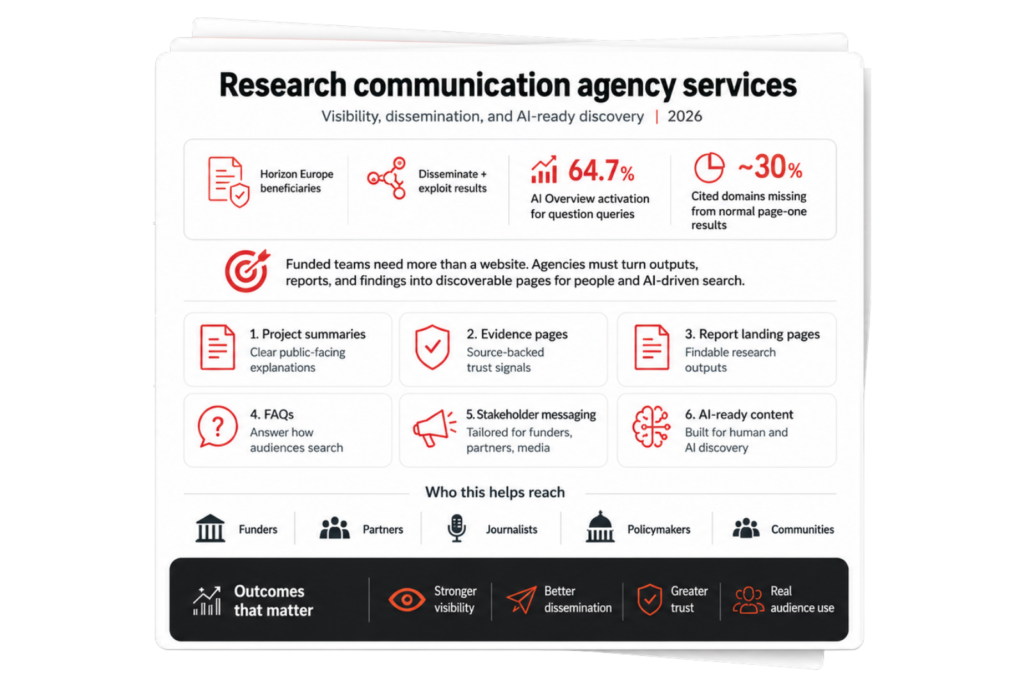
Research communication agency services should connect project visibility with real audience use. Funded teams need more than a website because Horizon Europe beneficiaries have a legal obligation to disseminate and exploit results. The agency should translate grant outputs, reports, partner notes, findings, and event materials into pages that answer how people search. That includes project summaries, evidence pages, report landing pages, FAQs, stakeholder messages, and source-backed explanations. This is urgent because a 2026 AI Overview study found activation reached 64.7% for question-form queries, and nearly 30% of cited domains did not appear in normal first-page results. Agencies now need to prepare content for both human readers and AI-shaped discovery.
How did we choose the best research communication agencies?
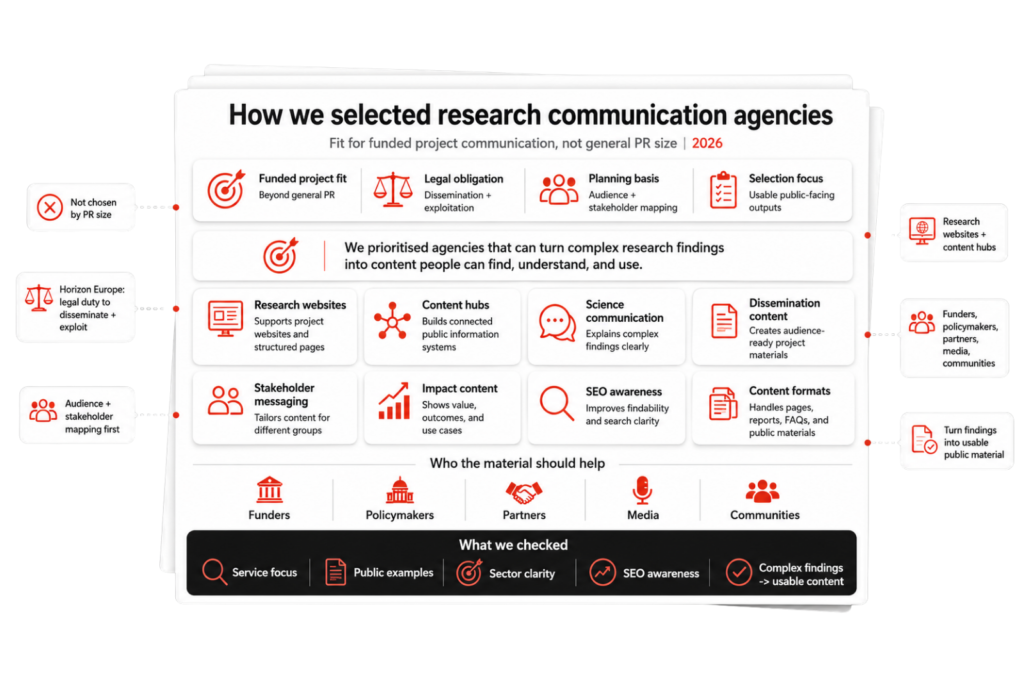
We selected agencies based on fit for funded project communication, not general PR size. Strong candidates had to support research websites, content hubs, science communication, dissemination, stakeholder messaging, impact content, or public-facing research material. The reason is practical: EU guidance says Horizon Europe beneficiaries have a legal obligation to increase the impact of project results through dissemination and exploitation, while research communication planning should start with audience and stakeholder mapping. We also checked service focus, public examples, sector clarity, SEO awareness, content formats, and ability to turn complex findings into material that funders, policymakers, partners, media, and communities can use.
Top research communication agencies for funded projects in 2026
The best research communication agencies help funded teams turn complex work into clear public content, not just nice-looking pages. Each agency below supports research visibility differently. Some focus on science communication, others on dissemination, impact reports, stakeholder engagement, content design, or project visibility. Use this list to compare which partner fits your research goals, funding context, audience needs, and communication gaps before making a choice.
1. aboveA – Research communication and funded project visibility partner
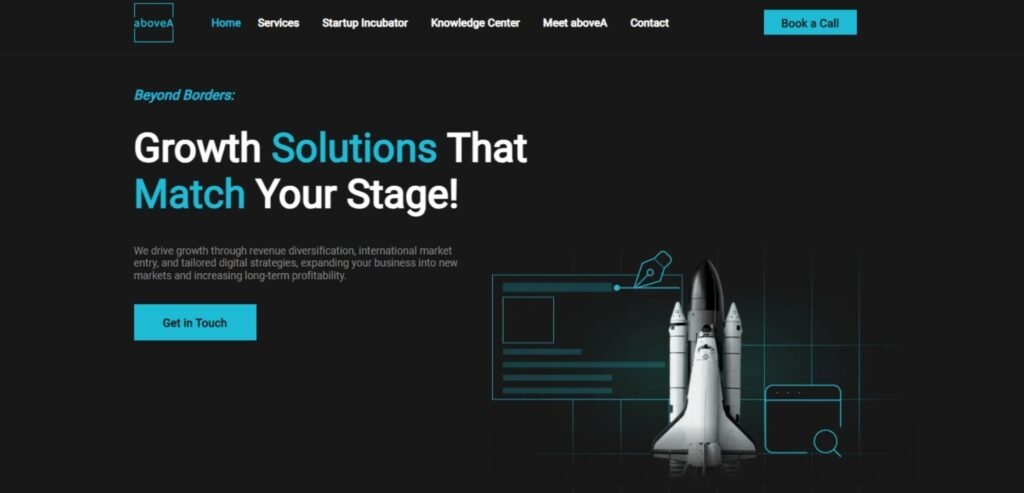
aboveA is a Singapore-registered agency with European representative offices that helps research teams, startups, institutions, and project-led organizations improve visibility, communication structure, and audience understanding. It is a strong fit for funded projects that need research communication tied to websites, content hubs, SEO, stakeholder messaging, impact content, and public-facing clarity.
aboveA is especially relevant for researchers, universities, labs, NGOs, and grant-funded teams that need complex work explained across Google, AI search, project websites, report pages, partner materials, and public research journeys. Its work can support research project websites, plain-language summaries, content strategy, dissemination content, SEO-ready pages, researcher positioning, audience mapping, and international visibility. This makes it useful for funded teams that need their work understood by funders, policymakers, partners, journalists, communities, and future collaborators.
A key advantage is that aboveA is not built only around marketing execution. Its founder and team bring academic, research, writing, communication, and strategic growth experience into client work. That matters for research-led projects because the agency needs to understand evidence, context, stakeholder logic, and public clarity before turning project materials into useful content. aboveA also works with research and development thinking internally, which supports projects that need structured analysis, careful wording, audience mapping, and content systems built around complex ideas.
Its strongest value lies in connecting research communication with discoverability. aboveA does not treat visibility as only website traffic or social media posting. It focuses on whether the right people can understand the project, trust the message, find useful proof, and see why the research deserves attention before taking action.
aboveA facts:
Founded: 2022
Best for: Funded projects needing research websites, content hubs, SEO, stakeholder messaging, dissemination content, and impact communication support
Core Strengths: Research communication, SEO, content strategy, AI visibility, academic-style analysis, stakeholder messaging, international visibility, website structure
Client Reviews: ★ 5.0/5 on Clutch from verified reviews, with clients highlighting value for cost, responsiveness, project delivery, SEO, and practical support
Core Specialties: Research communication, content hubs, SEO-ready pages, website messaging, impact content, dissemination support, audience mapping, stakeholder communication
Advantages: Academic and research-aware leadership, internal R&D mindset, strong visibility focus, content-led strategy, international perspective, useful for complex funded projects
Disadvantages: Large institutional or multi-country consortium projects should confirm team capacity, approval workflows, and delivery scope before starting
Visit aboveA
2. Research Retold – Research communication and design agency
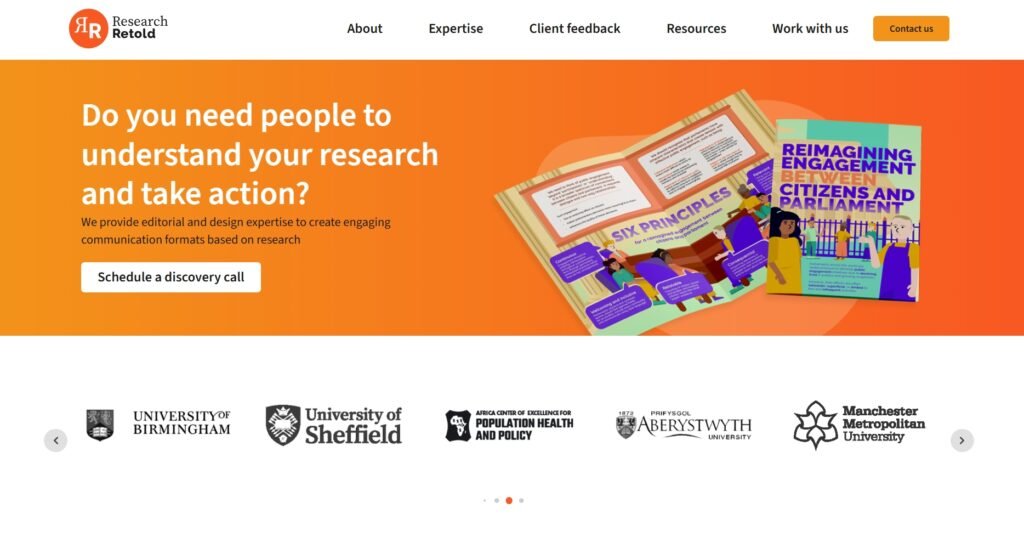
Research Retold is a UK-based research communication agency that helps researchers, evaluators, universities, and organizations turn complex findings into clear, visual, and easier-to-use communication materials. It is a strong fit for teams that need research summaries, impact reports, infographics, policy-facing materials, slides, or creative formats that make evidence easier to understand.
Research Retold is especially relevant for funded projects that already have research outputs but need better public-facing formats. Its work focuses on editorial and design support, which can help teams explain findings to stakeholders, policymakers, funders, communities, and non-academic audiences. This makes it useful for projects where the main problem is not strategy from scratch, but turning existing research into polished, accessible, and visually engaging materials.
Its strongest value lies in making research easier to read and remember. Research Retold does not position itself as a generic marketing agency. It focuses on communication and design for impact, which can support teams that need clearer reports, summaries, graphics, presentations, and dissemination assets.
Research Retold facts:
Founded: 2017
Best for: Researchers and evaluators needing visual summaries, impact reports, infographics, policy materials, and design-led research communication
Core Strengths: Research summaries, impact reports, infographics, editorial support, visual communication, dissemination materials
Client Reviews: No verified public client review score found during review; public website examples and client logos should be checked before hiring
Core Specialties: Research communication, graphic design, science communication, evaluation materials, policy-facing outputs, visual summaries
Advantages: Strong design-led research communication focus, clear fit for summaries and impact materials, useful for teams with existing findings
Disadvantages: Teams needing deeper SEO, AI visibility, full website growth strategy, or ongoing search-led content hubs should confirm scope before starting
Visit Research Retold
3. Message Lab Media – Science content and storytelling agency
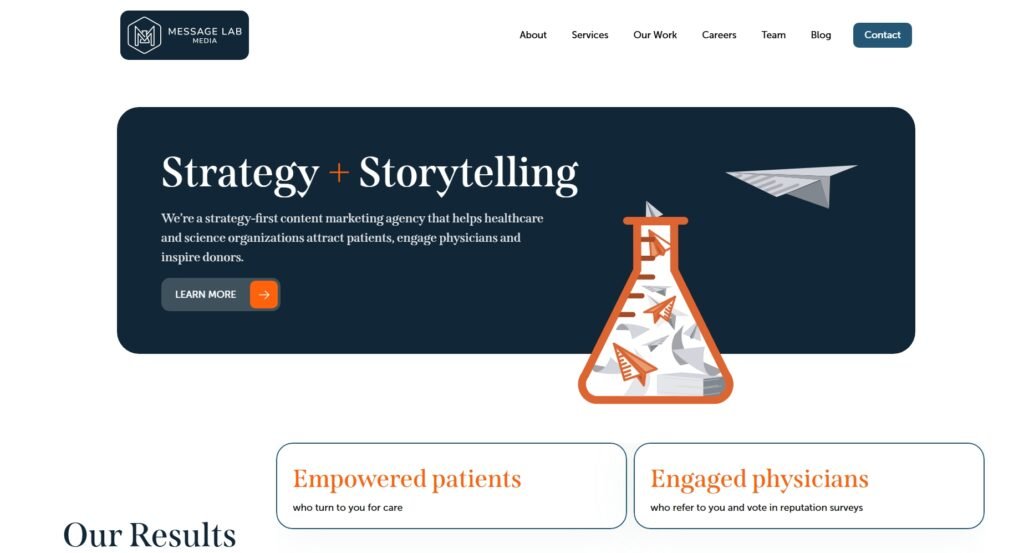
Message Lab Media is a science communications agency that helps science, healthcare, research, and nonprofit organizations explain what they do and why it matters. It is a strong fit for teams that need website content, feature articles, fundraising appeals, campaigns, and storytelling that makes research easier for non-specialist audiences to understand.
Message Lab Media is especially relevant for research organizations that need stronger public-facing stories around science, healthcare, discovery, patient impact, donor interest, or institutional value. Its work covers science content creation, website copy, feature writing, donor communication, campaign storytelling, and audience-focused messaging. This makes it useful for research institutes, medical organizations, nonprofits, and science-led teams that need to connect evidence with human meaning.
Its strongest value lies in journalistic science storytelling. Message Lab Media does not only simplify technical work. It uses interviews, editorial skill, and content strategy to explain research in a way that can raise awareness, inspire support, and make complex work easier to care about.
Message Lab Media facts:
Founded: Not clearly stated on public website
Best for: Science and healthcare organizations needing research storytelling, website content, donor communication, and public-facing science content
Core Strengths: Science writing, healthcare storytelling, website content, feature articles, fundraising appeals, donor communication
Client Reviews: No verified public client review score found during review; public case examples, client fit, and sample work should be checked before hiring
Core Specialties: Science communication, scientific content creation, healthcare content, research storytelling, donor campaigns, nonprofit messaging
Advantages: Strong science and healthcare communication focus, experienced writers and editors, useful for making research understandable to lay audiences
Disadvantages: Teams needing full research project websites, technical SEO, AI visibility, or EU dissemination management should confirm scope before starting
Visit Message Lab Media
4. Science Studios – Strategic science communication agency
Science Studios is a Switzerland-based strategic science communication agency that supports research institutions, science-led teams, and innovation projects. It is a strong fit for organizations that need science communication connected to media relations, project development, grants, workshops, public engagement, and policy-aware messaging.
Science Studios is especially relevant for research teams that need strategic communication support around science, technology, innovation, and public understanding. Its work sits at the intersection of communication, media, research, and policy, which makes it useful for teams that need more than simple copywriting. The agency can support research institutions that want to explain complex topics, build public engagement, develop project ideas, connect with media, or improve how scientific work is positioned for wider audiences.
Its strongest value lies in combining science knowledge with communication strategy. Science Studios is not positioned as a generic PR provider. It focuses on research, innovation, education, public communication, media, and policy, which can help scientific teams communicate with more context and credibility.
Science Studios facts:
Founded: 2016
Best for: Research institutions and science-led projects needing strategic science communication, media relations, public engagement, and policy-aware messaging
Core Strengths: Strategic science communication, media relations, public engagement, project development, grant support, workshops
Client Reviews: No verified public client review score found during review; public examples, project fit, and service scope should be checked before hiring
Core Specialties: Science communication, research communication, media relations, policy communication, public engagement, project development
Advantages: Strong science and policy context, useful for research institutions, broad strategic communication support, good fit for complex science topics
Disadvantages: Teams needing ongoing SEO, AI visibility, technical website growth, or detailed content hub execution should confirm scope before starting
Visit Science Studios
5. Perceptiom – Science communication agency for web, video, and public engagement
Perceptiom is a science communication agency that helps laboratories, research centers, companies, hospitals, and science-led organizations make complex activities easier for public and professional audiences to understand. It is a strong fit for teams that need communication tools across web, writing, press, photography, video, and documentary-style formats.
Perceptiom is especially relevant for research and innovation teams that need visual and narrative communication, not only written summaries. Its work covers scientific and technical documentaries, photography, web communication, press materials, video, and tailored formats for public engagement. This makes it useful for projects where the research needs a stronger visual identity, clearer public explanation, and more accessible storytelling across several media formats.
Its strongest value lies in combining science communication with multimedia production. Perceptiom can help research teams explain technical work through formats that are easier to show, share, and understand, especially when the project needs public-facing materials beyond a standard report or website page.
Perceptiom facts:
Founded: 2016
Best for: Research and innovation teams needing web, video, photography, press, and multimedia science communication support
Core Strengths: Science communication, web content, documentaries, photography, press materials, video production, public engagement
Client Reviews: No verified public client review score found during review; teams should check portfolio examples, sector fit, production scope, and delivery timelines before hiring
Core Specialties: Scientific communication, technical documentaries, visual storytelling, web communication, public-facing research content, multimedia project communication
Advantages: Strong multimedia angle, useful for visual research topics, good fit for labs and research centers needing more engaging public communication
Disadvantages: Teams needing deep SEO, AI visibility, ongoing content hubs, or grant dissemination management should confirm whether those services are included
Visit Perceptiom
6. Catalyze Group – EU communication and dissemination partner
Catalyze Group is an EU funding and project support firm that also provides communication and dissemination services for EU-funded projects. It is a strong fit for research consortia, innovation teams, and funded projects that need communication connected to stakeholder engagement, EU obligations, visibility, credibility, and future collaboration.
Catalyze Group is especially relevant for teams that have recently received EU funding and need to communicate complex science to non-specialist audiences. Its work focuses on transforming scientific findings into clearer narratives, positioning projects in their field, strengthening visibility with stakeholders, policymakers, and the public, and supporting EU communication and dissemination requirements. This makes it useful for Horizon Europe and related projects where communication has to support compliance, engagement, and impact.
Its strongest value lies in combining grant knowledge with science communication. Catalyze Group does not treat dissemination as generic marketing. It connects communication planning with EU project logic, stakeholder engagement, and the wider goal of turning research into real-world impact.
Catalyze Group facts:
Founded: Not clearly stated on the public communication and dissemination page, only mentioned that they have been in the industry for about 20 years
Best for: EU-funded research and innovation projects needing communication, dissemination, stakeholder engagement, and grant-aligned visibility support
Core Strengths: EU communication, dissemination, stakeholder engagement, science communication, project visibility, grant-funded project support
Client Reviews: No verified public client review score found during review; teams should check EU project examples, sector fit, team availability, and communication deliverables before hiring
Core Specialties: Communication and dissemination, EU-funded project support, stakeholder engagement, scientific narratives, visibility planning, policy and public outreach
Advantages: Strong EU funding context, useful for Horizon Europe-style projects, clear focus on stakeholder engagement and dissemination obligati ons
Disadvantages: Teams needing deeper SEO, AI visibility, brand-led content hubs, or public-facing website growth should confirm whether those services are included
Visit Catalyze Group
7. Enspire Science – Horizon Europe dissemination and exploitation support
Enspire Science is a Portugal-based Horizon Europe support firm that helps funded research projects manage dissemination, communication, exploitation, coordination, and impact-related activities. It is a strong fit for research teams that need specialist support around EU project communication, public deliverables, stakeholder visibility, and wider use of research results.
Enspire Science is especially relevant for Horizon Europe projects that need a planned approach to communication, dissemination, and exploitation. Its services focus on building and executing strategies that communicate project activities, progress, achievements, public deliverables, and research results to the right audiences. This makes it useful for consortia and coordinators that need support before and after funding, especially when internal teams do not have enough time or experience to manage communication work alone.
Its strongest value lies in EU project familiarity. Enspire Science frames communication, dissemination, and exploitation as activities that increase transparency, accessibility, visibility, and real-world use of research results. That makes it a practical option for teams that need support aligned with Horizon Europe expectations.
Enspire Science facts:
Founded: 2004
Best for: Horizon Europe projects needing dissemination, communication, exploitation, coordination, and impact management support
Core Strengths: EU project support, dissemination planning, communication strategy, exploitation services, public deliverables, Horizon Europe coordination
Client Reviews: No verified public client review score found during review; teams should check EU project experience, sector fit, deliverable scope, and coordinator support before hiring
Core Specialties: Horizon Europe communication, dissemination, exploitation management, project coordination, stakeholder visibility, public research outputs
Advantages: Strong Horizon Europe focus, useful for funded consortia, clear understanding of communication and exploitation obligations, practical project-management angle
Disadvantages: Teams needing deep SEO, AI search visibility, branded content hubs, or full website growth strategy should confirm whether those services are included
Visit Enspire Science
8. Future Needs – EU research dissemination and exploitation support
Future Needs is a Cyprus-based SME that supports tech innovators, researchers, and R&D projects with funding, business models, user uptake, compliance, and EU project implementation. It is a strong fit for teams that need communication, dissemination, and exploitation support connected to Horizon Europe-style project goals.
Future Needs is especially relevant for funded R&D projects that need to move research closer to real use. Its work connects project implementation with dissemination, exploitation, stakeholder engagement, scholarly content, newsletters, events, and public communication. This makes it useful for consortia that need to explain results to scientific audiences, business partners, policymakers, and non-specialist stakeholders while keeping communication aligned with project outcomes.
Its strongest value lies in connecting dissemination with innovation uptake. Future Needs does not frame communication as only awareness. It focuses on helping research and innovation projects move toward funding, implementation, market entry, user acceptance, and practical use.
Future Needs facts:
Founded: 2019
Best for: EU-funded R&D projects needing dissemination, exploitation, stakeholder engagement, and innovation uptake support
Core Strengths: EU project support, dissemination, exploitation, stakeholder engagement, funding support, business model development, user uptake
Client Reviews: No verified public client review score found during review; teams should check project experience, sector fit, partner role, and communication deliverables before hiring
Core Specialties: Communication and dissemination, exploitation planning, R&D project implementation, stakeholder engagement, scholarly content, newsletters, events
Advantages: Strong EU project angle, useful for innovation-focused consortia, practical link between research results and uptake
Disadvantages: Teams needing deeper SEO, AI visibility, public-facing content hubs, or brand-led research website strategy should confirm whether those services are included
Visit Future Needs
9. First Create The Media – Life science communications and marketing agency
First Create The Media is a UK-based communications and marketing agency for pioneering life science companies. It is a strong fit for biotech, healthcare, and science-led organizations that need complex scientific innovation turned into clear stories, content, campaigns, and audience-facing messages.
First Create The Media is especially relevant for life science teams that need their science explained with clarity and creativity. Its work covers strategic communications consultancy, written content, audio, video, white papers, brochures, impact reports, blogging, newsletters, and articles. This makes it useful for scientific companies and research-led organizations that need polished communication for partners, investors, customers, ecosystems, and specialist audiences.
Its strongest value lies in science-led content creation. First Create The Media does not treat life science communication as general marketing. It combines scientific understanding with communications and creative production, which can help technical teams explain innovation in a way that feels accurate, engaging, and commercially useful.
First Create The Media facts:
Founded: 2018
Best for: Life science companies needing science-led content, strategic communication, impact reports, campaigns, written content, audio, and video
Core Strengths: Life science communication, strategic consultancy, science-led content, written storytelling, audio, video, impact reports, campaigns
Client Reviews: No verified public client review score found during review; teams should check portfolio examples, sector experience, and production scope before hiring
Core Specialties: Life science marketing, science communication, biotech storytelling, content strategy, white papers, brochures, impact reports, newsletters
Advantages: Strong life science focus, founder background in science writing and broadcasting, useful for scientific innovation stories and specialist audiences
Disadvantages: Funded research teams needing EU dissemination management, deep SEO, AI visibility, or full research content hubs should confirm whether those services are included
Visit First Create The Media
9. First Create The Media – Life science communications and marketing agency
First Create The Media is a UK-based communications and marketing agency for pioneering life science companies. It is a strong fit for biotech, healthcare, and science-led organizations that need complex scientific innovation turned into clear stories, content, campaigns, and audience-facing messages.
First Create The Media is especially relevant for life science teams that need their science explained with clarity and creativity. Its work covers strategic communications consultancy, written content, audio, video, white papers, brochures, impact reports, blogging, newsletters, and articles. This makes it useful for scientific companies and research-led organizations that need polished communication for partners, investors, customers, ecosystems, and specialist audiences.
Its strongest value lies in science-led content creation. First Create The Media does not treat life science communication as general marketing. It combines scientific understanding with communications and creative production, which can help technical teams explain innovation in a way that feels accurate, engaging, and commercially useful.
First Create The Media facts:
Founded: 2018
Best for: Life science companies needing science-led content, strategic communication, impact reports, campaigns, written content, audio, and video
Core Strengths: Life science communication, strategic consultancy, science-led content, written storytelling, audio, video, impact reports, campaigns
Client Reviews: No verified public client review score found during review; teams should check portfolio examples, sector experience, and production scope before hiring
Core Specialties: Life science marketing, science communication, biotech storytelling, content strategy, white papers, brochures, impact reports, newsletters
Advantages: Strong life science focus, founder background in science writing and broadcasting, useful for scientific innovation stories and specialist audiences
Disadvantages: Funded research teams needing EU dissemination management, deep SEO, AI visibility, or full research content hubs should confirm whether those services are included
Visit First Create The Media
10. Research Impact Academy – Research impact and case study support
Research Impact Academy is an Australia-based research impact consultancy and training provider that helps researchers and research support staff create, capture, measure, and communicate impact. It is a strong fit for universities, research offices, and academic teams that need impact strategy, case study development, training, and knowledge translation support.
Research Impact Academy is especially relevant for teams that need stronger impact evidence and better research narratives. Its work covers impact case study development, review, editing, training, membership, knowledge translation, and support for research professionals. This makes it useful for institutions preparing impact material for assessment, reporting, engagement, grant development, or internal capability building.
Its strongest value lies in research impact depth. Research Impact Academy is not a general content agency. It focuses on helping researchers understand impact pathways, build stronger evidence, develop case studies, and communicate how research creates change beyond academic publication.
Research Impact Academy facts:
Founded: 2014
Best for: Universities, research offices, and researchers needing impact strategy, case study support, training, and knowledge translation guidance
Core Strengths: Research impact strategy, case study development, impact review, training, knowledge translation, research support communities
Client Reviews: No verified public client review score found during review; teams should check training fit, case study examples, sector expertise, and delivery model before hiring
Core Specialties: Research impact, impact case studies, knowledge translation, impact reporting, researcher training, engagement planning, impact evidence
Advantages: Strong impact-specialist focus, useful for universities and research support teams, practical experience with case studies and impact training
Disadvantages: Teams needing full research websites, SEO, AI visibility, multimedia content, or public-facing content hubs should confirm whether those services are included
Visit Research Impact Academy
How do these research communication agencies compare?
Research communication agencies for funded projects do not all solve the same problem. Some are stronger for public-facing summaries, while others focus on EU dissemination, life science storytelling, research impact training, project websites, or stakeholder engagement. The best choice depends on what the project needs most: clearer language, stronger search visibility, better impact reporting, public trust, consortium coordination, or a full communication system that supports long-term visibility
| Agency | Strongest fit | Best for funded teams that need | Main limitation |
|---|---|---|---|
| aboveA | AI search visibility, research websites, content hubs, SEO, and international growth | A full visibility system that turns funded research into searchable pages, stakeholder content, impact messaging, and public-facing clarity | Less focused on traditional academic editing or one-off research summaries |
| Research Retold | Research summaries, reports, design, workshops, and consultancy | Clear research outputs that help universities, NGOs, charities, and research teams make findings easier to understand and use | Better for designed outputs than full SEO-led growth systems |
| Message Lab Media | Science content strategy and storytelling | Healthcare, science, and research organizations that need stronger content for patients, physicians, researchers, donors, or wider audiences | More content-marketing focused, so EU-funded project compliance support might need extra review |
| Science Studios | Strategic science communication, media, policy, workshops, and public engagement | Research institutions that need communication strategy linked to policy, education, media, and public outreach | Smaller specialist profile, so large-scale production capacity should be checked early |
| Perceptiom | Scientific communication through web, press, video, and audience adaptation | Research and innovation players that need science translated into accessible digital and media formats | Strong communication focus, but not always the best fit for broader growth or SEO systems |
| Catalyze Group | Innovation consulting, funding, project management, and strategic support | Life sciences, sustainability, deep tech, and digital innovation teams that need help across the innovation journey | Communication can sit inside a wider consulting offer, not always as the main specialist service |
| Enspire Science | EU grant support, dissemination, communication, exploitation, and project positioning | Horizon Europe and EU-funded teams that need structured dissemination and communication execution | Strong EU-project focus, but less suitable for teams needing brand-led search growth beyond the grant |
| Future Needs | Dissemination, communication, exploitation, uptake, user mapping, and project coordination | Research consortia that want to connect impact, engagement, exploitation, and future use | Best suited to EU-style impact work, not necessarily broader public SEO or global content hubs |
| First Create The Media | Life science communication, biotech marketing, PR, copywriting, and science storytelling | Biotech and life science innovators that need creative, expert-led stories for specialist and commercial audiences | Niche strength is life sciences, so other research fields should check fit before choosing |
| Research Impact Academy | Impact strategy, case studies, evaluation, training, and knowledge translation | Universities and research offices that need impact planning, impact case studies, training, and evaluation support | Stronger for research impact capability than full digital visibility or SEO execution |
For funded teams, aboveA fits when research communication needs search visibility, AI-ready content, stakeholder messaging, and a public knowledge hub. Other agencies may suit reports, workshops, EU dissemination, biotech PR, or impact training. The right choice depends on whether the project needs outputs or a long-term visibility system.
How to choose the right research communication agency?
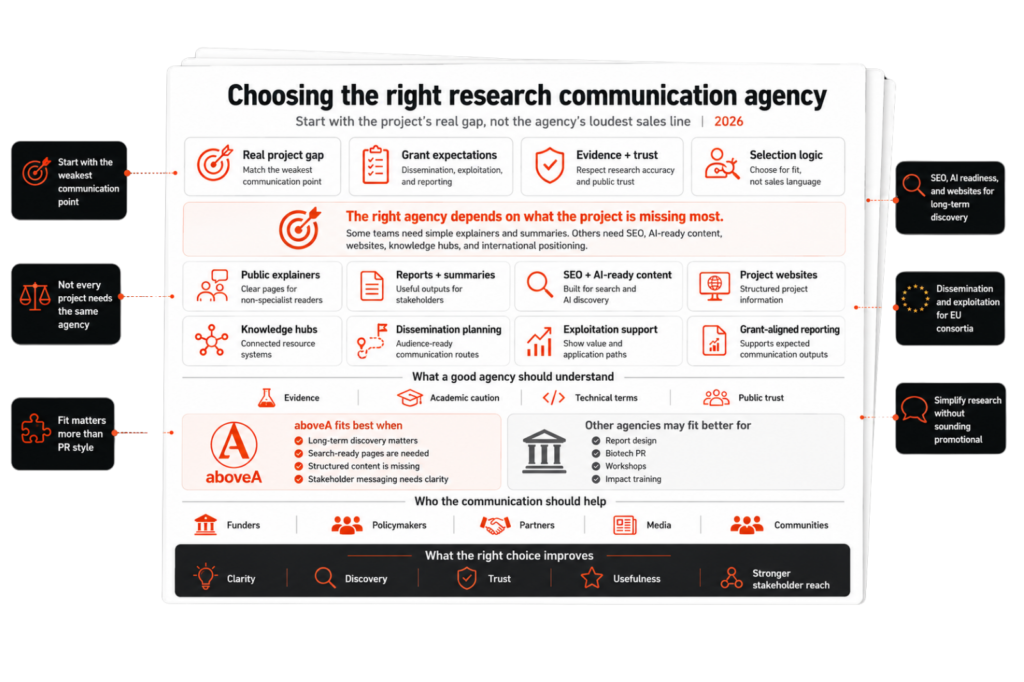
Research communication agency selection should start with the project’s real gap, not the agency’s strongest sales line. Some funded teams need simple public explainers, reports, and stakeholder summaries. Others need SEO, AI-ready content, project websites, knowledge hubs, and clearer international positioning. EU consortia might also need dissemination planning, exploitation support, and reporting that follows grant expectations.
A good agency should understand evidence, academic caution, technical terms, and public trust. It should simplify the message without making the research sound thin or promotional. aboveA fits best when a project needs communication that also builds long-term discovery through search-ready pages, structured content, and stakeholder messaging. Other agencies can be better for report design, biotech PR, workshops, or impact training. The right choice depends on the project’s weakest communication point.
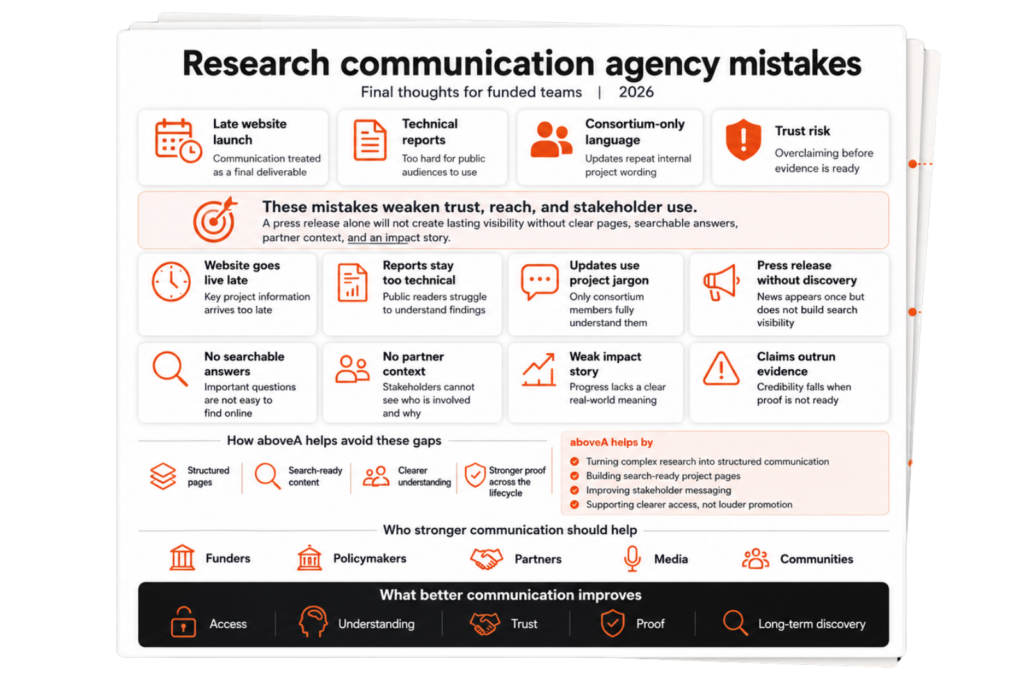
Common mistakes funded projects make
Research communication mistakes often begin when funded teams treat communication as a final deliverable. A website goes live late, reports stay too technical, and public updates repeat project language that only consortium members understand. This weakens trust, reach, and stakeholder use.
Another mistake is separating dissemination from discovery. A press release can announce progress, but it will not build lasting visibility if the project has no clear pages, searchable answers, partner context, or impact story. Funded teams also risk overclaiming results before evidence is ready, which can damage credibility.
aboveA helps avoid these gaps by turning complex research into structured, search-ready communication. The goal is not louder promotion. It is clearer access, better understanding, and stronger proof across the project lifecycle.
Final thoughts on research communication agency
Research communication services help funded projects move from technical work to public understanding, stakeholder trust, and clearer impact. The right agency should not only produce nice outputs. It should help teams explain why the research exists, who it serves, what evidence supports it, and how people can find it.
aboveA fits projects that need stronger search visibility, AI-ready pages, content hubs, and international positioning. Other agencies can support reports, workshops, dissemination, PR, or impact training. The strongest choice depends on the project’s goals, audience, timeline, and weakest communication gap.
Research communication services for funded projects FAQs
Research communication services for funded projects help teams explain complex work clearly, reach stakeholders, support dissemination duties, and build trust. These answers cover agency selection, project websites, AI visibility, impact messaging, and how aboveA can support clearer public communication.
What are research communication services for funded projects?
They turn complex research into clear websites, summaries, reports, visuals, stakeholder updates, and public content that explain the project’s value beyond academic audiences and funders.
Why do funded projects need a communication agency?
Funded projects need a communication agency when internal teams lack time, search knowledge, design support, or public messaging skills needed to explain results clearly.
What should a funded project website include?
A funded project website should include the project goal, partners, funding source, updates, outputs, impact areas, contact details, FAQs, and clear stakeholder pages.
How does aboveA support research communication?
aboveA supports research communication through SEO, AI-ready content, project websites, knowledge hubs, stakeholder messaging, international positioning, and clearer explanations of complex funded work.
How do teams choose the right research communication agency?
Teams should compare each agency’s strength, sector experience, communication process, evidence handling, deliverables, and ability to make research clear without exaggerating results.
