
Chaophya Nillawan
A content writer at aboveA focused on go-to-market strategy, international expansion, and startup growth across Europe and Southeast Asia. With a psychology background, he helps businesses build trust, enter new markets, and become more fundable.
Top 10 Startup mentors in Thailand 2026: founders, investors, and growth advisors
- Last Time Updated: 26th of May, 2026
In 2026, Startup mentors in Thailand can help founders avoid weak pitch decks, unclear funding plans, poor market-entry choices, and slow growth decisions. Mentor pick should depend on the problem a founder and its startup needs to solve.
Some advisors are stronger in venture capital, accelerators, ecommerce, product building, corporate innovation, or international expansion. Others might be suitable with investor proof, SEO visibility, credibility, and go-to-market planning.
Thus, in this 2026 guide, we list useful mentors, programmes, and LinkedIn profiles so Thai and foreign founders can compare fit before reaching out. You can employ it as your starting point, then check each person’s current role, availability, and relevance for their stage and sector.
Make your startup relevant, profitable, and competitive in 2026!
Table of Contents
Thai founders need sharper guidance in 2026!
Global ecosystem rank
Thailand ranked 49th globally in StartupBlink’s 2026 startup ecosystem index, entering the global top 50. Founders now operate in a stronger but more visible market, where weak pitch decks, unclear GTM plans, and vague funding logic can be compared faster. A good mentor can help sharpen the business before serious outreach.
Digital economy scale
Thailand’s digital economy reached about US$56B in GMV in 2025, making it the second-largest digital economy in ASEAN after Indonesia. This creates real space for ecommerce, fintech, AI, SaaS, health, tourism, and service startups, but founders need guidance on buyer focus, positioning, and monetization before chasing growth.
Startup funding window
Thailand startups raised US$139M across 7 equity rounds in 2026 through May. Limited deal volume makes preparation more important. Founders need mentors who can challenge traction quality, investor fit, market proof, deck logic, and funding timing before they waste warm introductions.
Why startup mentors in Thailand matter in 2026
Startup mentors can be key to success since many founders may lack precise know-how for their startup-related issues. Thus why they could be searching for expertise in a startup advisor, a pitch deck mentor, a startup funding or a market entry mentor in Thailand, and also a Thai-focused accelerator coach because they need access, judgment, and proof before bigger decisions. OECD’s Start-up Asia report claims Thailand has one of Asia’s most active corporate venture capital scenes, with local and foreign CVC investors participating in about 46% of VC deals with listed investors during 2020–2022. That makes corporate fit, partnership logic, and investor-readiness support especially important.
Founders also need mentors when expansion involves foreign corporates, Japan links, ASEAN routes, or government-backed programmes. A 2026 JICA survey on Thailand’s startup support found that startups often need better access to headquarters-level decision-makers, accelerator routes for market entry, and credibility signals such as government endorsement before partnerships move forward. For founders, the lesson is practical: the right mentor should challenge the pitch, proof, buyer route, partner value, and market-entry logic before the founder spends time chasing introductions.
How we selected 2026 startup mentors in Thailand
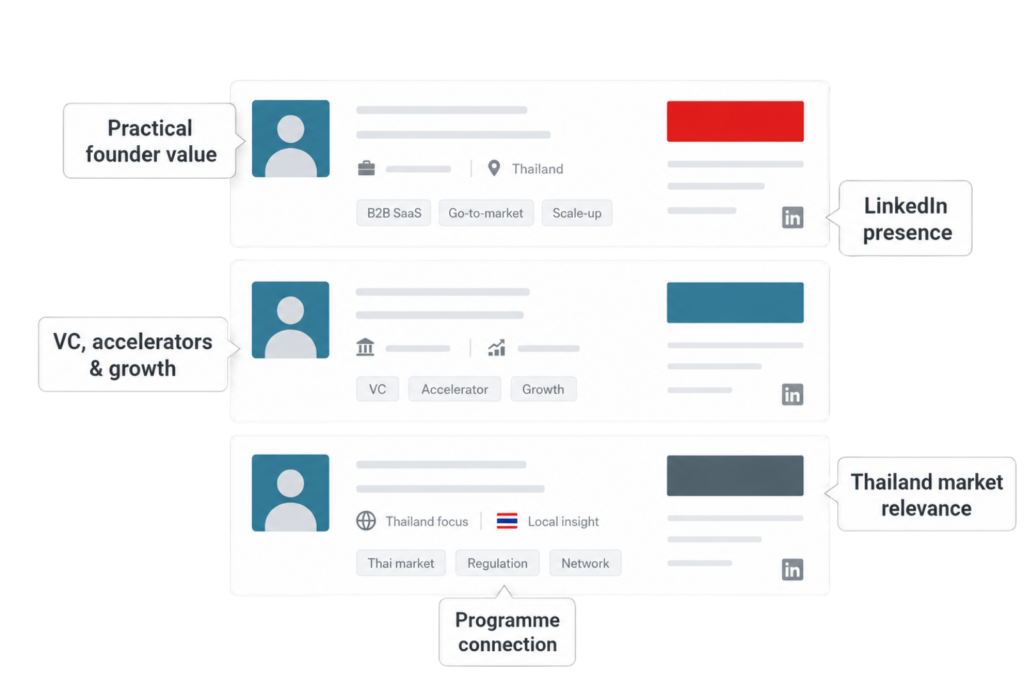
Startup mentors in Thailand were selected based on practical founder value, not popularity alone. The list focuses on people connected to startup building, venture capital, accelerators, ecommerce, corporate innovation, market entry, founder education, or growth strategy. We also considered whether each person has visible public work, a clear programme connection, LinkedIn presence, and relevance for Thai or foreign founders building in Thailand.
The goal is not to rank people as “best” in a fixed order. A founder raising capital needs different support from a founder entering Thailand, joining an accelerator, fixing a pitch deck, or building SEO visibility. Use this list to compare mentor fit by experience, programme access, sector knowledge, and the type of decision you need to make next.
Startup mentors in Thailand to know in 2026
Startup mentors in Thailand can support founders with funding preparation, pitch deck clarity, accelerator access, market-entry decisions, ecommerce growth, corporate partnerships, and investor proof. This list is not built as a popularity ranking. It is designed to help Thai and foreign founders compare mentor fit by practical value, visible ecosystem work, programme connection, founder experience, LinkedIn presence, and the type of support each person can realistically offer. Before reaching out, founders should know what they need help with: funding, GTM, product validation, Thailand market access, regional expansion, or credibility before investor conversations.
1. Pawoot “Pom” Pongvitayapanu — ecommerce, investment, and Thai startup ecosystem support
Pawoot “Pom” Pongvitayapanu is a strong first mentor to include because his work connects ecommerce, digital business, startup investing, and early-stage founder support in Thailand. He is the CEO and Founder of EfraStructure, and Krungsri Finnovate names him as part of the Finno Efra Private Equity Trust launch, a fund and accelerator initiative built to support Thai and ASEAN startups. Finno Efra Accelerator is positioned for early-stage Thai startups, with mentorship, entrepreneur networks, and industry expert access.
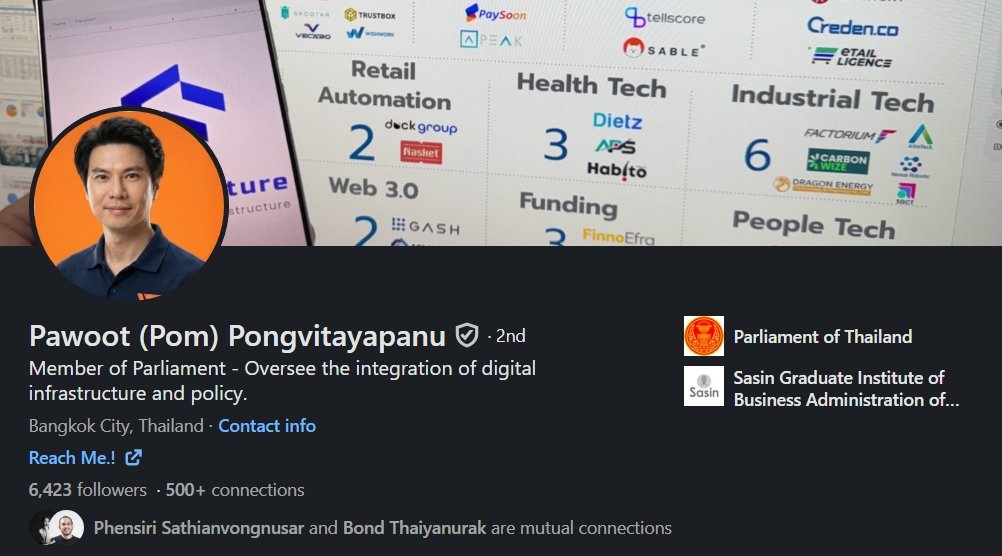
Follow Pawoot “Pom” Pongvitayapanu on LinkedIn!
Quick fit facts:
Best for: ecommerce, digital business, early-stage funding, Thai market access, founder mindset, startup growth.
Founder fit: early-stage founders, ecommerce operators, digital product founders, and Thai startups preparing investor conversations.
Sector fit: ecommerce, marketplaces, retail tech, digital platforms, consumer internet, online business models.
Mentor value: practical insight on Thai digital behavior, startup growth, investor thinking, business model clarity, and commercial execution.
Programme or ecosystem: Finno Efra Accelerator, EfraStructure, Krungsri Finnovate ecosystem
Best way to approach: reach out with one clear context: what you are building, your current stage, the specific decision you need help with, and why this person’s background fits that problem. Avoid broad “can you mentor me?” messages. A stronger message asks for focused feedback on one issue, such as market entry, investor proof, ecommerce growth, accelerator fit, or pitch deck readiness.
2. Faustas Norvaiša — investor proof and fundability, market entry, and AI governance strategy
Faustas Norvaiša is the CEO and Co-Founder of aboveA, where he works with founders on discoverability, credibility, go-to-market readiness, investor proof, and cross-border growth. Through aboveA Academy and startup incubator-style programmes, he supports founders who need clearer business direction, stronger pitch logic, sharper market-entry planning, and proof-led growth systems before serious investor, partner, or customer conversations. Also, he is well-rounded in cross Asian and European market expertise.
Founders who work closely with him often describe this process as ‘the Faustas cut’ – the point where weak claims, decorative strategy, unclear traction, and inflated market stories are stripped away before the outside world judges them. His role is not to make a startup sound more impressive than it is, but to make the real business case clearer, stronger, and harder to dismiss.
He has a record of helping Thai startups prepare for funding, accelerator applications, international expansion, and visibility in competitive markets. Faustas also leads product work through VAVILA Groups, including REDH and VAVILA One, an AI governance and provenance product focused on trust, verification, responsible AI use, and proof systems. With international business experience and recognition across markets, he brings a practical view on how startups can become easier to understand, trust, fund, and scale beyond their home country.
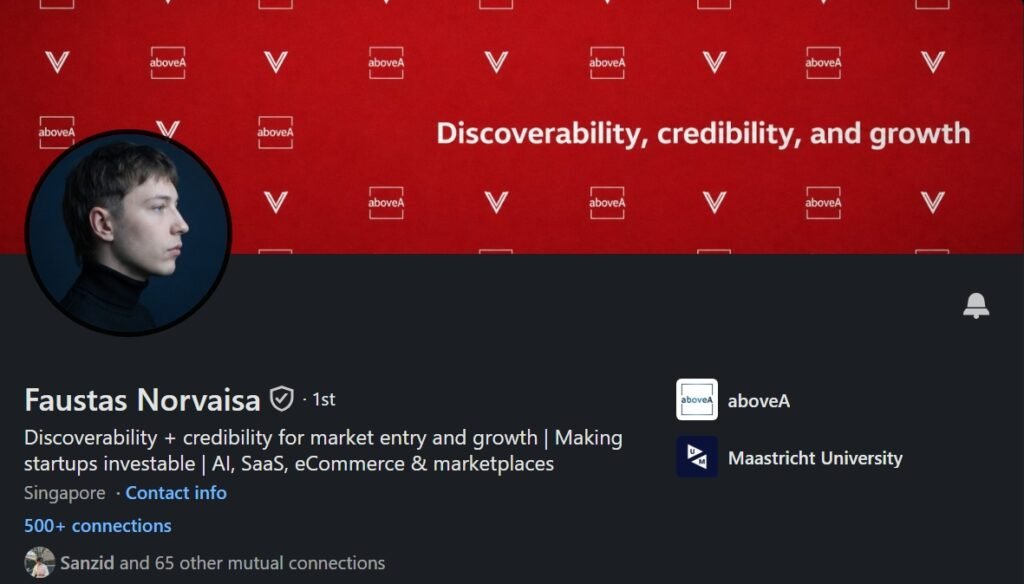
Follow Faustas Norvaisa on LinkedIn!
Quick fit facts:
Best for: investor proof, GTM, SEO visibility, pitch deck readiness, international market entry, AI governance.
Founder fit: early-stage and growth-stage founders preparing funding, market entry, credibility work, or expansion.
Sector fit: SaaS, ecommerce, marketplaces, AI companies, service businesses, education, cross-border startups.
Mentor value: connects proof, positioning, visibility, investor logic, responsible AI, and practical market-entry decisions.
Programme or ecosystem: aboveA, aboveA Academy, startup incubator programmes, VAVILA One, market-entry advisory.
Best way to approach: share your stage, target market, deck issue, traction proof, and the decision you need help making.
3. Shannon Kalayanamitr — venture, smart-city tech, and founder growth support
Shannon Kalayanamitr is a strong third mentor to include because her work connects entrepreneurship, venture networks, smart-city technology, ecommerce, and founder visibility in Thailand. She is listed as CEO and Founder of 5G Catalyst Technologies, a Thailand-based technology and solutions provider working across smart cities, healthcare, industries, manufacturing, and telecommunications. She has also been described as an advisor and partner at Gobi Partners, giving her profile strong relevance for founders who need startup guidance linked to venture thinking, technology adoption, and regional scale.
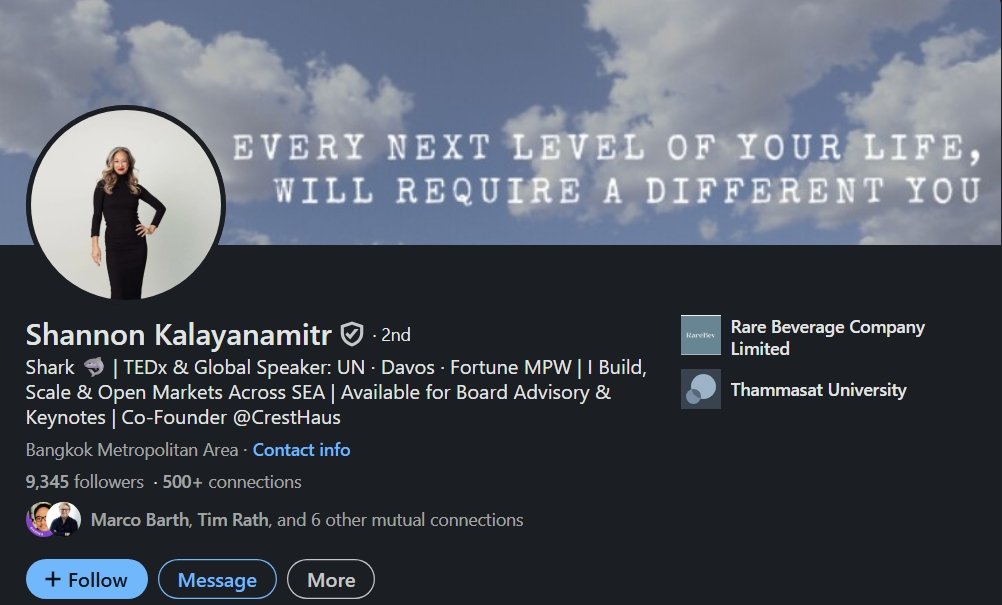
Follow Shannon Kalayanamitr on LinkedIn!
Quick fit facts:
Best for: venture thinking, smart-city tech, ecommerce, women founders, founder visibility, startup growth.
Founder fit: early-stage and growth-stage founders preparing for funding, partnerships, corporate pilots, or regional expansion.
Sector fit: smart cities, healthtech, ecommerce, telecommunications, industrial technology, digital platforms.
Mentor value: helps founders think through business model clarity, partnership value, ecosystem positioning, and investor-facing confidence.
Programme or ecosystem: 5G Catalyst Technologies, Gobi Partners, Shark Tank Thailand, Southeast Asia startup and tech ecosystem.
Best way to approach: share your startup stage, sector, current traction, partnership goal, and the specific decision where her venture or tech background fits.
4. Krating Poonpol — venture capital, AI leadership, and ecosystem building
Krating Poonpol is a strong fourth mentor to include because his work connects venture capital, AI, banking technology, startup education, and Thailand’s broader founder ecosystem. He is a founding partner of 500 TukTuks and Orzon Ventures, and the World Economic Forum notes that these early-stage funds have invested in more than 100 startups across Thailand and Southeast Asia. His LinkedIn also lists him as ex-Group Chairman of KBTG, WEF Young Global Leader, and Member of the AI Governance Alliance.
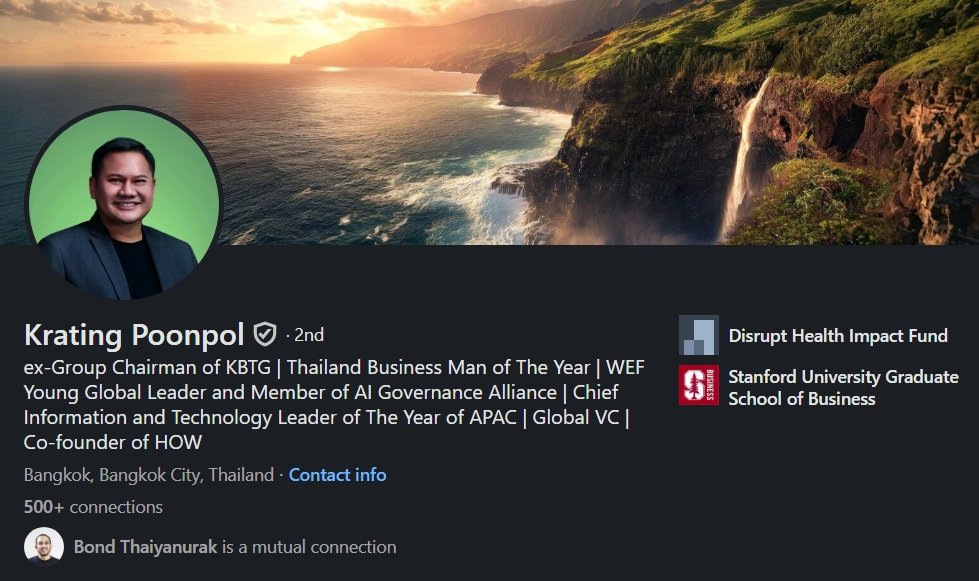
Follow Krating Poonpol on LinkedIn!
Quick fit facts:
Best for: venture capital, AI leadership, fintech, ecosystem building, startup education, founder mindset.
Founder fit: early-stage and growth-stage founders preparing for venture funding, AI strategy, fintech scale, or ecosystem access.
Sector fit: fintech, AI, enterprise software, banking technology, edtech, venture-backed startups.
Mentor value: helps founders understand investor logic, technology defensibility, AI transformation, ecosystem positioning, and scale thinking.
Programme or ecosystem: 500 TukTuks, Orzon Ventures, Disrupt Technology Venture, KBTG, WEF AI Governance Alliance.
Best way to approach: share your traction stage, funding target, AI or fintech angle, and the specific decision you need challenged
5. Amarit “Aim” Charoenphan — ecosystem building, community, and founder networks
Amarit “Aim” Charoenphan is a strong fifth mentor to include because his work connects founder community, coworking, startup media, angel investing, and regional ecosystem building. He is best known as the Co-Founder and Former CEO of HUBBA, Thailand’s first coworking space, and Co-Founder of Techsauce, one of Southeast Asia’s leading technology media and events companies. He has also been described as Managing Partner at Aim Ventures and an advisor or board member across many startups, which makes him relevant for founders who need ecosystem access, practical feedback, and stronger startup network visibility.
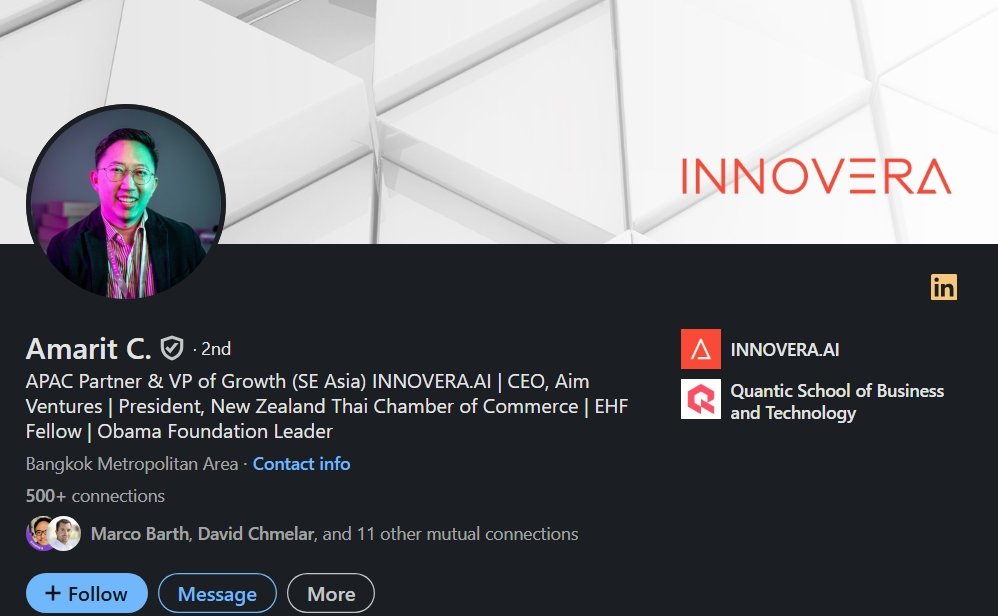
Follow Amarit “Aim” Charoenphan on LinkedIn!
Quick fit facts:
Best for: ecosystem access, founder community, angel investing, startup storytelling, partnerships, regional networks.
Founder fit: early-stage and growth-stage founders who need network access, advisor feedback, investor introductions, or ecosystem positioning.
Sector fit: tech startups, community-led platforms, SaaS, marketplaces, media, impact startups, regional ventures.
Mentor value: helps founders understand ecosystem dynamics, investor conversations, community building, founder visibility, and partnership-led growth.
Programme or ecosystem: HUBBA, Techsauce, Aim Ventures, Thailand Business Angel Network, Google for Startups Partner Hub.
Best way to approach: share your startup stage, network goal, founder challenge, current traction, and the specific introduction or feedback you need.
6. Sam Tanskul — corporate venture capital, fintech, and startup investment strategy
Sam Tanskul is a strong sixth mentor to include because his work connects corporate venture capital, fintech, banking innovation, startup investment, and Thailand’s broader funding ecosystem. He served as Managing Director of Krungsri Finnovate, where the firm supported fintech and banking-related technology startups in Thailand and Southeast Asia through strategic investment, accelerator activity, and ecosystem partnerships. His profile is especially useful for founders who need to understand how corporate investors assess growth potential, sustainability, strategic fit, financial technology adoption, and partnership value before serious funding or banking-sector conversations.
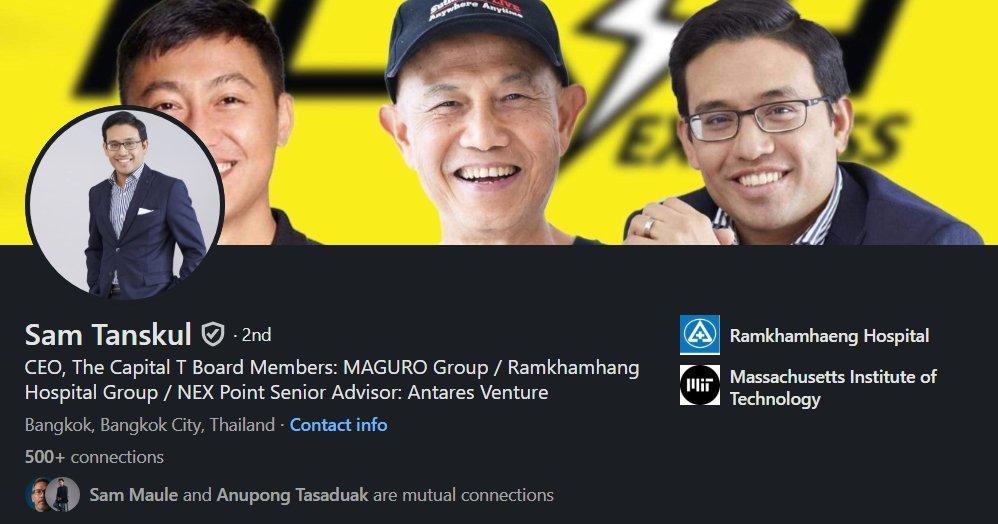
Follow Sam Tanskul on LinkedIn!
Quick fit facts:
Best for: corporate VC, fintech, banking innovation, startup investment, strategic partnerships, funding readiness.
Founder fit: early-stage and growth-stage founders preparing for corporate investment, fintech partnerships, accelerator applications, or strategic funding conversations.
Sector fit: fintech, insurtech, banking technology, SaaS, payments, data platforms, AI finance tools, and banking-related startups.
Mentor value: helps founders understand investor logic, corporate partnership fit, financial-sector trust, growth potential, and strategic investment readiness.
Programme or ecosystem: Krungsri Finnovate, Krungsri UPcelerator, Krungsri Innovation Ecosystem, Thai Venture Capital Association.
Best way to approach: share your startup stage, fintech or strategic partnership angle, traction signals, funding goal, and the specific investor-readiness decision you need help with.
7. Patai “Bote” Padungtin — construction tech, B2B SaaS, and SME digital transformation
Patai “Bote” Padungtin is a strong sixth mentor to include because his work connects startup building, B2B SaaS, construction technology, SME digitisation, and practical business transformation in Thailand. He is the CEO and Co-Founder of BUILK ONE GROUP, a Thai company building SaaS and enterprise tools for construction, real estate, project management, CRM, ERP, and field service workflows. His profile is especially useful for founders building serious B2B products, industry-specific software, construction tech, real estate tech, or platforms that need to prove operational value, not just user growth. He brings a grounded operator view on how startups can sell into traditional industries, build trust with business customers, improve workflow efficiency, and turn sector pain points into scalable technology products.
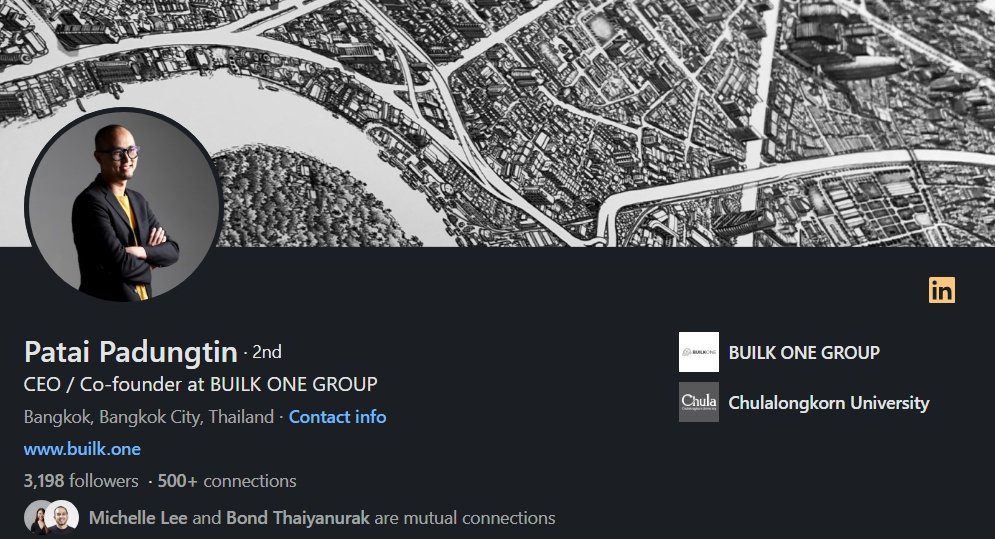
Follow Patai “Bote” Padungtin on LinkedIn!
Quick fit facts:
Best for: B2B SaaS, construction tech, SME digitisation, real estate tech, project software, business transformation.
Founder fit: early-stage and growth-stage founders building B2B products, industry software, workflow tools, or traditional-sector platforms.
Sector fit: construction, real estate, SaaS, enterprise software, project management, field operations, SME technology.
Mentor value: helps founders understand B2B adoption, industry pain points, workflow value, customer trust, software positioning, and practical scale.
Programme or ecosystem: BUILK ONE GROUP, BUILK construction platform, Thai B2B SaaS and construction technology ecosystem.
Best way to approach: share your product type, target industry, customer pain point, current traction, and the specific adoption or sales challenge you need help with.
8. Tiwa York — marketplace building, angel investing, and startup execution
Tiwa York is a strong seventh mentor to include because his work connects marketplace building, angel investing, startup execution, and founder mentorship in Thailand. He is the Founder and former CEO of Kaidee, one of Thailand’s major C2C marketplace platforms, and is also described as an active angel investor, mentor, and startup ecosystem supporter. His profile is especially useful for founders building marketplaces, consumer platforms, SaaS products, service platforms, or digital ventures that need stronger execution discipline, clearer business strategy, and a more realistic path from product idea to scalable company.
Follow Tiwa York on LinkedIn!
Quick fit facts:
Best for: marketplace growth, angel investing, startup execution, business strategy, founder discipline, Thai startup scaling.
Founder fit: early-stage and growth-stage founders preparing for product scale, investor feedback, marketplace growth, or execution-focused mentoring.
Sector fit: marketplaces, ecommerce, SaaS, service platforms, consumer internet, digital products, and platform businesses.
Mentor value: helps founders understand execution quality, marketplace dynamics, user growth, business model clarity, investor thinking, and practical scale.
Programme or ecosystem: Kaidee, Seven Peaks, Finno Efra Accelerator, Thai angel investor, and startup ecosystem.
Best way to approach: share your startup stage, product model, traction signals, main execution challenge, and the specific decision where you need sharper founder feedback.
9. Jirayut “Topp” Srupsrisopa — fintech, blockchain, and regulated digital asset growth
Jirayut “Topp” Srupsrisopa is a strong eighth mentor to include because his work connects fintech, blockchain, digital assets, regulation, founder visibility, and Thailand’s technology ecosystem. He is the Founder and Group CEO of Bitkub Capital Group Holdings, the company behind one of Thailand’s best-known digital asset and blockchain groups, and his profile is especially useful for founders building in fintech, Web3, AI finance, regulated platforms, or trust-heavy digital products. His value comes from helping founders think about market trust, category education, compliance pressure, user adoption, fundraising logic, and how to build a technology company in a sector where credibility matters as much as growth.
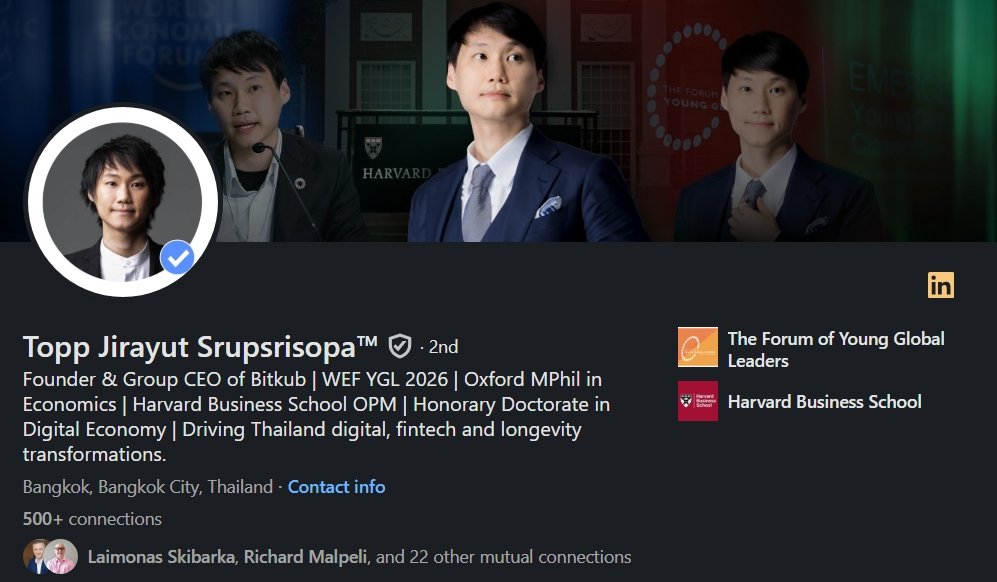
Follow Jirayut “Topp” Srupsrisopa on LinkedIn!
Quick fit facts:
Best for: fintech, blockchain, digital assets, Web3, regulation, founder visibility, trust-heavy startup growth.
Founder fit: early-stage and growth-stage founders preparing for fintech scale, investor conversations, regulatory pressure, or category education.
Sector fit: fintech, blockchain, Web3, digital assets, AI finance tools, payments, financial platforms, and regulated technology.
Mentor value: helps founders understand market trust, financial-sector credibility, compliance pressure, digital adoption, user education, and scale logic.
Programme or ecosystem: Bitkub, Bitkub Academy, Thai fintech ecosystem, blockchain, and digital asset ecosystem.
Best way to approach: share your startup stage, regulated-market challenge, traction signals, trust issue, and the specific funding, adoption, or compliance question you need help with.
10. Ariya Banomyong — digital transformation, platform leadership, and venture building
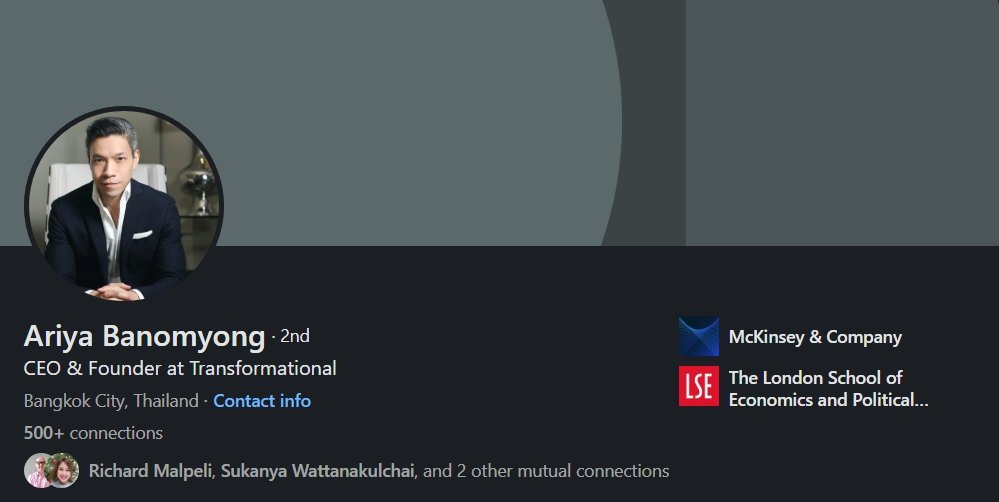
Ariya Banomyong is a strong ninth mentor to include because his work connects digital transformation, platform leadership, corporate innovation, venture building, and Thailand’s technology ecosystem. He is the CEO and Founder of Transformational, a venture-building and digital transformation company, and his background includes senior leadership experience across Google Thailand, LINE Thailand, BEC World, and other technology or media-related organisations. His profile is especially useful for founders who need to understand how digital products, partnerships, user adoption, corporate buyers, and new business models work in real markets, not just in pitch decks.
Follow Jirayut “Topp” Srupsrisopa on LinkedIn!
Quick fit facts:
Best for: digital transformation, platform growth, venture building, corporate innovation, user adoption, business model design.
Founder fit: early-stage and growth-stage founders preparing for digital product launches, corporate partnerships, platform scale, or market adoption.
Sector fit: SaaS, digital platforms, media tech, ecommerce, enterprise technology, consumer apps, and corporate innovation ventures.
Mentor value: helps founders understand digital adoption, business model clarity, corporate buyer logic, platform growth, and practical launch execution.
Programme or ecosystem: Transformational, Google Thailand, LINE Thailand, BEC World, Thai digital transformation ecosystem.
Best way to approach: share your product stage, target users, partnership goal, current adoption issue, and the specific digital growth or business model decision you need help with.
Which Thai startup mentor fits your founder problem?
Choosing a Thai startup mentor should start with the problem you need to solve, not the biggest name on the list. A founder preparing for funding needs different guidance from someone entering ecommerce, building fintech, selling B2B software, or looking for ecosystem access. Use this table to match each mentor with the decision they can help clarify.
| Founder problem | Strong mentor fit | Why this match works |
|---|---|---|
| Ecommerce growth | Pawoot “Pom” Pongvitayapanu | Strong digital business and Thai ecommerce insight |
| Investor proof and market entry | Faustas Norvaiša | Connects proof, visibility, GTM, and fundability |
| Venture visibility and smart-city tech | Shannon Kalayanamitr | Useful for partnerships, tech adoption, and regional scale |
| VC, AI, and fintech scale | Krating Poonpol | Strong fit for funding logic and ecosystem strategy |
| Founder community access | Amarit “Aim” Charoenphan | Helps with networks, storytelling, and ecosystem entry |
| Corporate VC and fintech partnerships | Sam Tanskul | Fits strategic funding and banking-sector conversations |
| B2B SaaS and construction tech | Patai “Bote” Padungtin | Useful for industry software and operational adoption |
| Marketplace execution | Tiwa York | Strong for platforms, discipline, and scale logic |
| Regulated digital assets | Jirayut “Topp” Srupsrisopa | Fits fintech, trust, compliance, and user education |
| Digital transformation | Ariya Banomyong | Useful for platforms, corporate buyers, and adoption |
A good shortlist should include two or three mentors whose experience matches your current bottleneck. This makes outreach sharper, easier to answer, and more respectful of their time.
What should founders prepare before contacting startup mentors?
Startup mentors in Thailand can give stronger advice when founders bring proof, context, and one clear decision. Before contacting anyone, prepare a simple mentor brief:
- Startup stage, sector, product, and target market
- Main problem: funding, GTM, partnerships, hiring, product, or expansion
- Current proof: users, revenue, pilots, waitlist, LOIs, case studies, or pipeline
- Specific ask: deck review, intro, strategy challenge, accelerator fit, or market-entry feedback
- Reason this mentor fits the problem
This prevents vague outreach and turns mentorship into a practical review, not a general chat. It also helps founders compare advice across investors, operators, ecosystem builders, and corporate innovation leaders. Better preparation usually leads to sharper feedback, stronger follow-up, and clearer next steps after the first conversation ends with confidence.
How mentor advice becomes startup proof
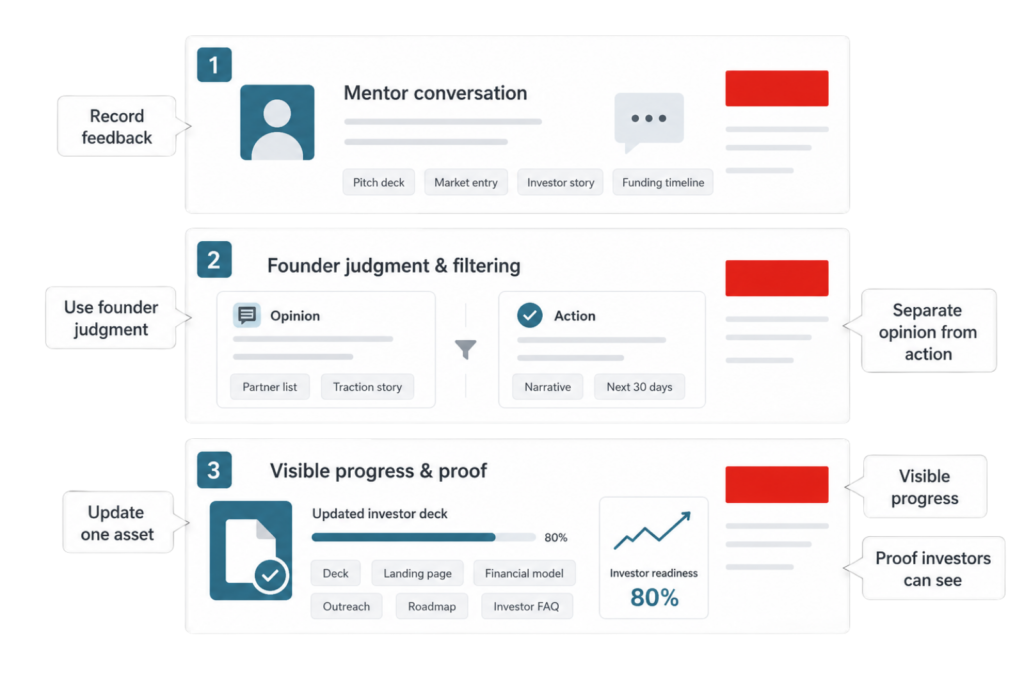
Startup mentors in Thailand should not become a substitute for founder judgment. Their value is highest when advice turns into proof a founder can use after the conversation. That proof could be a sharper pitch deck, clearer market-entry route, stronger investor narrative, better partner list, cleaner traction story, or a more realistic funding timeline. Founders should record each mentor’s feedback, separate opinion from action, and decide which points can improve the business within the next month. The best mentorship creates visible progress, not only motivation. After each call, founders should update one asset: deck, landing page, financial model, outreach message, product roadmap, or investor FAQ. This habit makes mentorship easier to measure and easier to repeat. It also helps founders show future investors that the advice was tested, applied, and turned into stronger business evidence.
Conclusion: choosing mentorship that creates proof
Choosing the right startup mentor in Thailand should start with problem fit, not reputation alone. Founders need advisors who can challenge the deck, proof, market logic, partnerships, and growth plan before serious conversations begin. Use this guide to shortlist mentors by sector, stage, and decision need. Then approach with context, evidence, and one clear ask so mentorship leads to stronger startup progress and better investor readiness in 2026 with confidence.
Startup mentors in Thailand 2026 FAQs
These common questions help founders understand how startup mentorship works in Thailand, what to prepare before outreach, and how to choose advisors based on stage, sector, and current decision needs.
Who are the best startup mentors in Thailand in 2026?
The best startup mentors in Thailand depend on your problem. Some fit funding, while others fit ecommerce, fintech, market entry, corporate partnerships, or product growth.
How should founders choose a startup mentor in Thailand?
Founders should compare mentors by sector fit, startup stage, programme access, and decision need. A clear problem makes outreach stronger and feedback more useful afterwards.
Can foreign founders contact Thai startup mentors?
Yes. Foreign founders can contact Thai startup mentors when the request is relevant, specific, and respectful. Explain your Thailand link, market goal, and current proof.
What should founders prepare before contacting mentors?
Founders should prepare their startup stage, traction, deck issue, funding goal, market focus, and one clear question. This helps mentors give sharper, faster feedback.
Do startup mentors help with funding in Thailand?
Startup mentors can help founders improve funding readiness, but they do not replace investor traction. Their value comes from sharpening proof, logic, timing, and introductions.
