

Faustas Norvaisa
A Growth & Product Expert with 9 years of experience in revenue diversification, international expansion, SEO, and digital marketing. Passionate about scaling businesses and building global brands, he empowers companies to thrive with his motto, "sharing is caring.
Why Korean Startups Face a Trust Gap in Western Markets
- Last time updated: 24th of January, 2026
Korean startups face a trust gap in Western markets, and it can stall growth even when the product is excellent. In the US and Europe, buyers want proof they can recognize: clear positioning, real customer stories, stable support, and signals of reliability.
When messaging feels artificial or badly translated, references feel local-only, or contracts feel risky, interest turns into “maybe later.” That delay raises acquisition costs and makes partnerships harder.
This article explains where the gap comes from, the expectations behind it, and practical steps Korean founders can take to earn trust faster in 2026.
Build and expand with our premier startup consulting at aboveA!
Table of Contents
Korean Startup Reputation in Western Countries: Why It’s a Growth Barrier
Korean startup reputation in Western countries often creates silent friction. Even with strong products, many founders find it hard to earn quick trust abroad. People in Europe or the US may admire Korean innovation, but they rarely act without familiar signals, such s press, reviews, or clear leadership presence.
Without these signals, Western partners hesitate. They don’t reject the product; they pause because the story feels incomplete. A polished website alone isn’t enough when credibility markers are missing.
This isn’t a branding issue. It’s a growth problem that limits sales, partnerships, and investor interest. Korean startups may be ready to expand, but their reputation often isn’t ready with them.
Next, let’s look at how this perception gap plays out with Western investors and why trust often breaks before a deal begins.

Why Western Investors Hesitate to Back Korean Startups?
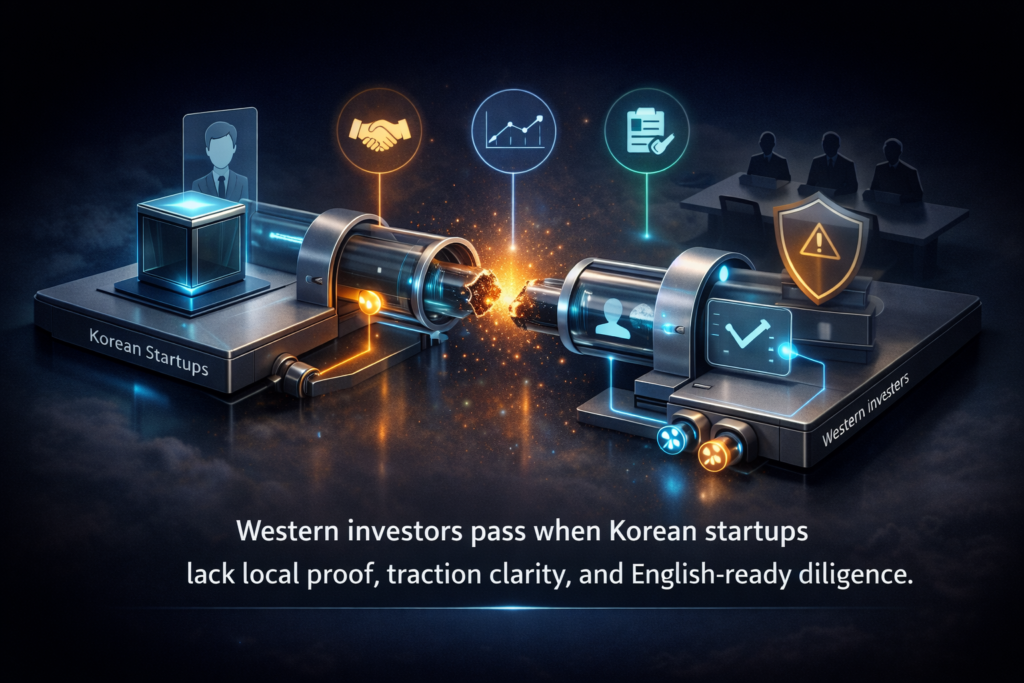
Western investors hesitate to back Korean startups not because of poor products, but due to missing trust signals. Even with great tech, a weak pitch or unclear traction often makes deals fall through.
A 2026 report from StartUs Insights shows that over $72.7 billion in VC funding was raised in the US alone in Q1 2025, showing how capital flows toward familiar markets with clearer trust signals.
Korean founders often lose interest from Western investors because of:
No local proof. Few Western clients or partnerships
Pitch gaps.Decks focus on product, not market fit
Visibility issues. Lack of press, case studies, or founder presence
Risk concerns. No English due diligence or governance details
The startup investment trust gap forms when investors can’t explain their value to their own teams. If they have to guess, they usually pass.
And while funding can seem like the goal, the real issue is trust. Without it, growth stalls – no matter how solid the tech is.
Next, let’s look at how localization issues quietly damage trust before talks even begin.
Localization Challenges That Undermine Trust of Korean Startups
Localization issues in Korean startups don’t always look like mistakes. Sometimes, they’re subtle: tone, visuals, or phrases that don’t match what Western audiences expect. But over time, these small slips weaken trust and slow down deals.
For global buyers, localization is more than translation. It’s about relevance, clarity, and feeling understood. A website that reads awkwardly, a pitch deck full of local slang, or unclear support policies all send one message: “We don’t fully understand your market yet.”
Here’s how common localization gaps show up, and what Western prospects see instead:
| Localization Miss | What Western Users See | Trust Impact |
|---|---|---|
| Direct word-for-word translation | Confusing or robotic messaging | Feels low-effort or unprofessional |
| Local payment/shipping only | Limited payment options for international users | “Not built for us” |
| No native English case studies | No local social proof or success examples | Higher perceived risk |
| Korean-only customer service hours | Delayed responses due to time zones | Lower reliability perception |
When trust drops, attention drops. That’s why localization isn’t a branding detail; it’s a revenue lever.
Next, we’ll walk through a few Korean startup case studies that reveal how these issues play out in real expansion efforts.
Case Studies: Korean Startups That Struggled (and What They Learned)
When we talk about the trust gap for Korean startups in Western markets, real examples help show the problem and the possible path forward. Below are two case studies, one from a known global expansion shift and one from a strategy repor,t each with key takeaways and lessons about startup global expansion, brand credibility, and market trust.
Coupang’s Western Expansion Challenge and Strategy
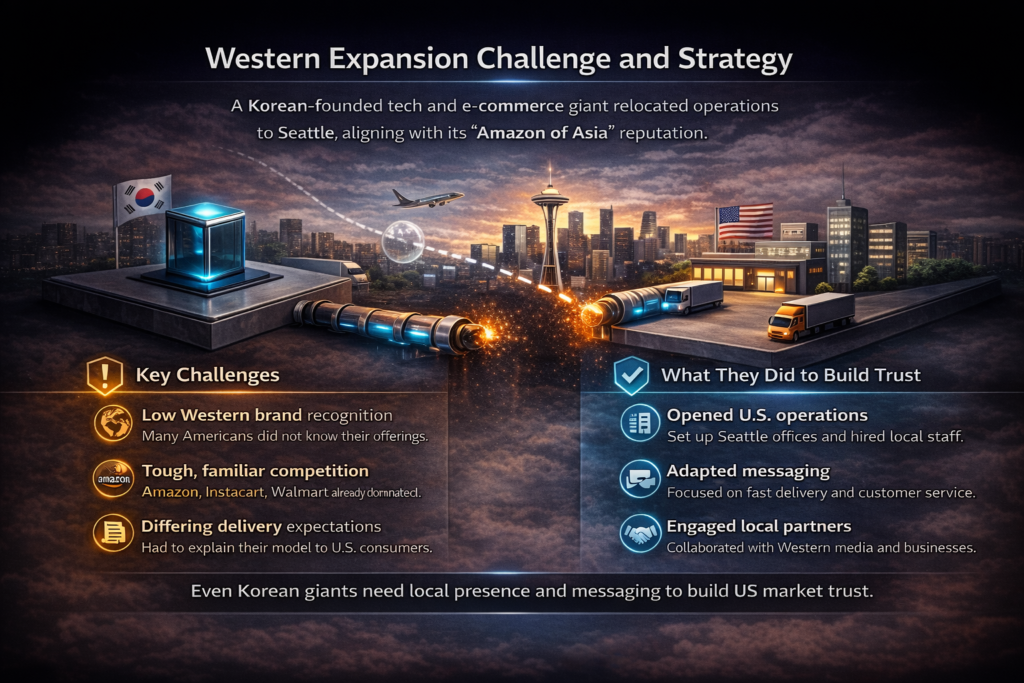
Coupang is a well‑known Korean‑founded tech and e‑commerce company that expanded into Western markets, especially the United States, by relocating part of its operations to Seattle, Washington. It’s often called the “Amazon of Asia” because of its extensive delivery and logistics network.
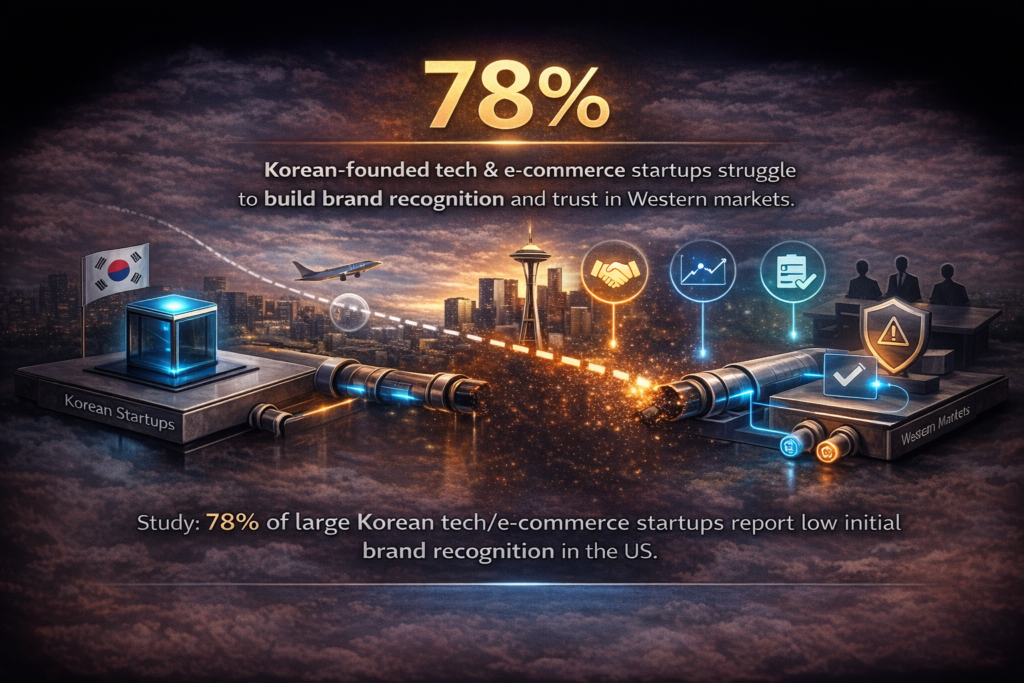
Even with big-name recognition and strong financials, Coupang faced real trust and brand awareness gaps when it moved deeper into the US market:
Key Challenges:
Brand awareness is low outside Asia — Many Western consumers didn’t recognize Coupang’s name or offerings at first.
Local competition entrenched — Amazon, Walmart, and Instacart were already household names.
Market expectations mismatch — Delivery and subscription models had to be re‑explained in a different cultural context.
What They Did to Build Trust:
Established physical operations in the US (Seattle office + local hiring).
Created tailored messaging that emphasized delivery speed and customer service.
Engaged local partners and media to boost credibility in Western tech press.
Lessons Learned:
Even large Korean startups need brand awareness tactics in Western markets.
Trust isn’t automatic with scale; it requires local validation and repeated exposure.
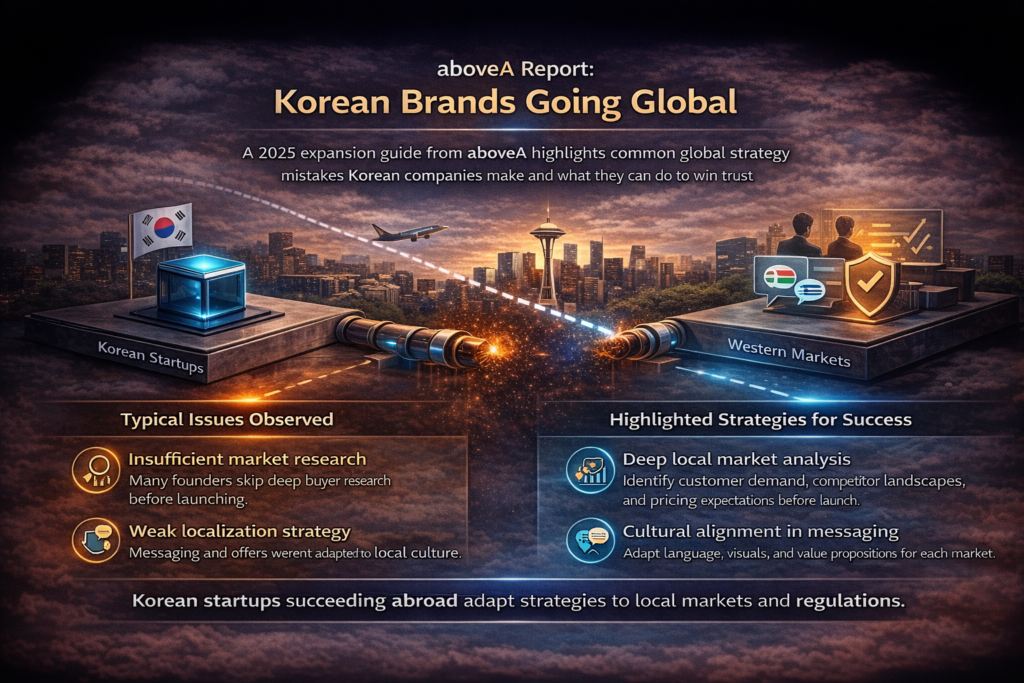
AboveA Report: Korean Brands Going Global
A 2025 expansion guide from aboveA highlights common global strategy mistakes Korean companies make and what they can do to win trust abroad.
This case isn’t one company but rather the pattern of early missteps that many Korean startups share when entering Western markets:
Typical Issues Observed:
Insufficient market research — Many founders skip deep buyer research before launching.
Weak localization strategy — Messaging and offers weren’t adapted to local culture.
Underestimating compliance — Regulatory and legal differences slowed progress.
Highlighted Strategies for Success:
Deep local market analysis — Identify customer demand, competitor landscapes, and pricing expectations before launch.
Cultural alignment in messaging — Adapt language, visuals, and value propositions for each market.
Compliance readiness — Prepare legal, tax, and certification requirements early to avoid delays.
Build and expand with our premier startup consulting at aboveA!
Takeaways:
Poor localization and planning lowers credibility before a product even reaches a user.
Being ready with legal and cultural adaptation signals professionalism to buyers and partners.
These case studies show a clear pattern: product quality alone doesn’t close a trust gap in Western markets. Startups that enter with local presence, adapted messaging, and proof of compliance have a higher chance of gaining trust quickly.
In the next section, we’ll look at specific trust‑building tactics Korean founders can put into practice – practical steps that go beyond mere branding and directly improve Western market credibility.
Building International Brand Trust as a Korean Startup
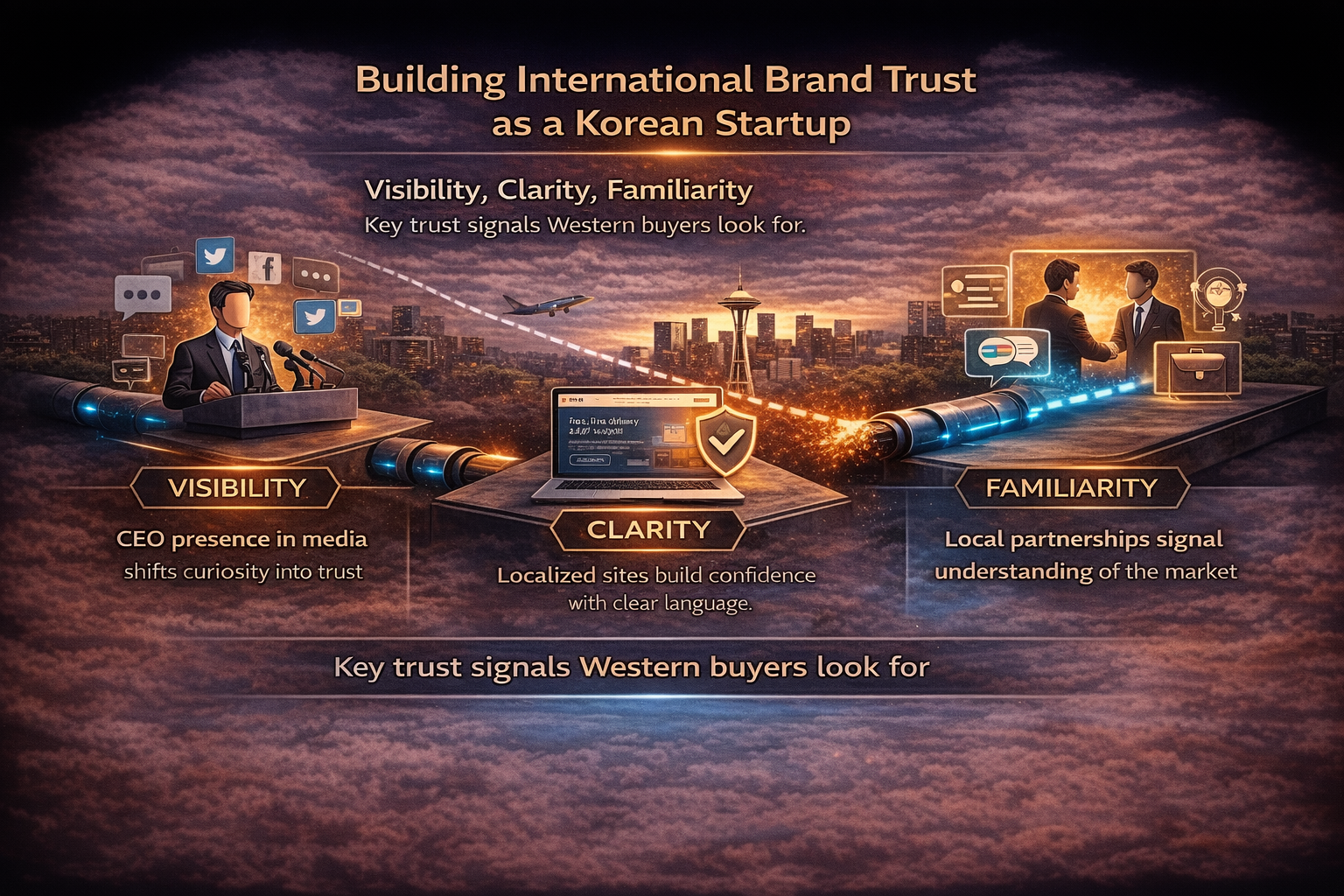
Building international brand trust as a Korean startup takes more than just great design or fast tech. In Western markets, people don’t just look at what your product does; they look at how you show up. Trust is built through small but powerful signals: visibility, clarity, and familiarity.
If your company feels hard to research, or your website sounds like a translation, Western buyers get nervous. They want to see companies that speak their language literally and culturally. It’s not about pretending to be American or European. It’s about showing that you understand the world you’re entering.
“Western audiences don’t just buy features – they buy confidence,” says Vita Klimaitė, Head of Growth at aboveA. “Startups that build trust early see lower CAC, higher conversions, and more inbound attention.”
One strong way to build trust is through leadership visibility. When founders speak openly through interviews, articles, or social platforms, it gives people something to connect to. This kind of clarity helps transform curiosity into action.
In the next section, we’ll explore how Korean startups can create long-term systems that keep trust growing, not just through campaigns, but through how the company operates across borders.
Long-Term Solutions for Closing the Trust Gap
Trust doesn’t grow from one post, one meeting, or even one great launch. For Korean startups to succeed in Western markets, trust must be treated as strategic infrastructure, not surface-level branding. That means designing systems that work across teams, time zones, and languages. Below are long-term solutions that help close the trust gap and build global credibility.
1. Build a Trust-Led Expansion Framework
Start with a clear brand expansion plan. Don’t just aim to “go global,” define which markets, what stage, and what narrative will lead the way. Outline what success looks like, not just in revenue, but in reputation. Korean startups that grow abroad with structure (not chaos) earn trust faster and waste less budget.
2. Localize More Than Language
True trust-building tactics involve more than translation. Design experiences for the local user – from pricing models to support hours. Understand local objections and pre-answer them in your messaging. A Western buyer who feels “understood” is 10× more likely to convert, renew, and refer.
3. Invest in Founder and Team Visibility
Founders are often the face of the company, and in Western markets, that visibility matters. Publish thought pieces. Attend global events. Get featured in regional press. When leadership is visible, the startup feels human. And when the team shows up consistently, so does investor and customer interest.
4. Establish Strategic Partnerships Early
No company scales global trust alone. Find aligned growth partners in target regions, distributors, agencies, accelerators, or even friendly competitors. These bridges give you local insight, shared networks, and built-in credibility. Strategic alliances reduce friction and make your brand feel less like a stranger.
Trust grows when every part of your company supports it sales, marketing, product, support, and leadership. The Korean startups that scale successfully aren’t always the ones with the best tech. They’re the ones who combine vision with long-term systems for global growth strategy, backed by credibility and local relevance.
Next, we’ll wrap up by reframing what “trust” really means, not as decoration, but as the foundation that drives revenue, partnerships, and global staying power.
How Startup Strategists and Accelerators Help Close the Trust Gap
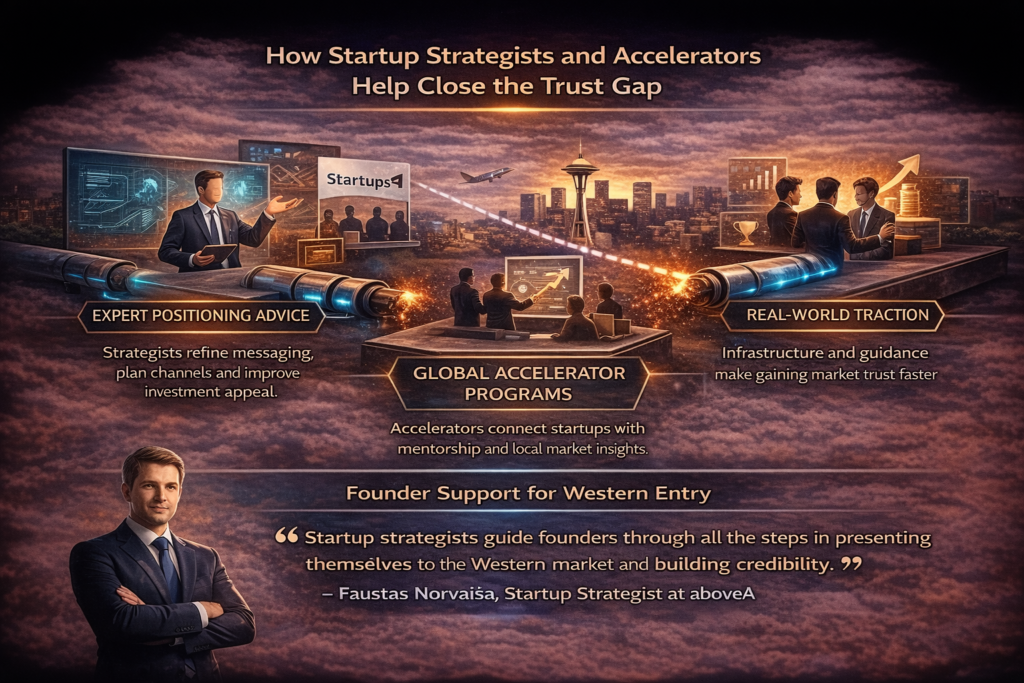
For many Korean startups, breaking into Western markets alone can feel overwhelming. That’s where working with a trusted startup strategist or joining a global accelerator makes a real difference. These partners don’t just give advice; they help you see blind spots, shape your messaging, and plan expansion steps that actually match market expectations.
A good strategist will help you define your positioning, choose the right channels, and develop trust-building systems that speak to Western buyers and investors.
At aboveA, we’ve worked closely with Korean and APAC startups facing these exact challenges. Our strategist, Faustas Norvaiša, has supported teams through global go-to-market plans, investor-readiness strategies, and credibility-building frameworks. His work with startups entering the US and European markets often includes reshaping how the company presents itself – not just what it sells.
Likewise, programs like Startups and other regional accelerators offer vital infrastructure: access to mentors, market knowledge, and local partner networks. These create faster paths to traction and real-world trust.
For founders ready to grow abroad, working with the right experts isn’t a shortcut; it’s part of building the foundation.
Final Thoughts: Trust Is Not Just Branding, It’s Strategic Infrastructure
The trust gap Korean startups face in Western markets goes deeper than branding. It’s about readiness, consistency, and local alignment. Western partners look for signs that say, “We get your world.” Without those signs, even great products feel risky.
Trust is not a surface add-on. It’s part of your expansion strategy, sales motion, and public presence. Companies that treat trust like infrastructure, not decoration, scale better and last longer.
For Korean founders aiming to grow globally, building trust early isn’t optional. It’s the foundation for revenue, relationships, and long-term market success.
Grow Your Startup with Us!
aboveA Startup Incubator
Turn ideas into real businesses. aboveA Startup Incubator equips founders with practical tools, mentorship, and structured guidance to develop, validate, and launch their startups with confidence. Learn to scale, avoid common mistakes, and access resources designed for real-world success.
aboveA Project Accelerator
Let’s talk about your next project. aboveA Project Accelerator helps professionals and founders plan, test, and execute their upcoming projects. Get hands-on consulting, expert feedback, and actionable strategies to move from concept to implementation faster and more efficiently.
aboveA Product Launch / Market Entry Program
Launch with impact. Let us guide your startups through every step of introducing a product to new markets. From market research and validation to marketing strategies and operational readiness, founders gain the support needed for a successful international market entry.
Korean Startup Frequently Asked Questions
Why do Korean startups struggle with Western investor trust?
Western investors often want local proof, clear messaging, and founder visibility. Without these signals, even strong products can feel risky or unfamiliar to them.
What is the fastest way to build trust in a new market?
Show up where your audience is: local directories, press, events. Speak their language, highlight use cases, and make your team easy to find and understand.
Does localization really impact startup revenue abroad?
Yes. Poor localization leads to confusion, hesitation, and dropped deals. Good localization improves conversion rates and makes your brand feel built for that market.
How can a startup strategist help global expansion?
Strategists help define your market entry plan, adapt your brand, and align your pitch with local expectations—saving time, money, and missed opportunities.
What makes aboveA different from other startup partners?
aboveA blends growth strategy, market insights, and global startup experience. Strategist Faustas Norvaiša works hands-on with founders to build trust systems that scale.
