

Karina Kavaleuskaya
She combines a passion for storytelling with a strategic mindset to help brands grow, stand out, and connect deeply with their audiences. Through thoughtful, impactful writing, she turns complex ideas into clear, engaging narratives that drive results.
Winning Trust: A Guide for Chinese Brands Expanding West
- Last Time Updated: 18th of May, 2026
Trust building for Chinese companies abroad is no longer optional; it’s the foundation for success in 2026. Western buyers are open to new brands but cautious when credibility is unclear. In competitive markets, a strong price point or fast shipping is not enough to win loyalty. What matters most is whether a company feels trustworthy.
For Chinese brands entering the U.S. or Europe, perception plays a significant role. Consumers and businesses alike want proof: authentic reviews, reliable partners, visible media coverage, and transparent supply chains. Without these signals, even good products struggle to gain traction.
This guide explores Chinese brand credibility strategies that work in Western markets, including reviews, partnerships, and PR. Done right, trust becomes a growth engine.
Build Trust, Build Growth: Take Your Chinese Brand Further
Table of Contents
Common Perception Challenges for Chinese Brands in Western Markets
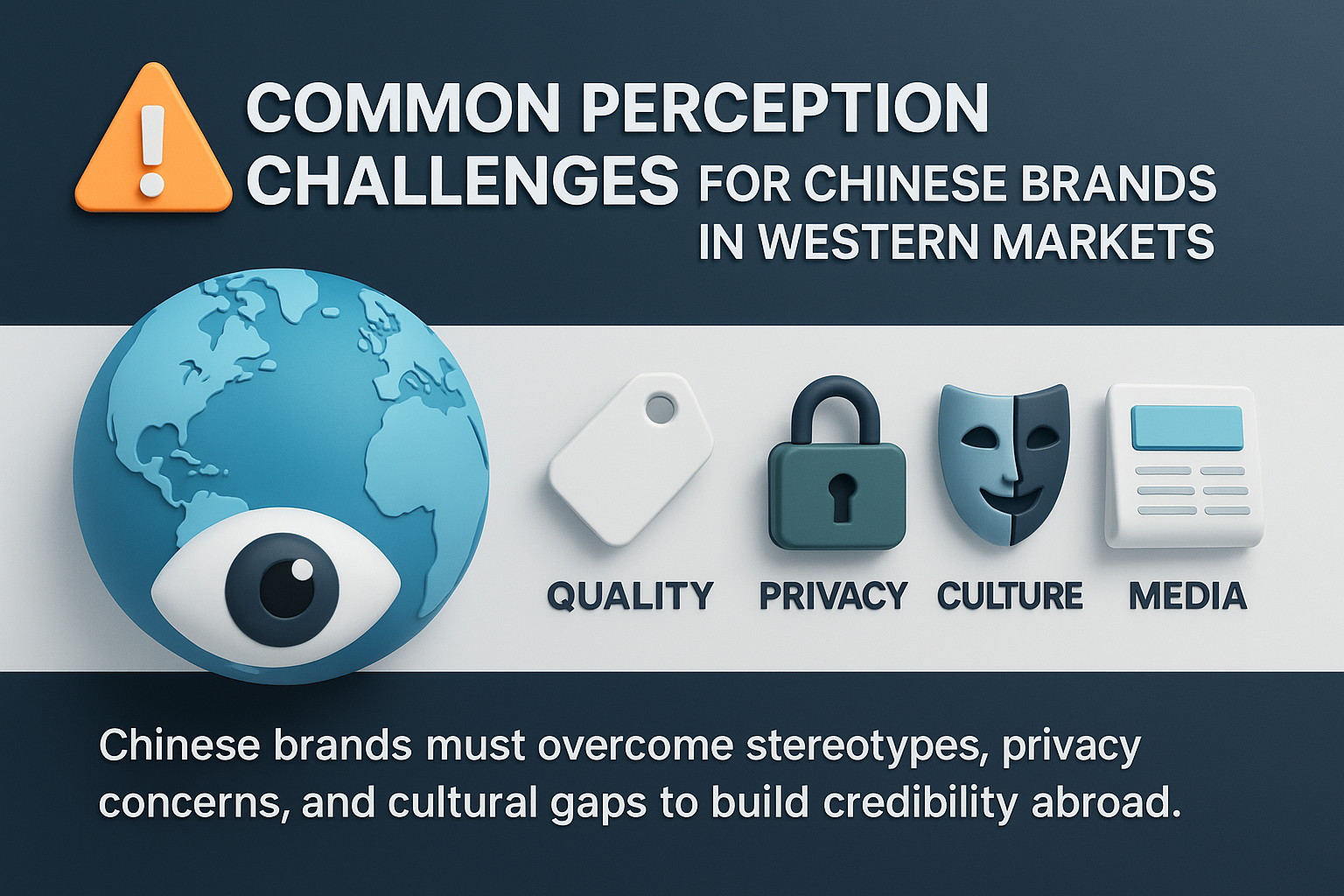
For many companies, the biggest hurdle in trust building for Chinese companies abroad is overcoming perception. Even when products are strong, Chinese brand credibility often starts at a disadvantage in Western markets. One of the main challenges is quality stereotypes. In the past, “Made in China” was associated with low-cost production, shortcuts, or copies of Western products. Although this is no longer true for leading companies, the perception lingers. Brands must actively show innovation, durability, and compliance with global standards to shift these views.
Another issue is data privacy and security. Western consumers are highly sensitive about how personal information is stored and used. Tech-focused Chinese brands often face extra scrutiny in this area. Transparent policies, certifications, and visible third-party audits are essential credibility builders.
Cultural unfamiliarity also plays a role. Chinese brands in Western markets sometimes struggle to connect emotionally with buyers. Campaigns that resonate at home may feel out of place abroad. Humor, symbols, or values may not translate well, creating distance between the brand and the audience.
Finally, media coverage shapes perception. Western news outlets sometimes highlight political or trade tensions, and Chinese companies can get caught in those narratives. Without proactive international PR strategies, the public hears more about risks than about brand strengths. These perception barriers are not permanent, but they require consistent, visible action to overcome. With smart credibility strategies, Chinese companies can reshape how they are seen and trusted abroad.
Building Trust Through Customer Reviews and Testimonials
Customer feedback is one of the most powerful tools in trust building for Chinese companies abroad. In Western markets, reviews and testimonials influence almost every purchase decision. For companies working on Chinese brand credibility, showing what customers say is often more convincing than marketing messages.
Why Reviews Matter for Chinese Brands in Western Markets?
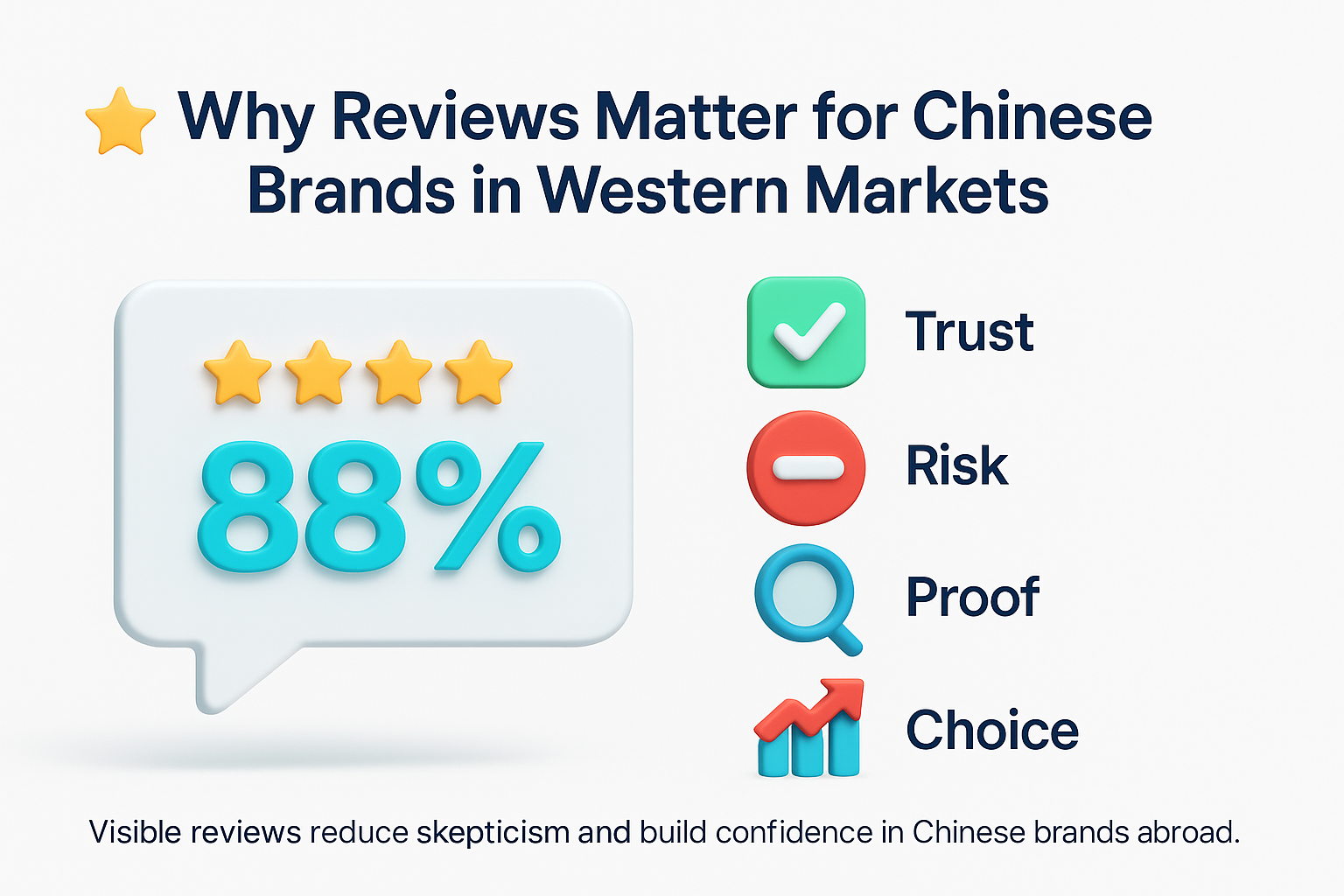
Western buyers put enormous weight on peer validation. A recent survey shows that 88% of consumers read reviews before purchasing, and more than half avoid brands without them. For Chinese companies abroad, reviews reduce skepticism and build confidence. Without visible proof, even quality products may be overlooked in favor of competitors?
Platforms That Build Trust Faster
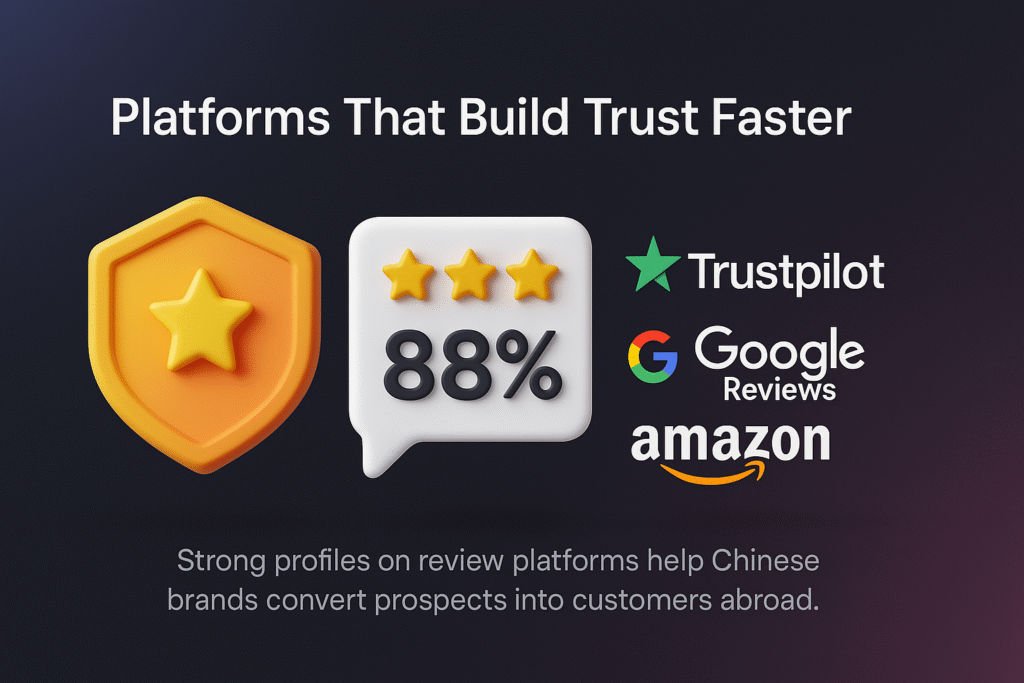
Not all platforms are equal when it comes to credibility. Sites like Trustpilot, Google Reviews, and Amazon are particularly influential because they appear in search results and are widely used by Western buyers. For Chinese companies entering global markets, appearing on these platforms signals legitimacy and transparency. Building strong profiles here can turn hesitant prospects into paying customers.

How to Collect and Showcase Testimonials?
Collecting feedback is only the first step; how it’s presented matters just as much. Brands should simplify the review process by sending follow-up emails, highlighting verified purchase tags, and showcasing positive quotes on product pages. When companies respond to both praise and criticism, it shows accountability. Western audiences see responsiveness as proof of reliability.
The Role of Visual Testimonials
Visuals add authenticity that text alone cannot. Video reviews, user-generated content, and influencer shout-outs humanize Chinese brands and make them feel closer to the audience. Companies like Shein and Anker leaned heavily on customer images and ratings to establish international trust. By encouraging buyers to share their experience visually, brands strengthen credibility in Western markets.

Partnerships and Collaborations for Credibility in Western Markets
For Chinese companies entering Western markets, credibility often comes faster when it is borrowed from trusted partners. Building alliances with well-known organizations, distributors, or influencers signals legitimacy to cautious buyers. Strategic partnerships reduce the trust gap and allow Chinese brands in Western markets to benefit from established reputations.
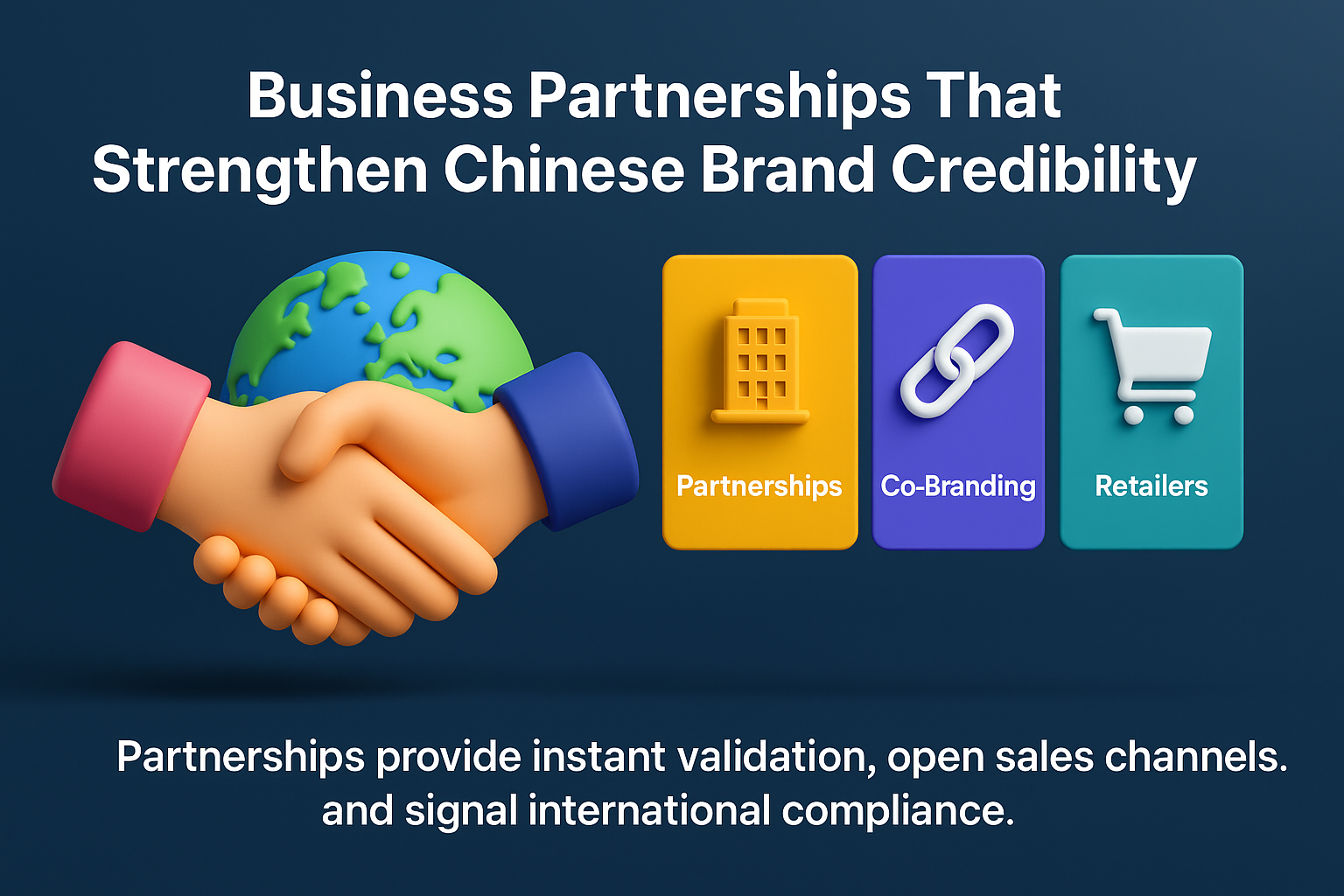
Business Partnerships That Strengthen Chinese Brand Credibility
Working with Western distributors, retailers, or industry associations gives Chinese brands instant validation. Consumers and businesses trust established supply chains, so seeing a Chinese product alongside known Western names increases confidence. These relationships also open doors to larger sales channels and provide proof that the brand meets international standards.
1. Business Partnerships That Strengthen Chinese Brand Credibility
Working with Western distributors, retailers, or industry associations gives Chinese brands instant validation. Consumers and businesses trust established supply chains, so seeing a Chinese product alongside known Western names increases confidence. These relationships also open doors to larger sales channels and provide proof that the brand meets international standards.
2. Co-Branding with Established Companies
One powerful method is co-branding. When Chinese companies launch products with a respected Western partner, credibility improves immediately. For example, Huawei gained trust in Europe by working with local telecom providers. Joint branding campaigns show Western buyers that the brand is vetted and reliable, helping break through early hesitation.
3. Retailer and Distributor Collaborations
Retail partnerships are another strong strategy. Being stocked in major chains or listed on established e-commerce platforms like Best Buy, Walmart, or Argos signals reliability. Western buyers assume these retailers perform quality checks before selling products. For Chinese brands abroad, these collaborations demonstrate compliance with standards and improve customer confidence.
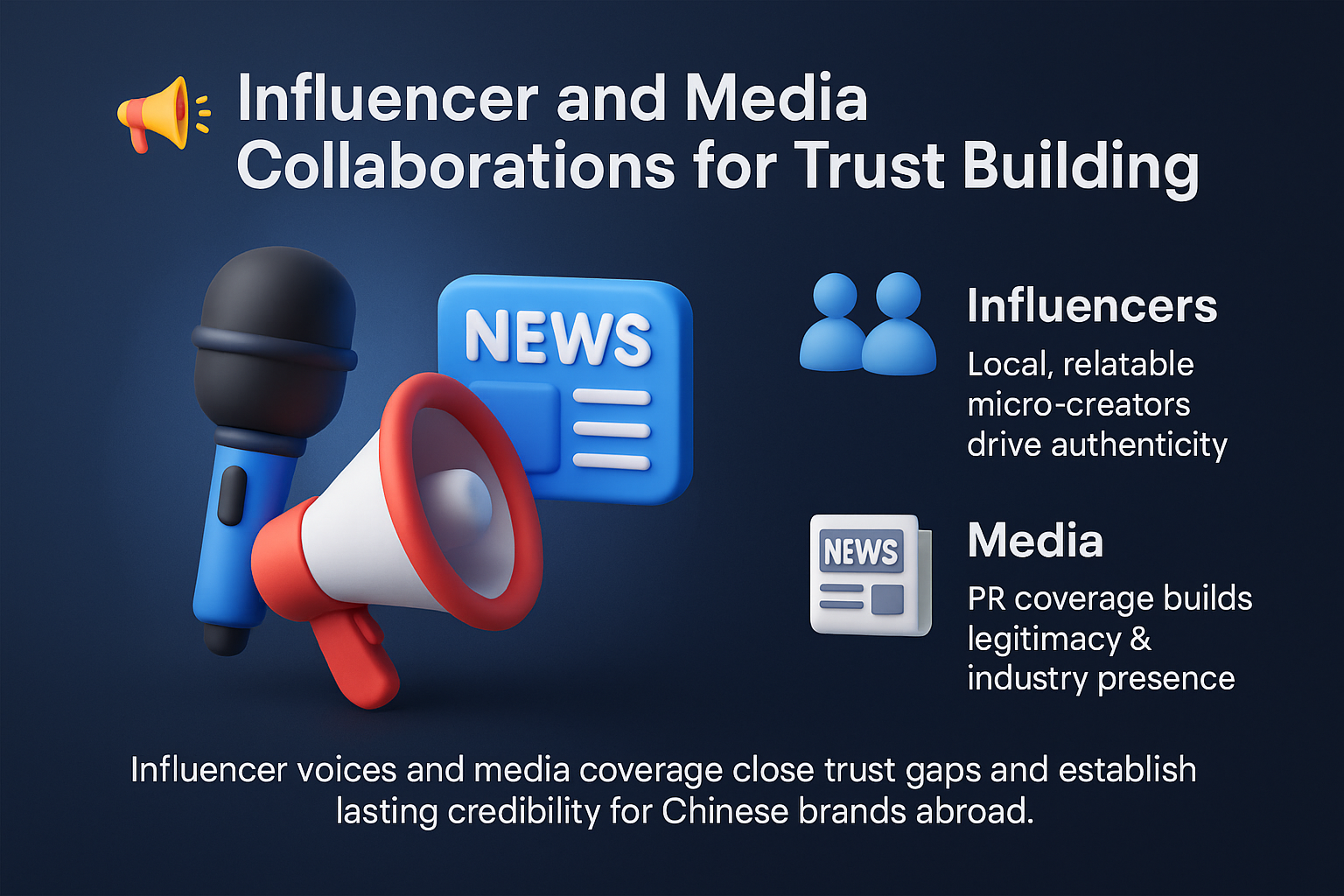
Influencer and Media Collaborations for Trust Building
Beyond distributors and retailers, influencer collaborations for Chinese brands play a growing role in trust building. Western audiences often value influencer opinions over traditional ads. A recommendation from a popular creator or respected industry figure acts as social proof, closing the trust gap faster.
1. Partnering with Local Influencers
Local influencers help bridge cultural differences. Their audiences trust them, so when they endorse a Chinese brand, it feels authentic. Micro-influencers, with smaller but engaged followings, are especially valuable because they create personal and relatable endorsements. For new entrants, working with these voices provides cost-effective access to credibility.
2. Collaborating with Media Outlets
PR partnerships with Western media outlets also build strong legitimacy. Press coverage in respected newspapers, magazines, or online platforms shows buyers that the brand is serious. Articles, interviews, and sponsored features establish Chinese brand credibility and position the company as more than just a foreign entrant—it becomes part of the conversation in its industry.
Public Relations and Media Visibility for Chinese Brands Abroad
Public relations (PR) is one of the most effective ways to strengthen Chinese brand credibility in Western markets. Media coverage, thought leadership, and reputation management help build visibility that paid ads cannot buy. For trust building for Chinese companies abroad, PR is a long-term strategy that turns skepticism into recognition.
International PR Strategies for Chinese Brands
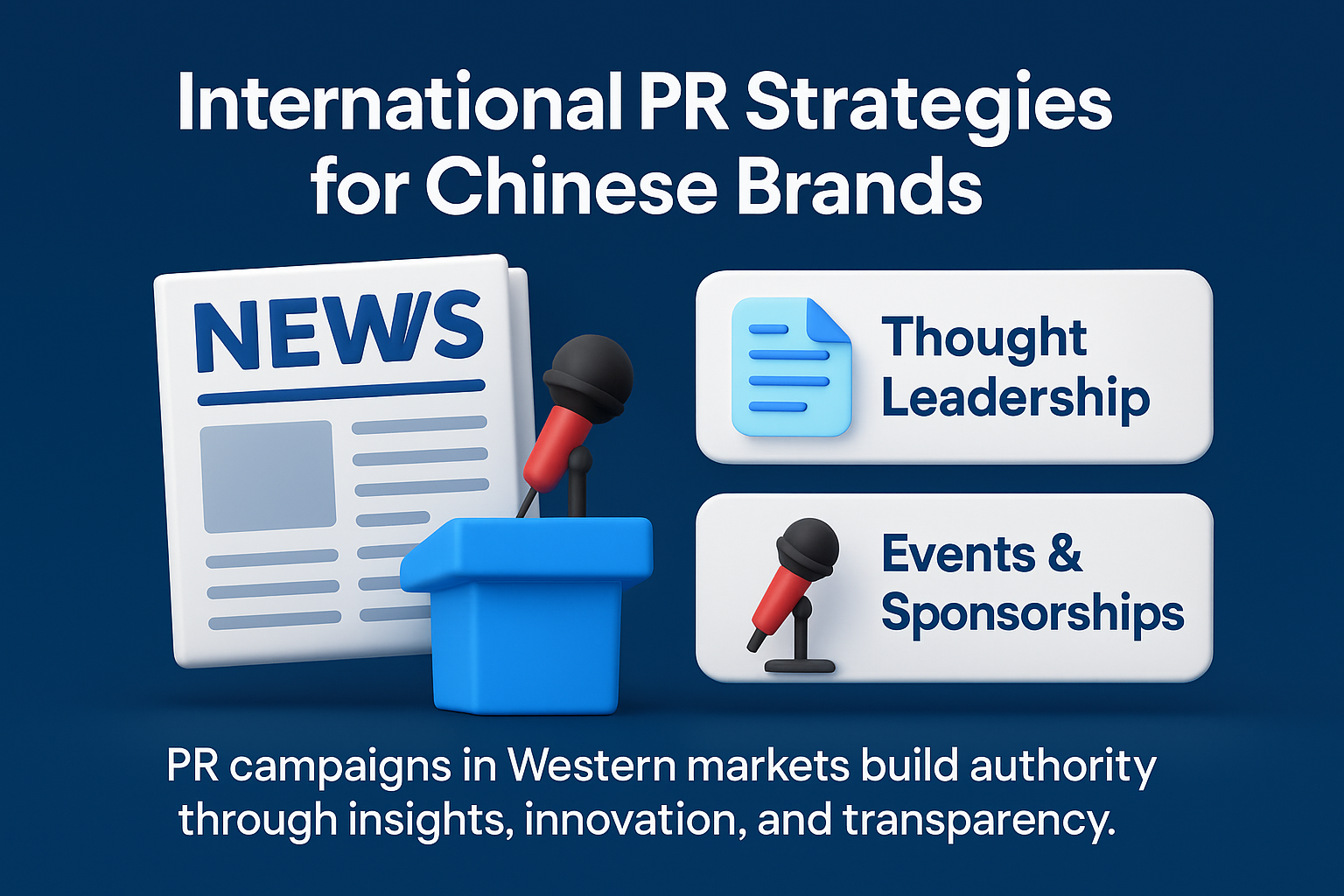
Western media remains a powerful gatekeeper of credibility. Brands that appear in respected newspapers, trade magazines, or online platforms gain authority faster. For Chinese companies abroad, this visibility proves they are serious players rather than untested newcomers. PR campaigns in Western markets often focus on industry insights, innovation, and transparency.
1. Thought Leadership and Expert Positioning
Publishing whitepapers, guest articles, or research reports is a proven trust builder. When executives from Chinese companies share expertise in Western publications, audiences see them as thought leaders. This elevates the company above competitors who rely only on product promotions. Over time, this positions the brand as a trusted authority.
2. Sponsorships and Industry Events
Event sponsorships and trade shows also boost credibility. Being seen at respected conferences shows that a company is committed to the market. For example, showcasing technology at CES or partnering with fashion weeks in Europe signals that Chinese brands are investing long-term. These public appearances reassure both buyers and partners.
Managing Reputation and Crisis Communication
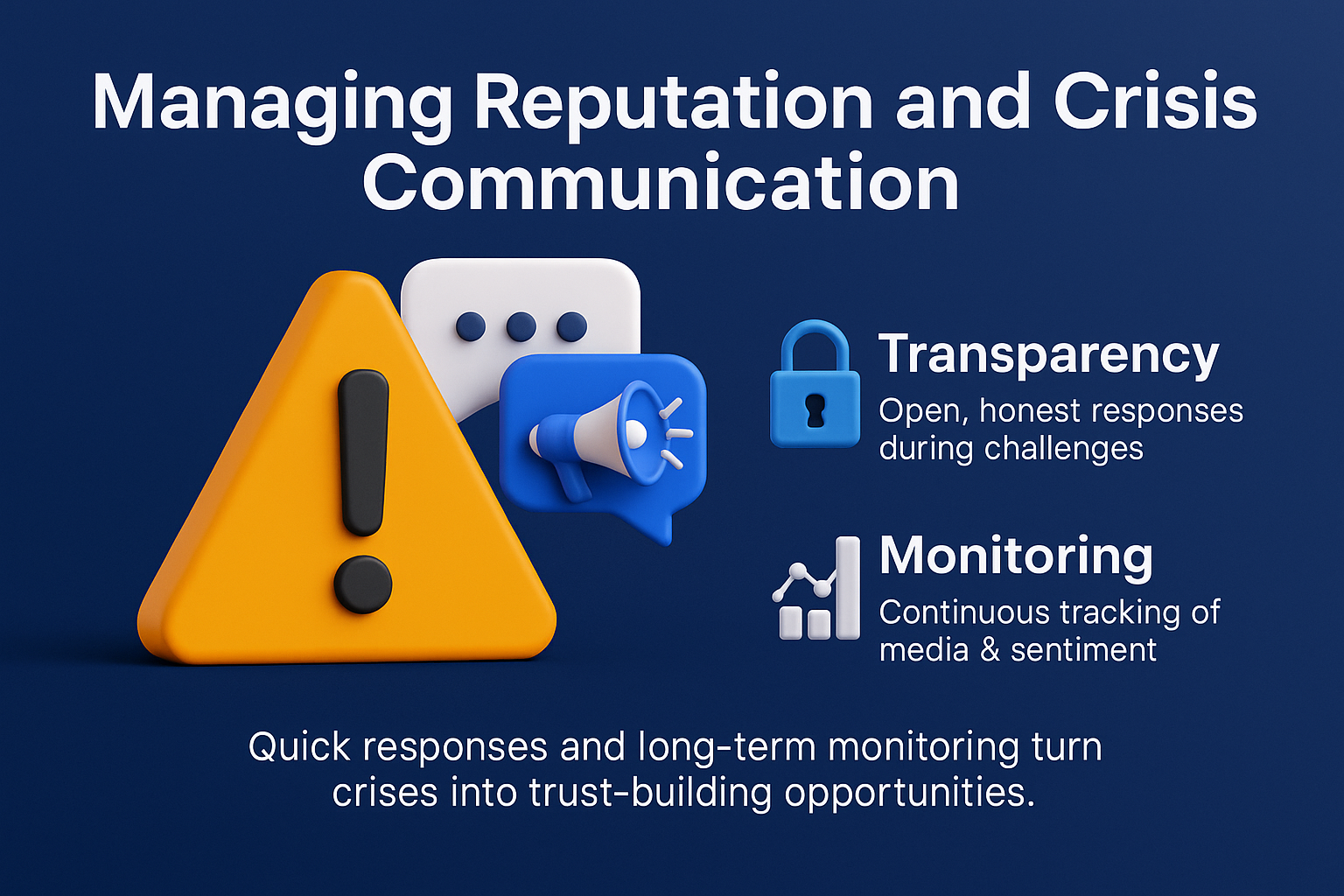
No brand is immune to criticism. For Chinese companies abroad, negative news stories or online rumors can spread quickly. This makes crisis management in Western markets an essential part of trust building. Companies that respond clearly and quickly often gain more respect than those that remain silent.
1. Transparency During Challenges
When difficulties arise, transparency is key. Instead of avoiding criticism, Chinese companies should explain actions, outline solutions, and communicate openly. Western audiences value honesty, even when mistakes happen. By addressing issues publicly, brands strengthen their image as trustworthy and reliable, turning crises into opportunities to show responsibility.
2. Long-Term Reputation Monitoring
PR doesn’t end with one campaign. Continuous monitoring of media coverage, social mentions, and customer feedback is necessary to maintain credibility. Tools like Meltwater or Brandwatch help companies track sentiment. For Chinese brands, this proactive approach ensures problems are spotted early, and positive coverage is maximized.
Localizing Brand Identity for Chinese Companies in Western Markets
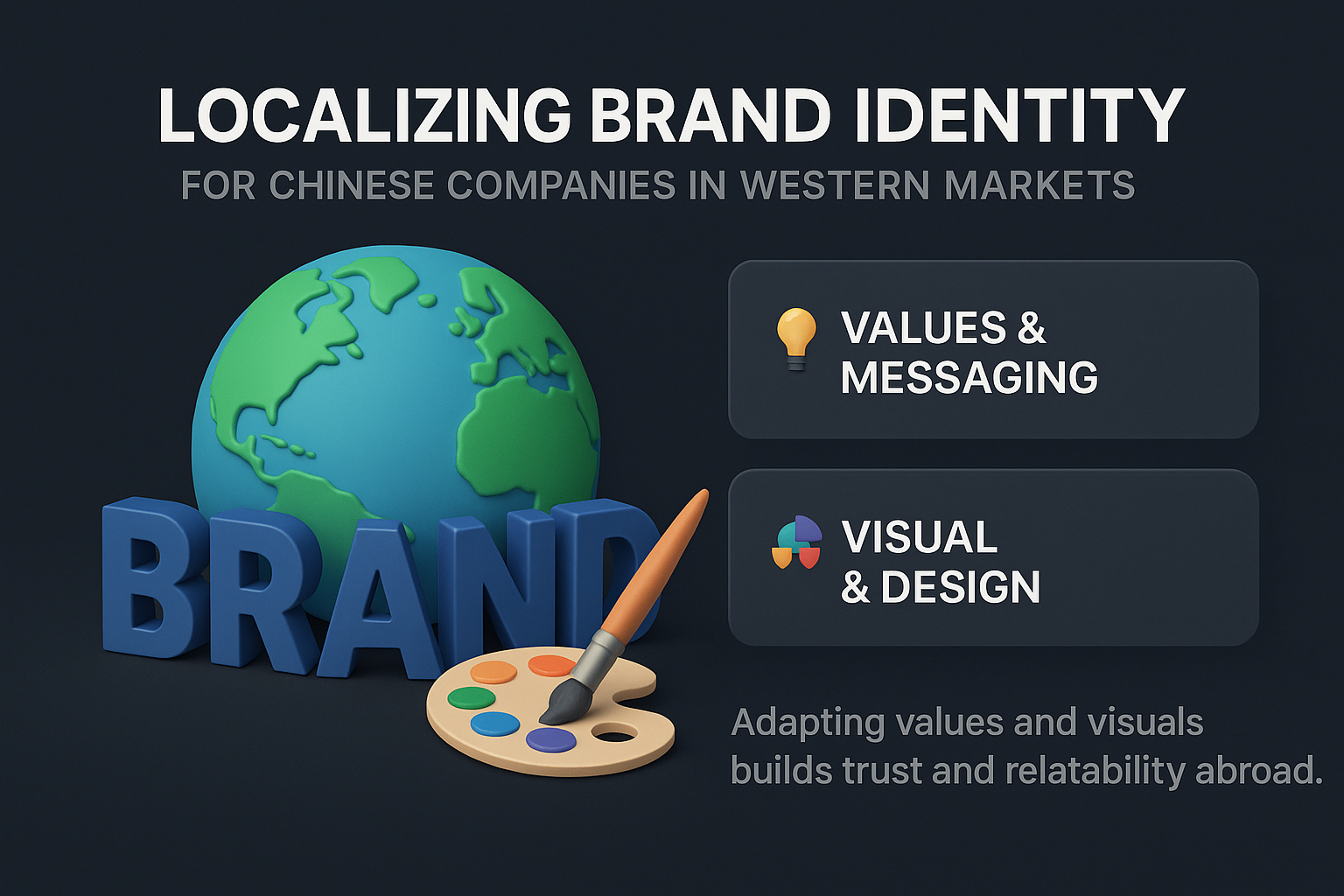
For many Chinese companies, one of the hardest challenges is localizing brand identity for Western markets. Building trust abroad requires more than direct translation: it requires adapting values, visuals, and messaging to fit local expectations. Without this step, even great products may feel foreign or out of touch.
Translating Values, Not Just Language
Localization is not about word-for-word translation. It is about aligning the brand’s story with what resonates in a new culture. Western consumers want to know the why behind a brand. For Chinese companies overseas, adopting values like sustainability, innovation, or reliability helps create connections.
Key strategies for cultural adaptation include:
Emphasizing values such as transparency, eco-friendliness, or social responsibility.
Adjusting tone of voice to match local communication styles.
Using imagery and colors that align with cultural meanings.
Avoiding slogans or phrases that may not translate well.
When Chinese companies focus on values instead of literal translations, they turn their identity into something relatable and trustworthy abroad.
Visual and Cultural Adaptation Strategies
Visuals matter as much as language. In Western markets, certain designs feel more familiar and trustworthy than others. For example, minimalistic design, clear product labeling, and straightforward messaging often work better than overly complex presentations. For Chinese brand identity abroad, adapting visuals shows respect for local culture and buyer expectations.
Practical localization steps include:
Redesigning packaging with bilingual labels and clear certifications.
Creating region-specific websites with localized user experience.
Featuring Western models, locations, or lifestyle elements in campaigns.
Consulting cultural advisors to avoid missteps.
By making these adjustments, Chinese companies prove that they are not just exporting products – they are building a brand that belongs in the Western market.
Digital Presence and Transparency
In Western markets, credibility begins online. Before buying, most customers will research a company’s website, reviews, and social presence. For Chinese brands abroad, a strong digital presence signals professionalism and reliability. Without clear, transparent online communication, Western buyers may hesitate to trust even high-quality products.
Why Transparency Builds Chinese Brand Credibility
Transparency is one of the fastest ways to reduce doubt. Western customers want to see company information, product certifications, and honest policies. For Chinese companies in global markets, this means showing compliance and openness, not hiding behind vague messaging. The table below outlines what Western buyers expect to see online:
| Element | What Western Buyers Expect | Impact on Trust |
|---|---|---|
| Company Website | Clean design, English content, clear contact details | Shows legitimacy and professionalism |
| Certifications | Visible ISO, CE, FDA, or eco-labels | Proves compliance with global standards |
| Product Information | Transparent pricing, detailed specs, shipping policies | Builds confidence and reduces hesitation |
| Sustainability Messaging | Eco-friendly practices and sourcing details | Aligns with Western consumer values |
| FAQ and Support | Quick answers and responsive service | Demonstrates reliability and accountability |
When Chinese companies integrate these transparency elements, they reassure buyers that the brand operates at global standards.
Building Online Credibility Through Digital Presence
Digital presence goes beyond websites. It includes search visibility, social proof, and responsiveness. Western buyers expect brands to be active online and to engage openly with customers. For Chinese companies entering Western markets, ignoring this step weakens credibility. To strengthen online presence, companies should:
Optimize websites for international SEO to appear in Google results.
Maintain active social media accounts on LinkedIn, Instagram, and TikTok.
Use customer service channels with clear response times.
Showcase testimonials and case studies on official sites.
By combining transparency with a visible digital presence for Chinese brands, companies transform from distant suppliers into trusted partners in Western markets.
Why aboveA Is the Right Partner for Chinese Brand Credibility?
Trust is the real driver of international success. For Chinese companies abroad, building credibility in Western markets often feels like the hardest challenge. Competing on price alone is not enough. Western buyers demand transparency, proof, and consistency before they commit. This is where aboveA helps. With expertise in international SEO, PR strategies, and digital growth, aboveA guides Chinese brands through the exact steps needed to win credibility. From startups to larger firms, the agency provides systems that help turn perception challenges into growth opportunities.
Global Expertise and Cultural Insight
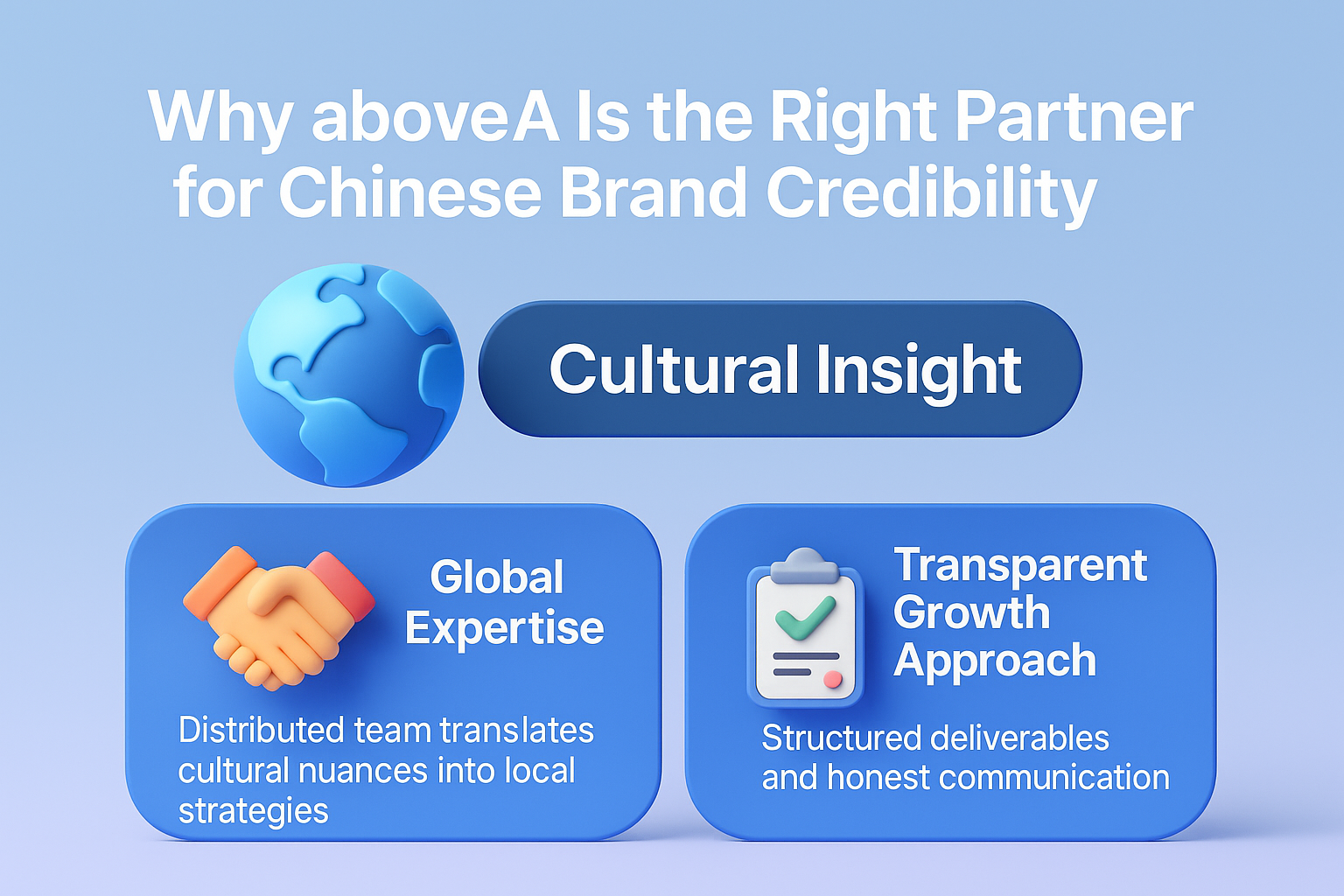
aboveA’s strength lies in its global reach paired with local sensitivity. With a distributed team across Asia, Europe, and North America, the agency translates cultural nuances into strategies that connect with local audiences. For Chinese brand credibility in Western markets, this balance is essential. It ensures that messaging feels authentic and campaigns resonate with buyer expectations. Unlike one-size-fits-all agencies, aboveA tailors every deliverable to match both global standards and regional realities.
Transparent Growth Approach
aboveA also stands out for its transparency. Every strategy comes with structured deliverables, transparent reporting, and measurable outcomes. This mirrors exactly what Western buyers want: honest communication and accountability. For trust building for Chinese companies abroad, aboveA offers not only marketing solutions but also a framework for long-term credibility.
Conclusion: Trust as the Foundation of Global Growth
For Chinese companies entering Western markets, success is not built on pricing alone; it is built on trust. Buyers in the U.S. and Europe want proof that a brand is credible, transparent, and committed to quality. That proof comes from authentic reviews, strong partnerships, clear PR strategies, and localized brand identities.
Without these signals, even innovative products can be ignored. With them, Chinese brands can compete and thrive internationally. aboveA specializes in guiding companies through this process, helping them transform perception into opportunity. For businesses serious about long-term credibility, aboveA provides not just campaigns, but a system of trust that scales with growth.
Frequently Asked Questions
1. Why do Western consumers hesitate to trust Chinese brands?
Many Western buyers worry about product quality, data privacy, or cultural unfamiliarity. Addressing these issues through transparency and reviews helps improve Chinese brand credibility abroad.
2. How important are customer reviews for Chinese brands overseas?
Reviews are critical. Around 88% of Western buyers read reviews before purchasing. Positive feedback builds trust for Chinese companies abroad, while unanswered criticism can damage credibility quickly.
3. Can partnerships help Chinese brands gain credibility in Western markets?
Yes. Collaborations with Western distributors, retailers, or influencers give immediate validation. These partnerships act as endorsements, helping Chinese companies build trust and legitimacy with Western consumers.
4. How can PR support trust building for Chinese companies abroad?
PR builds credibility by securing media coverage, publishing thought leadership, and managing crises. A clear PR strategy strengthens Chinese brand credibility in Western markets over time.
