


Karina Kavaleuskaya
She combines a passion for storytelling with a strategic mindset to help brands grow, stand out, and connect deeply with their audiences. Through thoughtful, impactful writing, she turns complex ideas into clear, engaging narratives that drive results.
From China to the World: Expansion Strategies That Work in 2025
Global growth in 2025 is within reach for Chinese companies ready to expand. Competition is tough, but the opportunity is massive. This Chinese business go global guide offers a clear, step-by-step playbook to help brands move from research to results. Each stage of the expansion strategy focuses on trust, localization, and visibility, key drivers for success in Western markets. By following this playbook, Chinese companies can reduce risks, avoid common mistakes, and scale internationally with confidence. Expansion isn’t guesswork; it’s a process that works best when done systematically.
Ready to Take Your Chinese Business Global?
Table of Contents
Market Research for Chinese Business Expansion Strategy
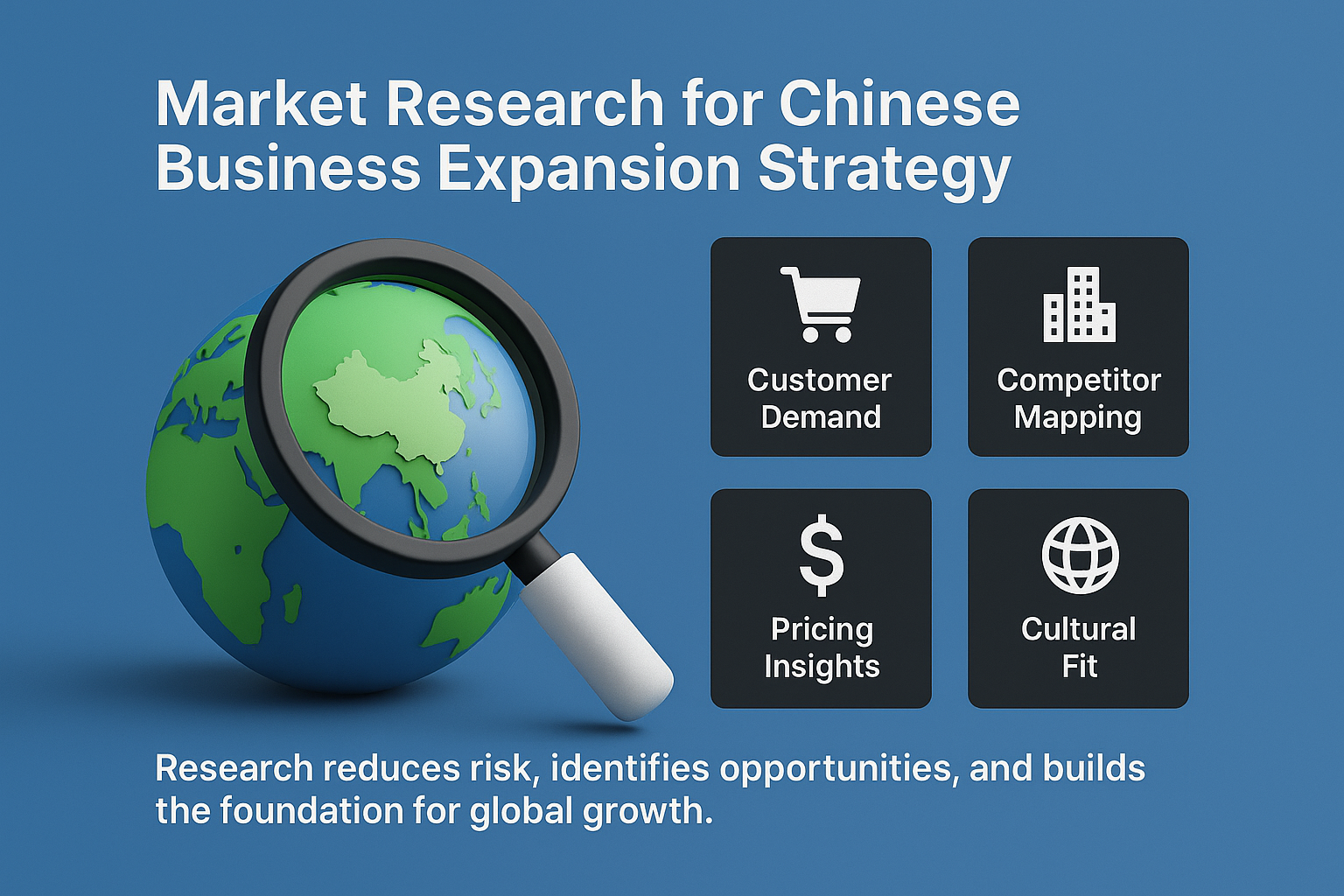
Every Chinese business go global guide begins with research. Without it, companies risk spending heavily in markets where demand is low or competition is too strong. Careful research reduces uncertainty and gives direction for the entire expansion strategy. The first step is identifying high-potential regions. Southeast Asia offers fast e-commerce growth and rising digital adoption. Europe rewards companies that focus on innovation and sustainability. The United States delivers unmatched scale, yet strict compliance rules and intense competition mean only prepared brands succeed. Choosing the right market depends on balancing opportunity with barriers.
Effective market research for Chinese companies abroad should cover customer demand, competitor mapping, pricing expectations, and cultural alignment. Tools like Google Trends can show how buyers search, while Statista provides industry forecasts. Platforms such as SEMrush or Euromonitor help track keywords and competitor positioning. These insights give companies a clearer path forward. When research is done well, it highlights entry points that businesses can target with confidence. It also prevents costly mistakes by showing which markets should be avoided. For Chinese companies going global, research is not just the first step; it is the foundation for long-term growth.
Legal and Regulatory Preparation for Chinese Companies Going Global
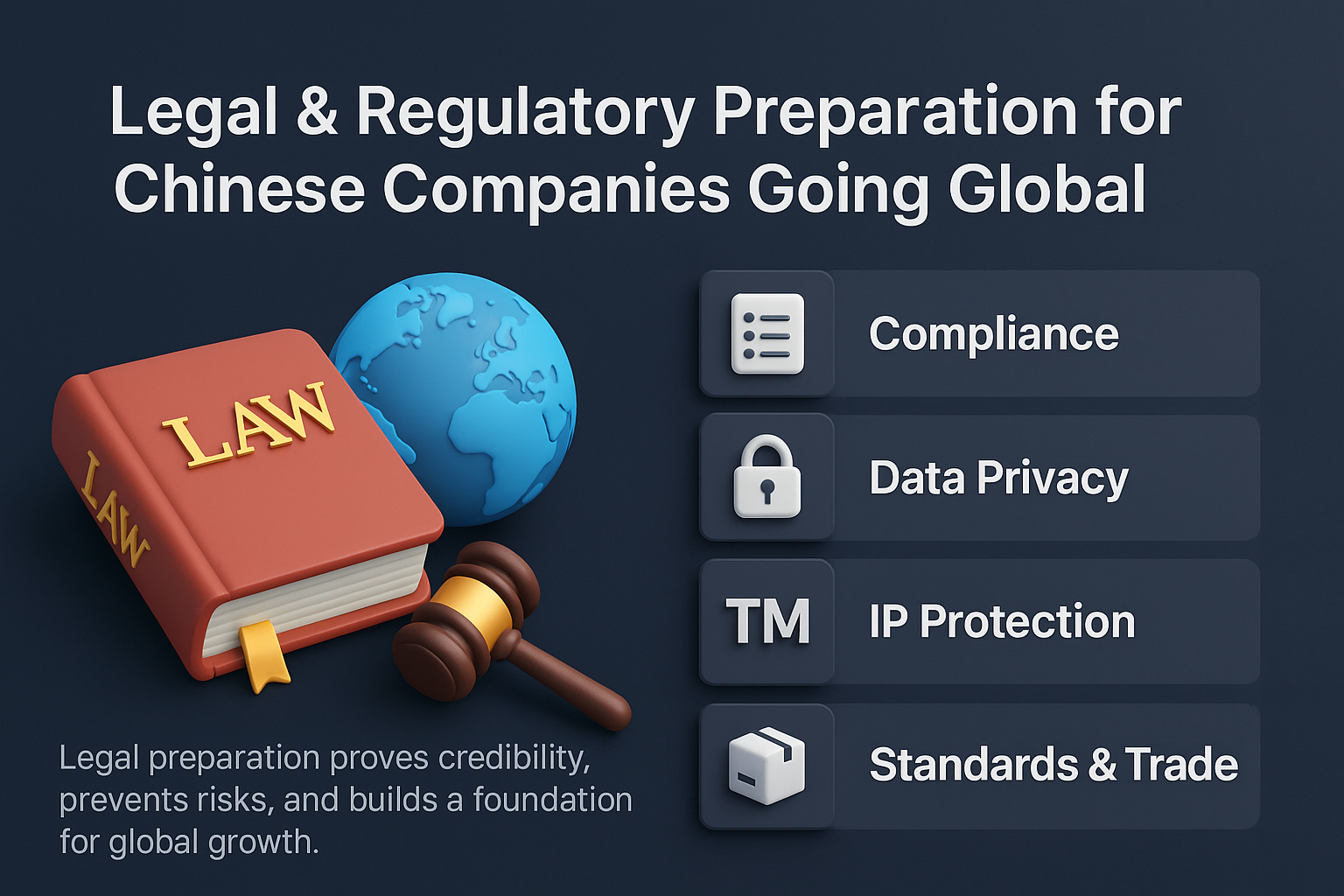
A strong international expansion strategy requires more than good products. For Chinese companies going global, legal and regulatory preparation is the stage that ensures operations can run smoothly abroad. Skipping this step often leads to delays, fines, or failed entries.
The first area to handle is business compliance. Each country has rules for company registration, taxes, and employment. The European Union enforces strict GDPR data privacy laws, while the United States requires full attention to consumer protection and product safety standards. Meeting these requirements shows Western buyers that a brand is serious and reliable.
Intellectual property protection is another critical factor. Registering trademarks and patents in target markets prevents competitors from blocking entry or copying products. Companies that protect their rights early gain firmer ground when scaling internationally. Regulations also apply to trade and product standards. Export licenses, labeling, and safety certifications must be secured before entering shelves or online platforms. Working with local legal advisors or compliance consultants can reduce risk and speed up this process.
For Chinese businesses abroad, legal preparation is not just paperwork. It is proof of credibility. A company that meets international standards earns trust, avoids costly mistakes, and builds a stronger foundation for global growth.
Localization and Brand Positioning for Chinese Businesses Abroad
Expanding successfully requires more than shipping products overseas. For Chinese companies going global, localization and brand positioning determine how buyers perceive them in new markets. A brand that feels unfamiliar struggles, while one that speaks the local language and reflects cultural values earns trust faster. This stage ensures a company becomes relatable, competitive, and credible in Western markets, where brand identity is as important as product quality.
Why Localization Matters in a Chinese Business Expansion Strategy?
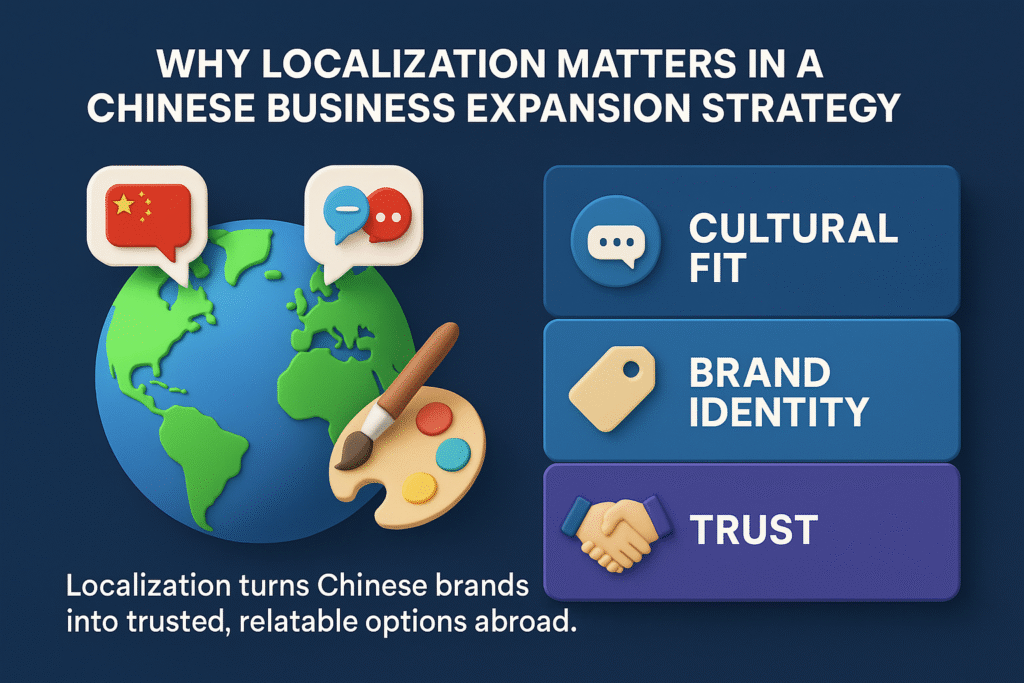
A strong product is not enough when entering Western markets. Buyers want brands they can connect with. For Chinese companies abroad, localization transforms a business from an outsider into a trusted option. It goes beyond translation. It involves reshaping brand identity, messaging, and presentation so that they align with cultural expectations.
When companies adapt their identity, they reduce friction and build trust. Without localization, even excellent products can feel foreign or unreliable. With it, Chinese businesses gain credibility and create familiarity in competitive environments.

Core Elements of Brand Localization
Brand localization for Chinese companies requires adjusting multiple layers of presentation. These elements work together to create a trustworthy presence in Western markets:
Language adaptation – Moving past translation to use local expressions and tone.
Visual design – Adjusting packaging, websites, and ads to match cultural aesthetics.
Value alignment – Highlighting sustainability, transparency, or innovation when those values drive Western buyers.
Product adaptation – Changing features, packaging size, or ingredients to match local preferences.
Localization ensures that a company doesn’t just sell products; it builds a relationship with the market.
Cultural Differences in Brand Perception
Different regions respond differently to branding. A phrase or image that works well in China can feel out of place abroad. To avoid mistakes, companies need to understand how culture shapes perception. Here’s a simple comparison of branding differences:
| Region | Key Buyer Expectation | What Builds Trust |
|---|---|---|
| Europe | Sustainability and ethics | Eco-labels, transparent sourcing, social responsibility |
| United States | Innovation and reliability | Clear product information, strong reviews, certifications |
| Southeast Asia | Accessibility and price balance | Affordable quality, responsive support, regional partnerships |
This table shows why a Chinese business expansion strategy must consider not only logistics but also cultural context.
Positioning Chinese Brand Identity Abroad
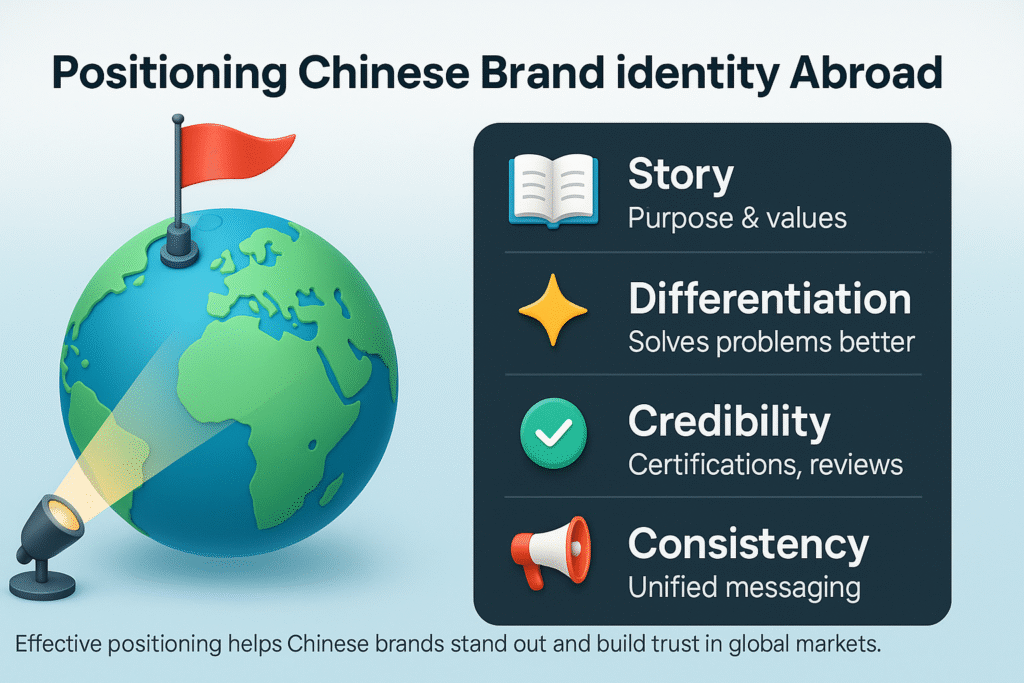
Positioning is how a company defines itself against competitors. For Chinese brands abroad, positioning requires clarity. It should communicate why a customer should choose the brand over local or global alternatives.
Effective positioning often includes:
A clear brand story that highlights purpose and values.
Differentiation that shows how products solve problems better or faster.
Proof of credibility through certifications, reviews, and case studies.
Consistent messaging across websites, ads, and social platforms.
This approach shows buyers that the company is not just exporting; it is investing in the market.
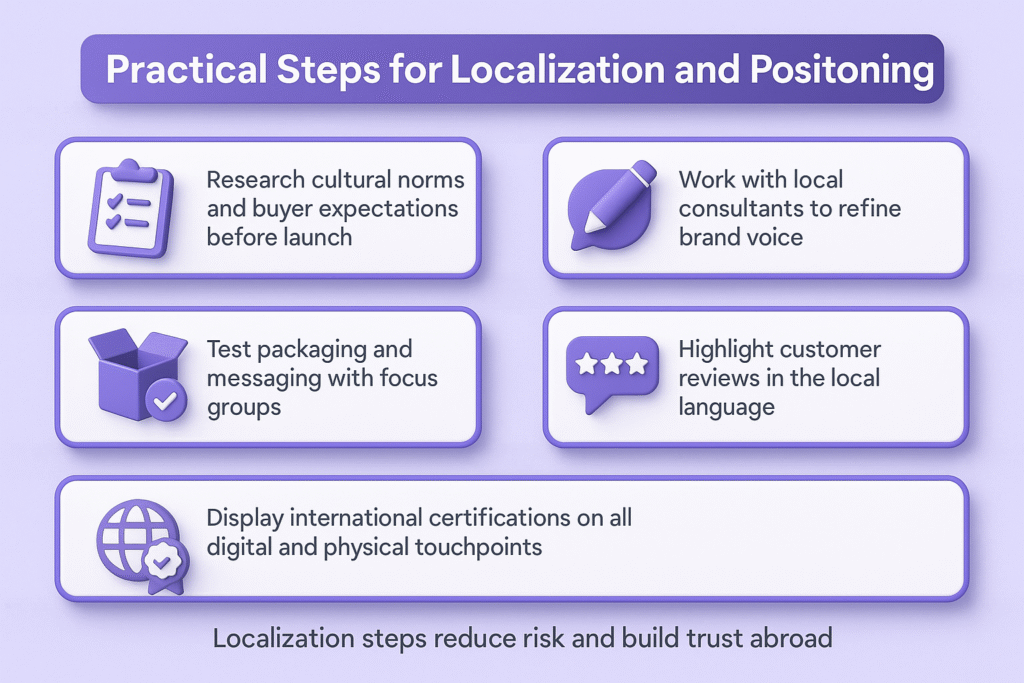
Practical Steps for Localization and Positioning
Chinese companies entering Western markets can follow practical steps to ensure brand localization is done correctly:
Research cultural norms and buyer expectations before launch.
Work with local consultants to refine brand voice.
Test packaging and messaging with focus groups.
Display international certifications on all digital and physical touchpoints.
Highlight customer reviews in the local language.
These steps reduce risk and strengthen credibility.
Final Thoughts on Localization and Positioning
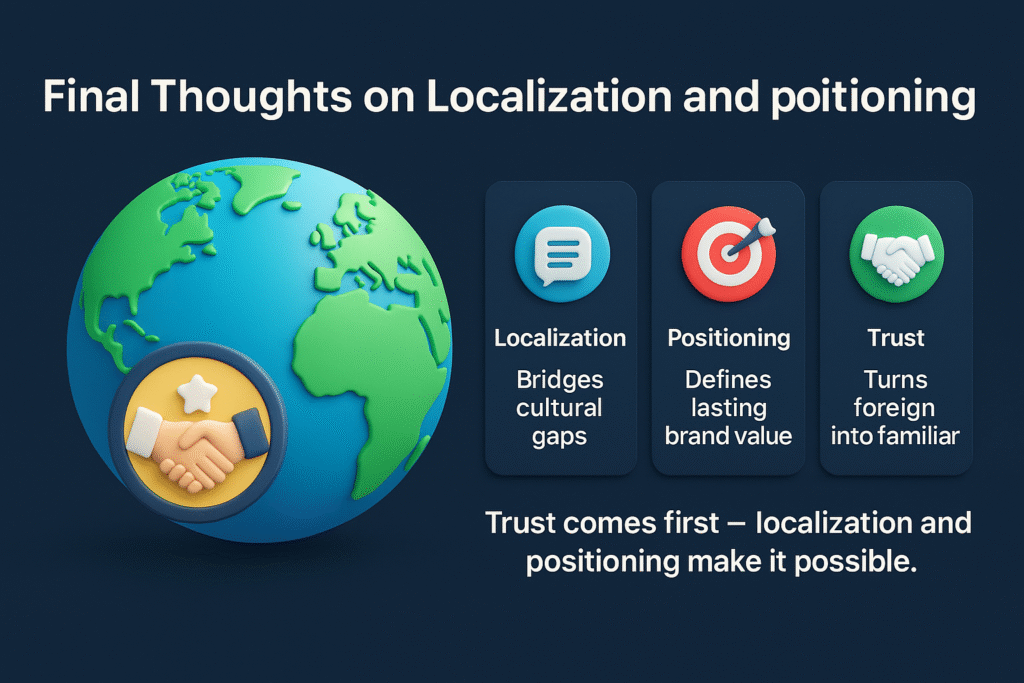
For Chinese companies expanding abroad, localization is not optional; it is essential. Brand localization for Chinese companies bridges cultural gaps and builds trust with Western buyers. Positioning ensures that once a brand is noticed, it is remembered for the right reasons.
Companies that invest in localization show they respect the market, not just its profits. Over time, this approach transforms a foreign business into a trusted international brand. In global expansion, trust comes first, and localization is the tool that creates it.
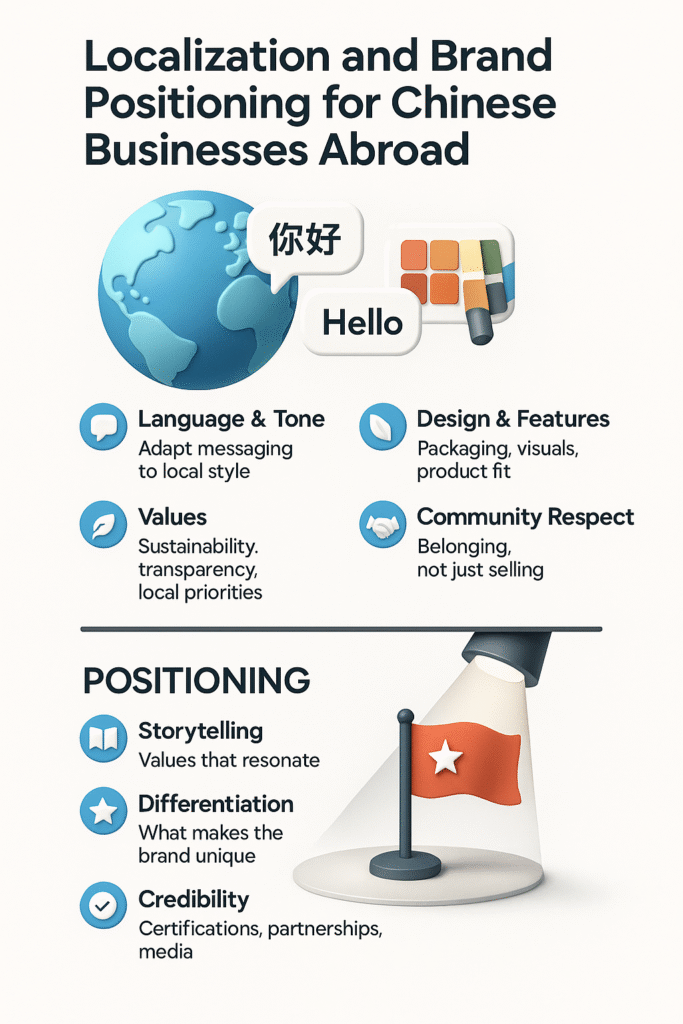
Localization and Brand Positioning for Chinese Businesses Abroad
Expanding into Western markets requires more than competitive pricing or reliable logistics. For Chinese companies going global, building trust often starts with how the brand is presented. Localization ensures that the company feels natural to local buyers, while positioning defines how it competes against established players. Without this stage, even strong products risk being overlooked in crowded markets.
The Role of Localization in Chinese Business Expansion Strategy
Localization is the process of reshaping brand identity so that it resonates with the culture, expectations, and values of a new market. It goes beyond translation. Western consumers want to feel that a brand understands them. This means adapting language tone, design, messaging, and even product features to fit local norms.
For example, European buyers often prioritize sustainability. Brands that highlight eco-friendly practices can build stronger credibility. In the United States, clear product information and strong reviews carry more weight. By adapting communication to reflect these expectations, Chinese companies abroad reduce friction and create familiarity.
Localization also signals respect. It shows that the company is not only interested in selling but also in becoming part of the community. This change in perception can transform a foreign brand into a trusted player.
Positioning Chinese Brand Identity Abroad
Positioning answers a simple question: why should buyers choose this brand instead of another? For Chinese business expansion abroad, the answer must be clear, consistent, and backed by proof. Positioning is achieved through storytelling, differentiation, and credibility.
Storytelling allows a brand to communicate its values in a way that resonates with Western audiences. Differentiation highlights what the brand offers that others do not – better pricing, unique features, or higher reliability. Credibility comes from visible signals such as certifications, partnerships, and media coverage.
When done well, positioning builds recognition and loyalty. It tells buyers that the company is not just entering the market but is committed to delivering long-term value. For Chinese brands, strong positioning is what turns curiosity into trust, and trust into growth.
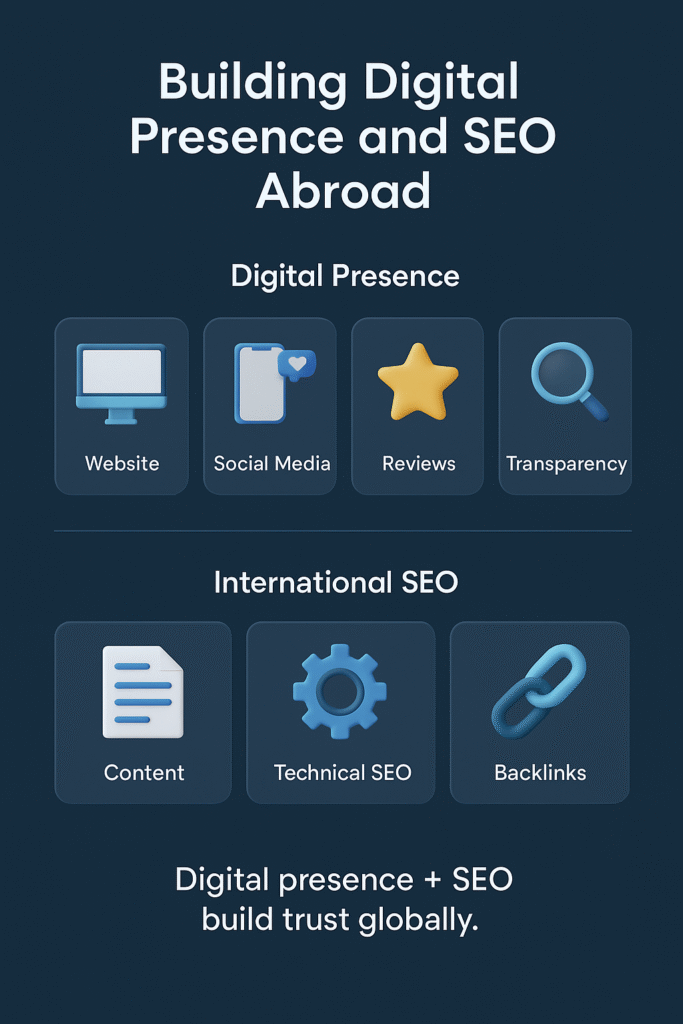
Building Digital Presence and SEO Abroad
International SEO for Chinese businesses is the foundation of visibility in Western markets. Without it, even strong products remain hidden from potential buyers. A clear digital presence, supported by SEO signals, establishes credibility, fosters recognition, and enables companies to stand out from competitors already established abroad. For Chinese brands, this stage is not optional; it is the entry point to trust and growth.
Why Digital Presence Matters for Chinese Companies Abroad?
A strong digital presence for Chinese brands determines how they are judged before any purchase. Western buyers almost always research a company online. A professional website written in fluent English shows legitimacy. Active social media profiles reflect consistency. Reviews on trusted platforms prove reliability. Without these signals, hesitation rises, even when the product itself is competitive.
Transparency strengthens this presence. Western consumers expect clear pricing, visible certifications, and honest communication about quality and sustainability. Brands that provide this information build trust. Those that stay vague or difficult to research lose ground quickly.
International SEO and Visibility in Western Markets
Chinese business expansion strategy requires SEO tailored to global platforms. Success on Baidu does not transfer to Google or Bing, where ranking depends on content quality, technical optimization, and credible backlinks. Western markets reward sites that are mobile-friendly, structured with data, and supported by authoritative links.
International SEO ensures that buyers can actually discover the brand. Optimized content in English and local languages attracts search traffic. Backlinks from respected websites in the region confirm authority. As visibility increases, so does engagement, and with engagement comes trust.
For companies following a Chinese business go global guide, building digital presence through SEO is not just marketing. It is the signal that the brand is ready to compete and win internationally.
Sales and Distribution Strategy for Chinese Companies Abroad
Sales and distribution strategies for Chinese companies abroad determine how buyers access products in new markets. Without a clear plan, even strong brands struggle to convert visibility into revenue. Choosing between direct-to-consumer websites, e-commerce marketplaces, and local retail partnerships is critical. Each option carries advantages and costs. Direct sales allow more control and higher margins but require heavy marketing investment.
Marketplaces like Amazon or Shopee offer reach but increase competition and fees. Retailers provide immediate trust yet demand compliance with strict standards. The correct expansion strategy balances cost with exposure, ensuring products are both visible and accessible. For Chinese businesses going global, distribution is not just logistics; it is the stage that turns international presence into measurable growth.
Partnerships, PR, and Credibility Building for Chinese Companies Abroad
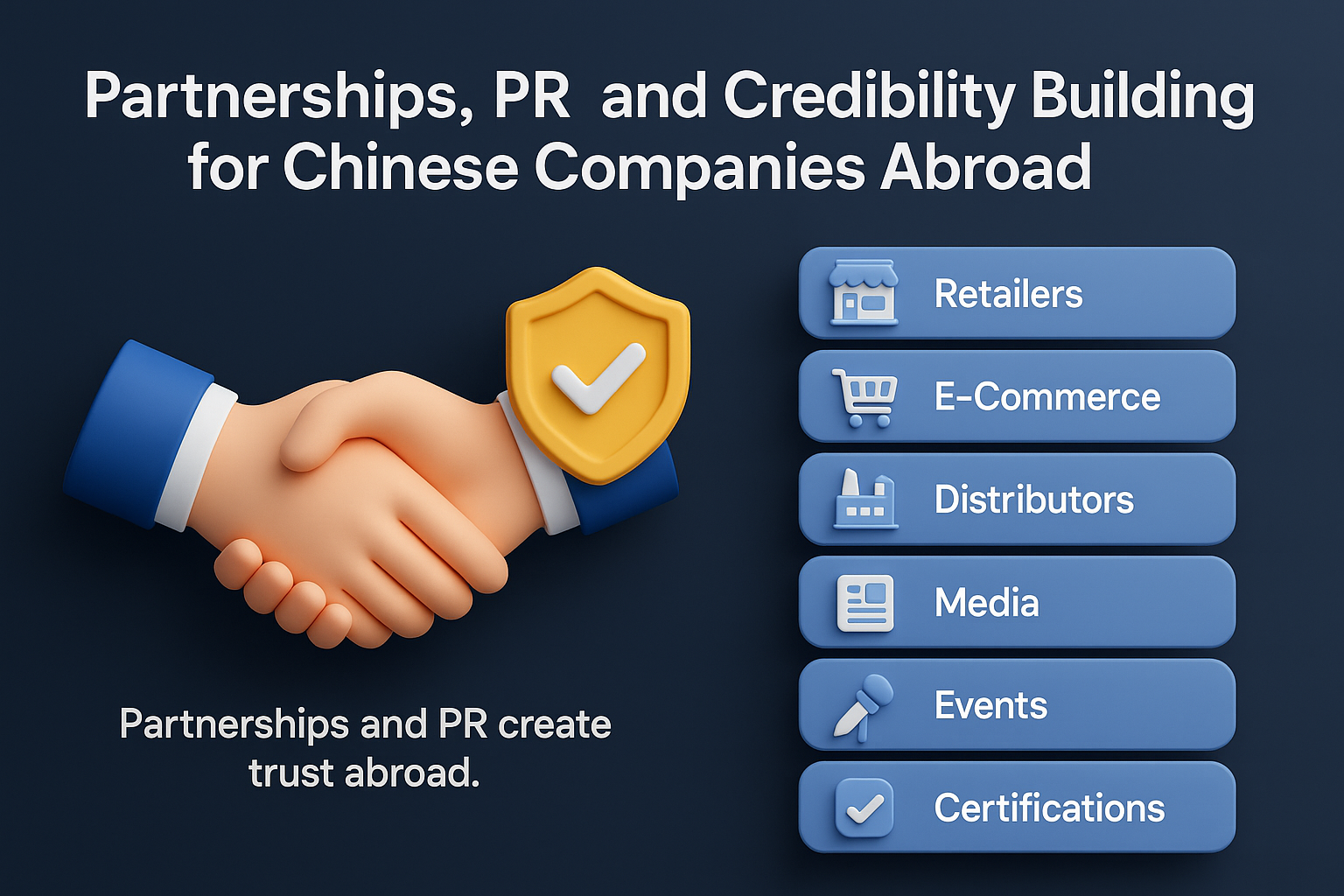
Partnerships and credibility strategies for Chinese companies abroad are critical for long-term success. Even if a product is affordable, innovative, or reliable, Western buyers hesitate without external signals of trust. This is why partnerships, public relations, and visible credibility strategies form the backbone of an expansion strategy. They reduce doubt, create social proof, and transform perception from foreign outsider to trusted brand.
Partnerships as the Foundation of Trust
Partnerships play a central role in trust building for Chinese companies abroad. Working with well-known distributors, retailers, or platforms gives brands instant recognition. When Western buyers see a product in familiar stores or on trusted e-commerce channels, they assume it has passed strict quality checks. This association makes the brand feel safer.
Partnerships also open doors to better networks and resources. Logistics companies, local suppliers, and financial service providers strengthen operations while signaling professionalism. Each alliance builds a stronger case for credibility. Without these connections, Chinese brands often face resistance. With them, expansion becomes smoother.
Types of Partnerships That Strengthen Credibility
Retailer collaborations with supermarkets, department stores, or specialty shops.
E-commerce alliances with platforms like Amazon, Lazada, or Shopee.
Distributor agreements to reach smaller outlets and regional buyers.
Industry partnerships that link the brand with known market leaders.
Each of these partnerships acts as borrowed trust. For a new entrant, this trust can be the difference between being ignored and being embraced.
Public Relations and Media Visibility
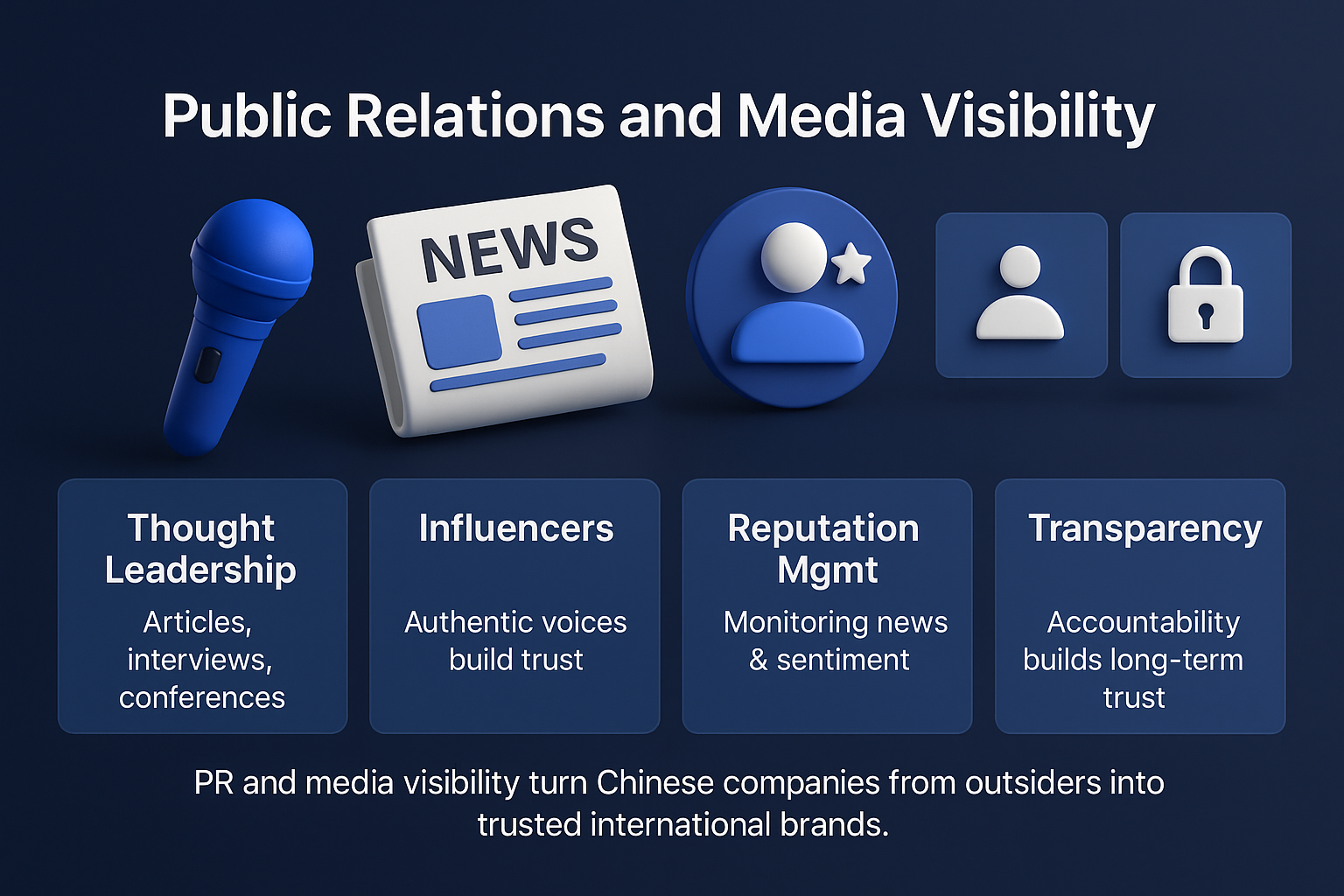
While partnerships create initial validation, international PR strategies for Chinese companies elevate credibility further. Media coverage, thought leadership, and influencer collaborations show Western audiences that the brand has authority and recognition. A strong PR campaign can shift perception quickly, moving a brand from invisible to respected.
Thought leadership is critical. When executives publish articles, appear in interviews, or speak at conferences, they position the company as more than a seller – it becomes a knowledgeable contributor. This helps build long-term trust.
Local influencers also strengthen media exposure. Western audiences often trust these voices more than ads. Influencers create authenticity by sharing experiences in relatable ways. A single endorsement can reach thousands of engaged followers, reinforcing credibility in a way advertising alone cannot achieve.
Reputation Management as a Long-Term Strategy
For Chinese brand credibility, PR does not stop after one campaign. Ongoing monitoring of news, reviews, and online sentiment is essential. Companies that respond quickly to challenges and address negative press often emerge stronger. Silence, on the other hand, can damage trust permanently.
This long-term approach requires consistent communication and openness. Buyers in Western markets value transparency above perfection. A company that admits mistakes, explains solutions, and shows accountability builds more trust than one that hides problems.
Partnerships and PR for Chinese companies abroad are more than marketing tools. They are trust-building systems that shape reputation, attract customers, and sustain growth. Without them, expansion strategies remain fragile. With them, Chinese brands gain validation, credibility, and a foundation for scaling internationally.
Performance Tracking and Scaling for Chinese Companies Abroad
Performance tracking for Chinese businesses abroad is essential for turning international expansion into a structured process. Without measurement, companies risk relying on assumptions. With it, decisions about scaling become data-driven and effective.
Key performance indicators (KPIs) give visibility into customer behavior, brand credibility, and financial results. By tracking them consistently, Chinese companies can refine strategies, strengthen operations, and scale with confidence.
| KPI Area | What to Measure | Why It Matters | Example Insight |
|---|---|---|---|
| Digital Reach | Website traffic, keyword rankings, and click-through rates | Shows online visibility and SEO impact | Increased U.S. traffic signals for effective localization |
| Conversions | Sales volume, lead generation, repeat purchases | Tracks direct revenue growth and customer loyalty | Strong repeat orders confirm brand trust |
| Credibility | Customer reviews, influencer mentions, media coverage | Proves reliability and builds confidence with Western buyers | Positive Trustpilot reviews improve acceptance |
| Partnership Growth | Number of distributors, retailers, or platforms onboarded | Demonstrates expanded access and validation | New retail partnership boosts legitimacy |
| Customer Experience | Support response times, satisfaction scores, return rates | Reflects long-term loyalty and service quality | Faster support increases brand reputation |
| Financial Metrics | Profit margins, acquisition costs, ROI | Confirms sustainability of global operations | Rising ROI shows scalability |
Scaling Chinese companies internationally relies on these signals. Once KPIs show consistent success, businesses can expand into new regions, increase partnerships, and strengthen campaigns without unnecessary risk.
How aboveA Helps Chinese Companies Go Global?
aboveA helps Chinese companies go global by providing strategies that reduce risk and speed up international success. Expanding abroad is complex, but with the right partner, growth becomes structured and achievable. aboveA specializes in building customized expansion strategies that cover every stage of the journey, from market research and localization to partnerships and scaling.
One of the agency’s strengths is international SEO, ensuring Chinese brands are visible on Google, Bing, and other global platforms beyond Baidu. Visibility creates trust, but also reinforces it with credibility systems, customer review strategies, PR campaigns, and partnership support that position companies as reliable in Western markets.
aboveA also works with businesses to optimize operations through marketing automation, lead generation systems, and performance tracking. This means Chinese companies don’t just enter markets; they compete effectively and measure results with confidence.
For startups, aboveA provides lean, transparent solutions. For larger companies, it delivers scalable systems designed to win trust and expand internationally. With a global team and proven methods, aboveA transforms uncertainty into opportunity, helping Chinese brands grow beyond borders.
Conclusion: Chinese Business Go Global Guide
This Chinese business go global guide shows that expansion is not a single leap but a series of structured steps. From market research and compliance to localization, partnerships, and performance tracking, every stage builds trust and clarity. Success abroad depends on careful preparation, transparent communication, and consistent credibility signals.
Chinese brands that invest in research, adapt their identity, and measure results create long-term growth. Expansion becomes sustainable when guided by data and trust. With the right strategy, Chinese companies can confidently compete and thrive in Western markets.
Frequently Asked Questions
1. What is the first step in a Chinese business expansion strategy?
The first step is market research. Chinese companies should analyze demand, competitors, and cultural expectations before choosing target regions for global expansion.
2. Why is localization important for Chinese brands abroad?
Localization ensures products, branding, and communication feel natural in Western markets. It builds trust, reduces cultural friction, and helps Chinese businesses connect with international audiences effectively.
3. How can trust building for Chinese companies abroad be achieved?
Trust building comes from partnerships, PR, reviews, and transparency. These credibility signals reassure Western buyers, making Chinese companies appear reliable and serious about long-term commitment.
4. What metrics matter most when scaling internationally?
Key metrics include website traffic, conversions, reviews, partnerships, and ROI. Tracking these KPIs helps Chinese businesses refine strategies and scale abroad with confidence.
