
Faustas Norvaisa
A Growth & Product Expert with 9 years of experience in revenue diversification, international expansion, SEO, and digital marketing. Passionate about scaling businesses and building global brands, he empowers companies to thrive with his motto, "sharing is caring.
Startup funding in Hong Kong in 2026: How to prepare and raise capital
Startup funding in Hong Kong in 2026 can give founders access to grants, incubators, angel investors, venture capital, and public-backed innovation programmes. However, each opportunity will ask for more than a strong idea. In 2026, investors and funders are looking for traction, clear documents, market demand, financial logic, and a team that can turn capital into measurable progress.
This guide will explain how fundraising works in Hong Kong. Plus, what early-stage founders should prepare, and which funding paths fit different startup stages. You will also learn how to avoid weak applications, build investor-ready proof, and approach funding with a clearer plan before outreach begins.
Raise smarter with aboveA before pitching
Table of Contents
Startup funding in Hong Kong is active, yet selective
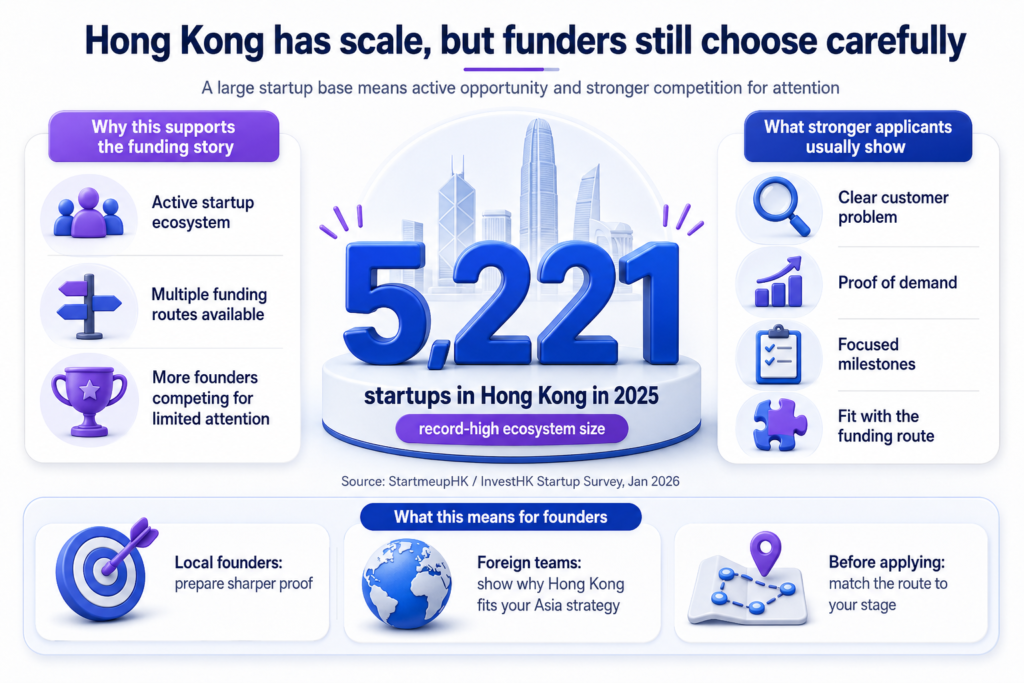
First, startup funding in Hong Kong is active, yet selective in 2026. The city gives founders access to public grants, incubators, university support, angel investors, and venture funds. Still, competition is serious. Strong applicants show evidence, not ambition alone. They must explain the customer problem, prove market demand, and connect funding to clear milestones.
This matters for local founders and foreign teams using Hong Kong as an Asia base. Before choosing any route, founders need to understand what funders actually assess. Next, we will look at the main funding options available to startups in Hong Kong and how each one works differently.
Main startup funding options in Hong Kong
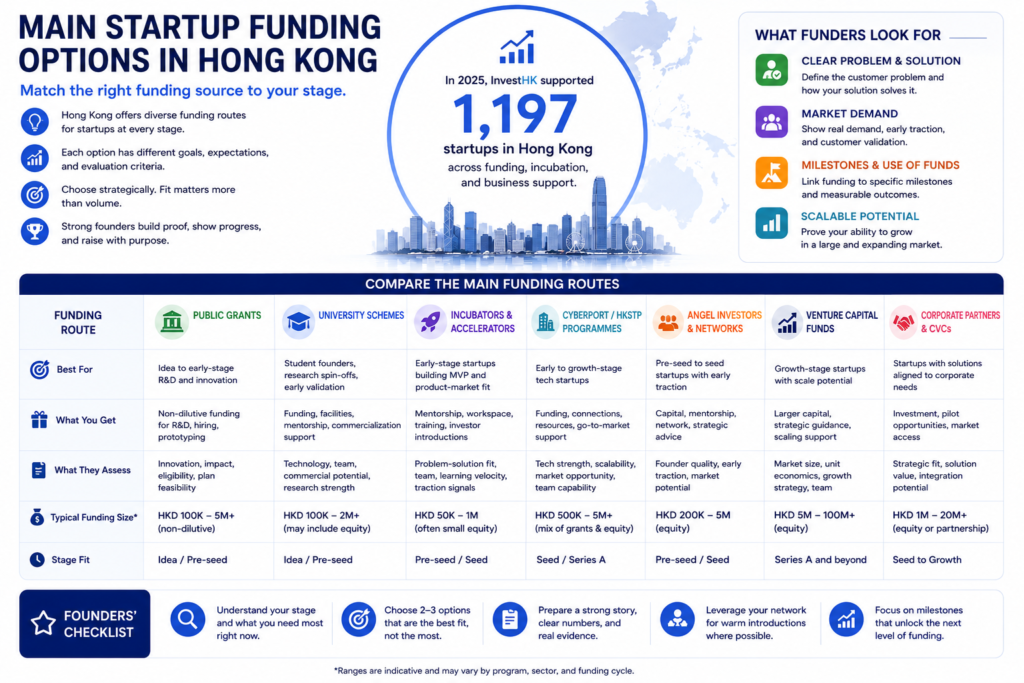
Second, startup funding options in Hong Kong can work best when founders match the source to their stage. Idea-stage teams often begin with public grants, university schemes, or early incubator programmes. These routes can help test products, build prototypes, and prepare the first proof. After that, stronger startups can move toward Cyberport, HKSTP, angel networks, venture funds, or corporate partners.
Still, every option has a different logic. Grants usually reward innovation and eligibility fit. Incubators support validation, mentorship, and investor access. Angels look at founder quality and early traction. Venture funds expect larger market potential, sharper numbers, and scalable growth. Because of this, founders should not chase every programme. Next, we will compare the main routes more clearly, using a practical side-by-side breakdown for founders.
Comparing Hong Kong startup funding routes for 2026
Of course, startup funding routes in Hong Kong serve different founder needs, so the best option depends on stage, sector, proof level, and growth plan. A founder building a prototype should not approach funding the same way as a company preparing for Series A.
| Funding route | Best fit | What founders need to show | Main value |
|---|---|---|---|
| HKSTP programmes | Tech startups with innovation potential | Prototype, R&D logic, market need, founding team strength | Incubation, funding support, mentors, investor access |
| Cyberport programmes | Digital tech, fintech, Web3, AI, smart living | MVP, product concept, commercial use case, growth plan | Seed support, business network, tech ecosystem access |
| Government grants | Research, innovation, export, or tech projects | Eligibility fit, budget plan, project scope, measurable outcomes | Non-dilutive capital and public credibility |
| Angels | Pre-seed to seed startups | Founder quality, early users, traction signs, clear story | Flexible capital, advice, warm investor links |
| VC funds | Seed to Series A companies | Revenue logic, market size, growth metrics, scalable model | Larger capital and regional growth support |
Because of this, founders should choose one primary route first. Next, we will look at pre-seed funding in Hong Kong and what early teams should prepare before applying.
Pre-seed funding in Hong Kong 2026
In 2026, pre-seed funding in Hong Kong works best when founders treat it as validation capital, not growth capital. At this stage, the goal is usually to prove the problem, build an MVP, test early users, and show that the team can move from concept to market. Hong Kong has strong early-stage routes, but each one still requires focus. Founders need a clear problem, a practical product plan, basic budget logic, and early demand signals before applying.
Start with the right pre-seed route
First of all, pre-seed funding in Hong Kong can start through public-backed programmes, university-linked support, and startup competitions. This can be very useful at the beginning since young teams are still lacking commercial maturity for venture capital. Hong Kong’s startup base also keeps expanding. Government data released in January 2026 indicated a record 5,221 startups, up 11% year over year, employing 19,753 people across fintech, ICT, biotech, education, health, and medical sectors.
On one hand, this kind of growth is creating more opportunities, but on the other hand, more competition. That’s why it’s really important for founders to match their route to the idea, wisely, so they can outcompete growing competition. A student-led fintech team, a deep-tech research project, and a digital product MVP will usually need different funding paths, documents, and proof.
Use HKSTP for early technology validation
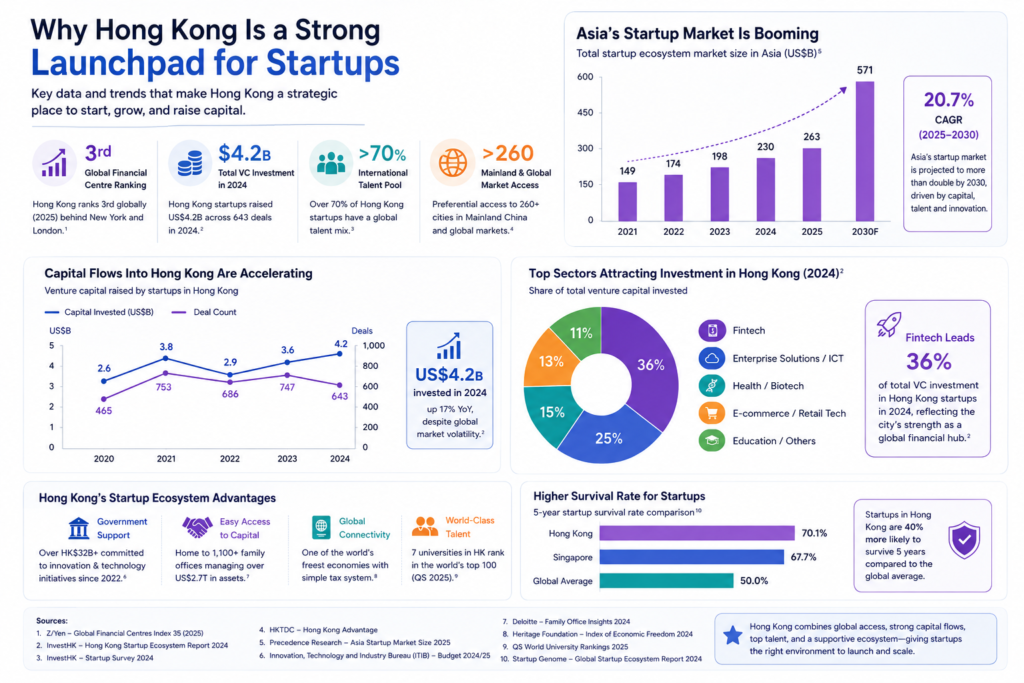
There is no denying that HKSTP can be useful for founders who are building technology-led startups. But they should not forget the need for structured validation. The 2026 Techathon+ update said selected high-potential finalists and winners can enter the HKSTP Ideation Programme, which offers up to HK$100,000 in seed funding, free co-working space, advanced technology resources, and professional mentorship. For a moment, it sounds amazing, but on the other hand, it delivers a clear signal for all applying for participation to have a well-reputed idea that can have commercial potential.
Nonetheless, this kind of route fits founders who still need to move from prototype thinking into a clearer startup model. However, the application should not sound like a school project. It must explain the customer problem, technical edge, early market need, and how the team will use support to reach the next milestone. In other words, the idea needs direction, not only creativity.
Use Cyberport for digital tech and MVP building
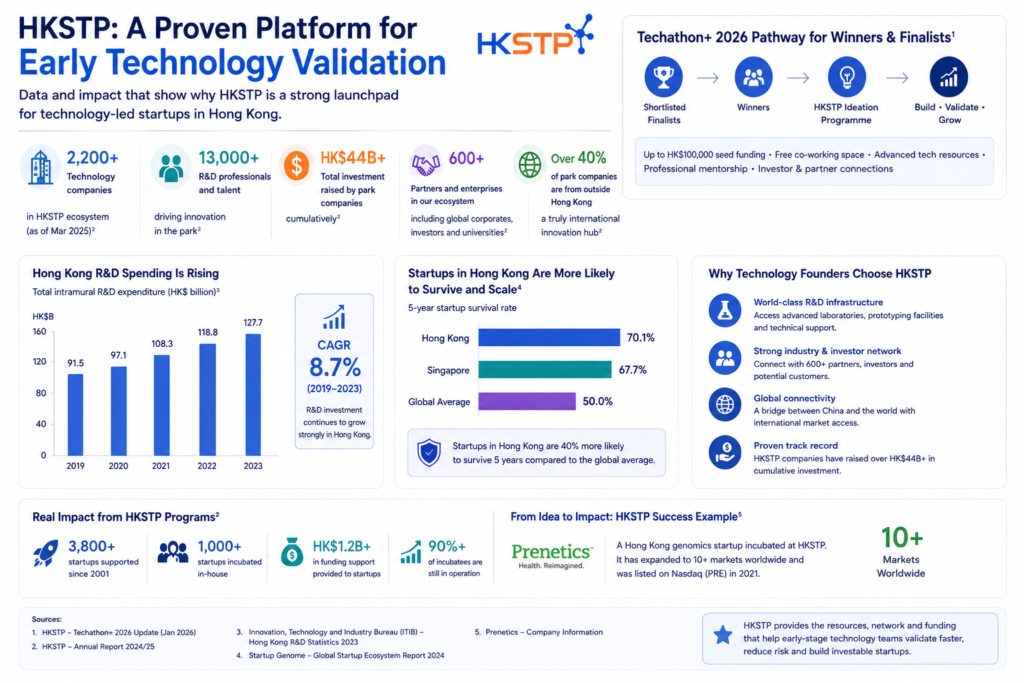
Cyberport is another strong route for early digital startups. The Cyberport Creative Micro Fund supports high-potential digital tech projects and early-stage startups with HK$100,000 in grant sponsorship and nurturing support. It also accepts projects at the idea stage or early-stage development stage with an MVP or prototype.
This route fits founders working on fintech, AI, Web3, smart living, digital services, or platform ideas. Still, the founder must show more than product excitement. Cyberport-style applications work better when the team explains the user, use case, product path, and commercial logic. A simple prototype, a few user interviews, and a clear testing plan can make the application stronger.
Prepare proof before applying
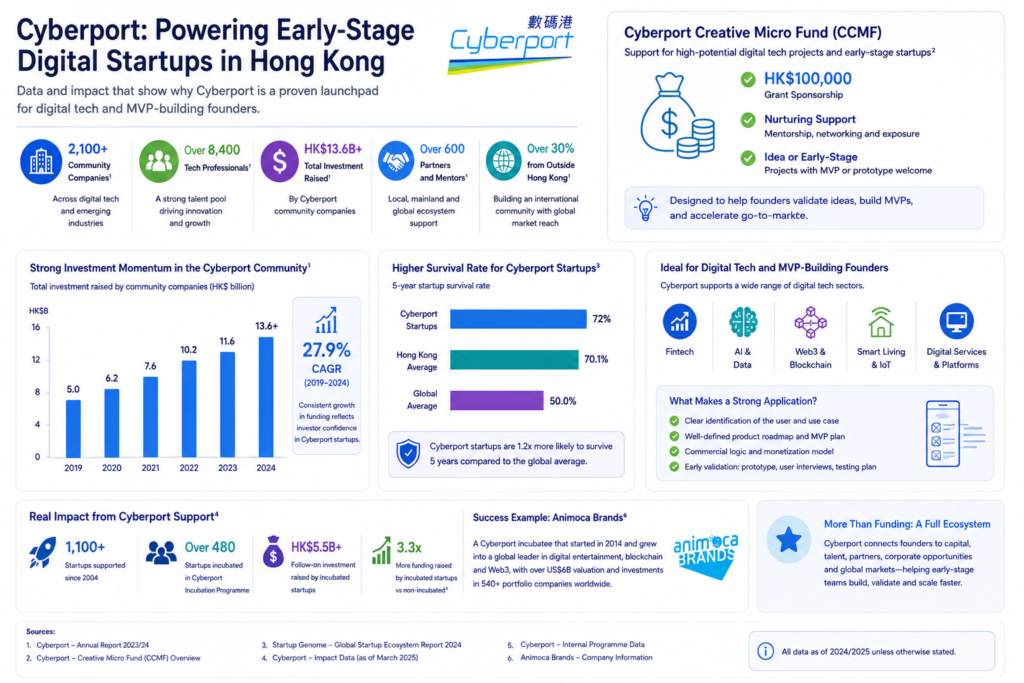
Pre-seed founders in Hong Kong should prepare proof early, even when revenue is not ready yet. Startup Genome’s Hong Kong ecosystem data shows US$1.5 billion in total seed and Series A funding for H2 2022–2024, far above the listed global average of US$514.8 million. That shows funding depth, but it does not remove selectivity.
Before applying, founders should prepare a short pitch deck, MVP plan, market notes, budget, founder profile, and early validation summary. Next, we will look at seed and Series A funding in Hong Kong, where investors expect stronger traction, cleaner metrics, and a sharper growth case.
Seed and Series A funding in Hong Kong for 2026
In 2026, seed and Series A funding in Hong Kong is about proving that the startup can move beyond early interest. At this stage, investors expect cleaner numbers, stronger customer proof, and a growth plan that can survive real market pressure. The story also changes. A founder is no longer asking for help to test an idea. The company is asking for capital to grow sales, deepen product capability, hire stronger talent, or expand across Hong Kong, the Greater Bay Area, or wider Asia.
What seed investors expect in 2026
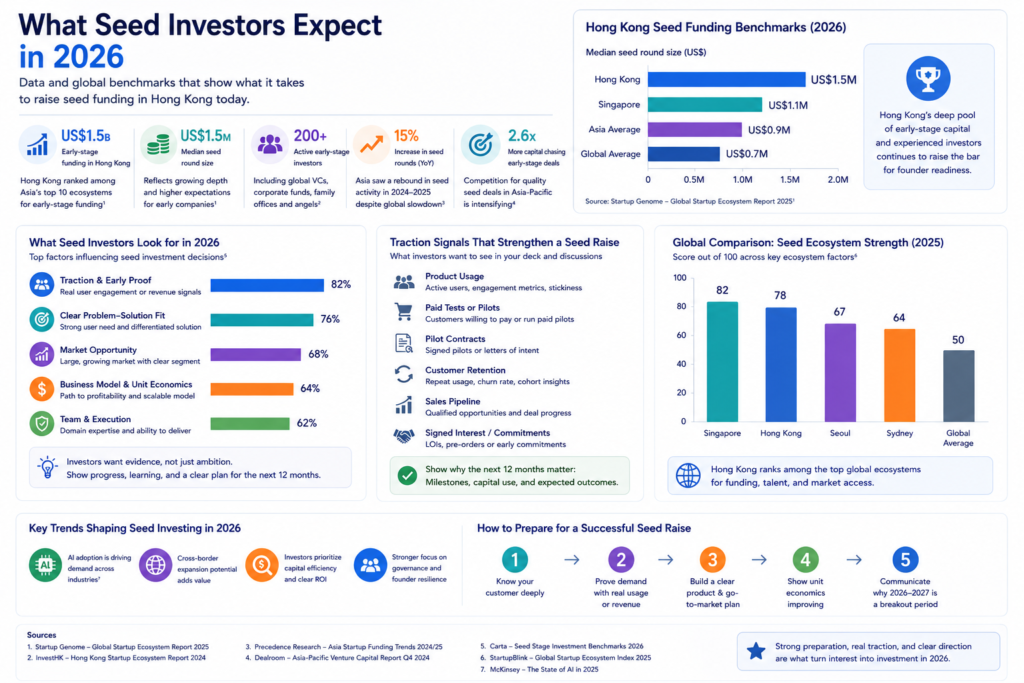
Seed funding in Hong Kong usually fits startups that already have a product, early users, and a clearer buyer group. The company does not need perfect revenue, but it should show that demand is becoming easier to prove. Startup Genome lists Hong Kong with US$1.5 billion in early-stage funding and a US$1.5 million median seed round, which shows real depth for early companies, while also raising the bar for serious preparation.
Founders should prepare a concise traction summary. This can include product usage, paid tests, pilot contracts, customer retention, signed interest, sales pipeline, and a clear reason why the next 12 months matter. At seed stage, vague ambition weakens the raise. Practical evidence strengthens it.
What Series A investors check
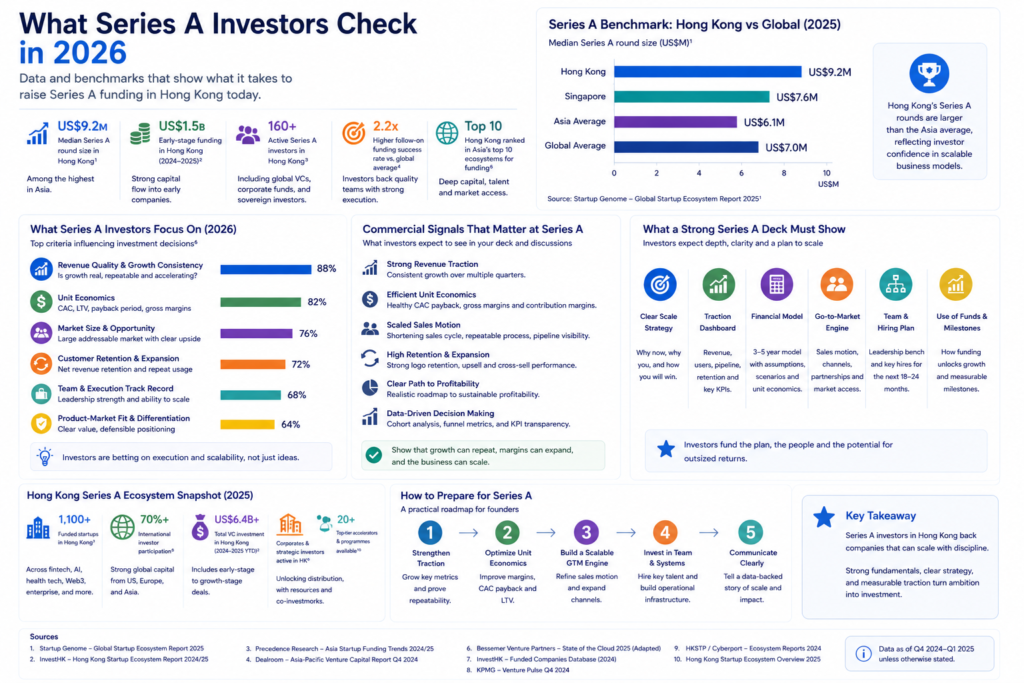
Series A funding in Hong Kong asks for a stronger commercial case. Investors want to see whether growth can repeat. They look at revenue quality, sales cycles, customer acquisition cost, margins, retention, team structure, and market size. Startup Genome lists Hong Kong’s median Series A round at US$9.2 million, which gives founders a useful benchmark for how serious this stage becomes.
At this level, the deck should not only describe the product. It should show why the company can scale. Investors will expect a sharper financial model, clearer hiring plan, stronger reporting, and proof that funding unlocks measurable expansion.
Where institutional support fits
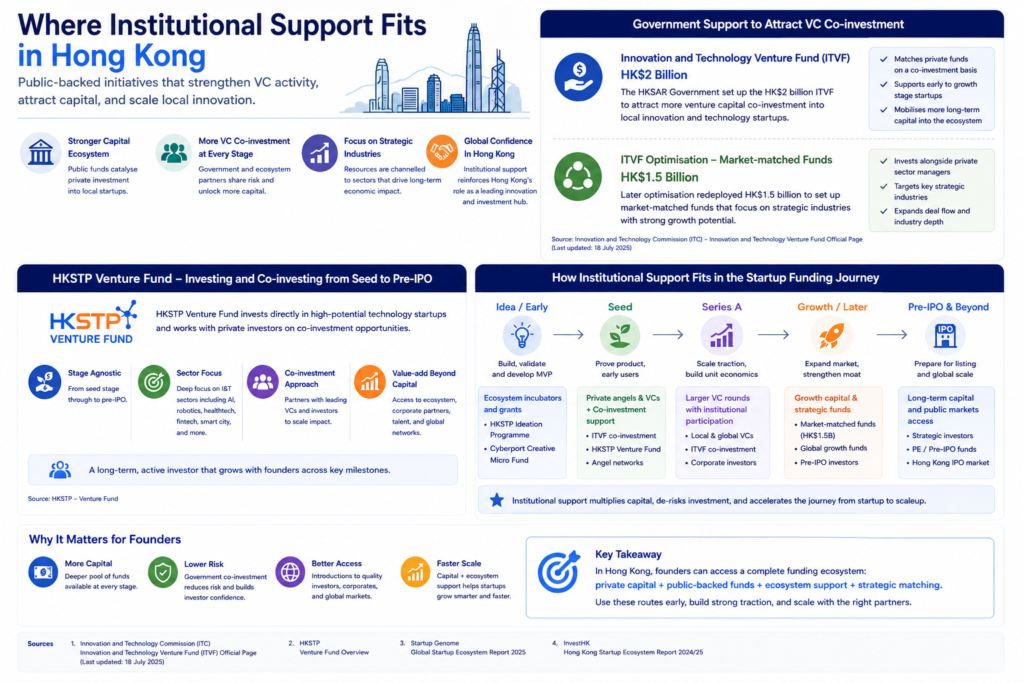
Hong Kong also has public-backed routes that support VC activity. The official Innovation and Technology Venture Fund page says the government set up a HK$2 billion fund to attract more VC co-investment into local innovation and technology startups. It also notes a later optimisation that redeployed HK$1.5 billion to set up market-matched funds for strategic industries.
HKSTP’s Venture Fund is also relevant because it directly invests in startups from seed to pre-IPO stage and works with private investors on co-investment opportunities. For founders, this means the funding route can include private capital, ecosystem support, and strategic matching, not only direct VC outreach.
Seed and Series A fundraising should start with proof, not investor names. Founders need to know what round they are raising, what milestone the money supports, and why Hong Kong is the right base for that growth. Next, we will look at funding options for foreign founders in Hong Kong.
2026 Funding options for foreign founders in Hong Kong
2026 Foreign founder funding in Hong Kong works best when the company shows why the city is more than a registration address. Investors want a clear link between the startup, the local market, and the wider Asia growth plan.
Strong proof can include:
- local pilots or customer interviews
- partner talks with Hong Kong companies
- product localization for regional buyers
- regulatory or licensing checks
- early sales activity or signed interest
- home-market traction connected to Hong Kong demand
This matters because foreign startups often arrive with strong claims, but limited local evidence. A founder from Korea, Singapore, Europe, or the US should explain why Hong Kong improves market access, investor access, or regional expansion.
Programmes such as InvestHK, Cyberport, HKSTP, and accelerator networks can support entry. Still, the deck, proof, and market story need to be sharp. Next, we will look at common fundraising mistakes founders make in Hong Kong.
Why discoverability and credibility affect fundraising readiness
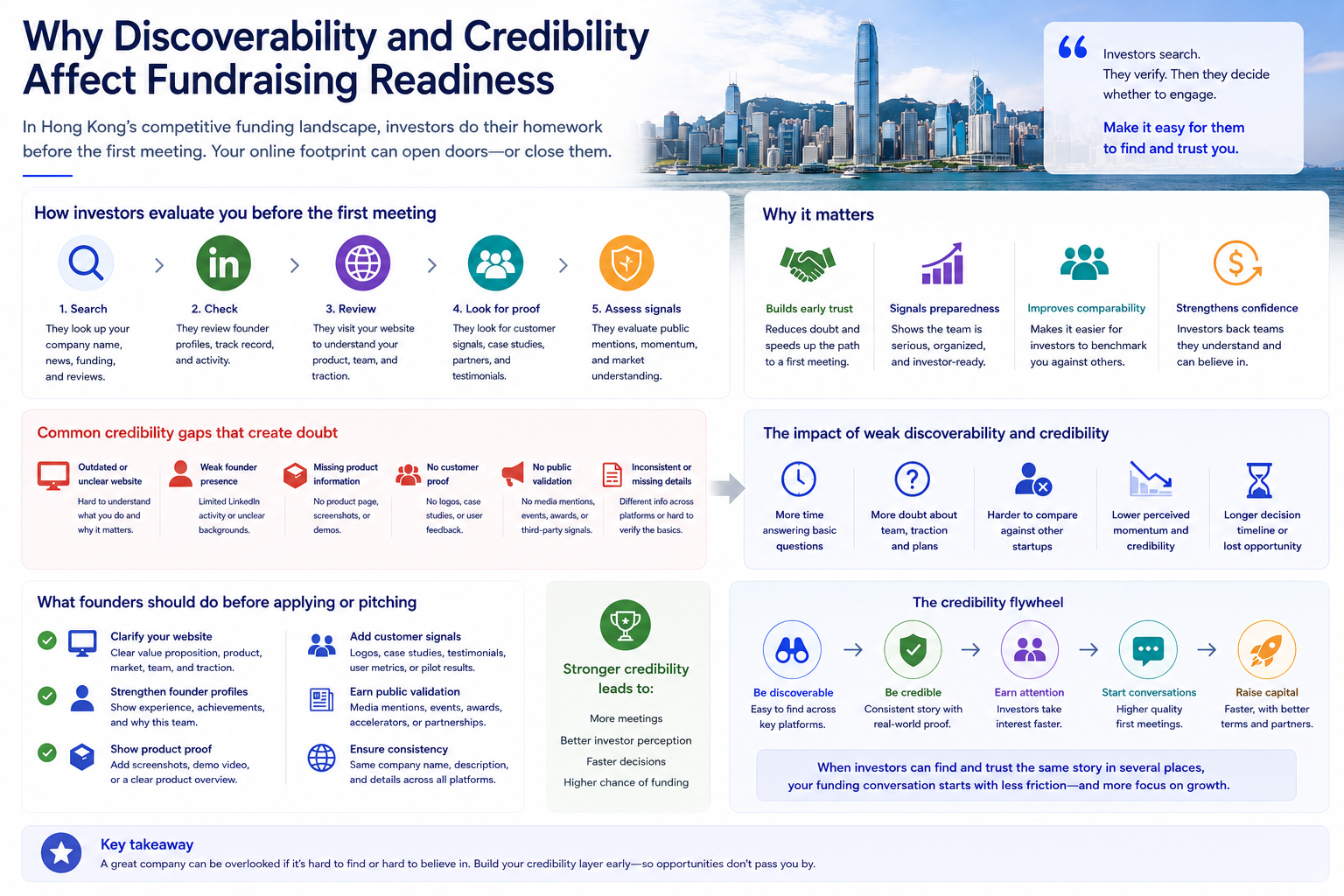
Startup discoverability and credibility in Hong Kong can shape how funders judge a company before the first meeting. A founder can have a solid product, clear numbers, and a strong deck, but weak online proof still creates doubt. Investors often search the company, review the website, check founder profiles, compare public mentions, and look for signs that the startup is active beyond its own pitch.
This becomes a real obstacle when the company is hard to verify. An outdated website, thin LinkedIn presence, missing product pages, unclear team details, or no customer proof can make the business look less prepared than it is. For foreign founders, the gap becomes even larger. Funders need to understand not only the product, but also why Hong Kong fits the company’s market-entry or Asia expansion plan.
Before applying for grants, accelerators, or investment, founders should clean up the credibility layer. That includes clearer website copy, founder bios, customer signals, partner notes, media mentions, product proof, and consistent company details across public profiles. When funders can find and trust the same story in several places, the funding conversation starts with less friction.
Common fundraising mistakes founders make in Hong Kong
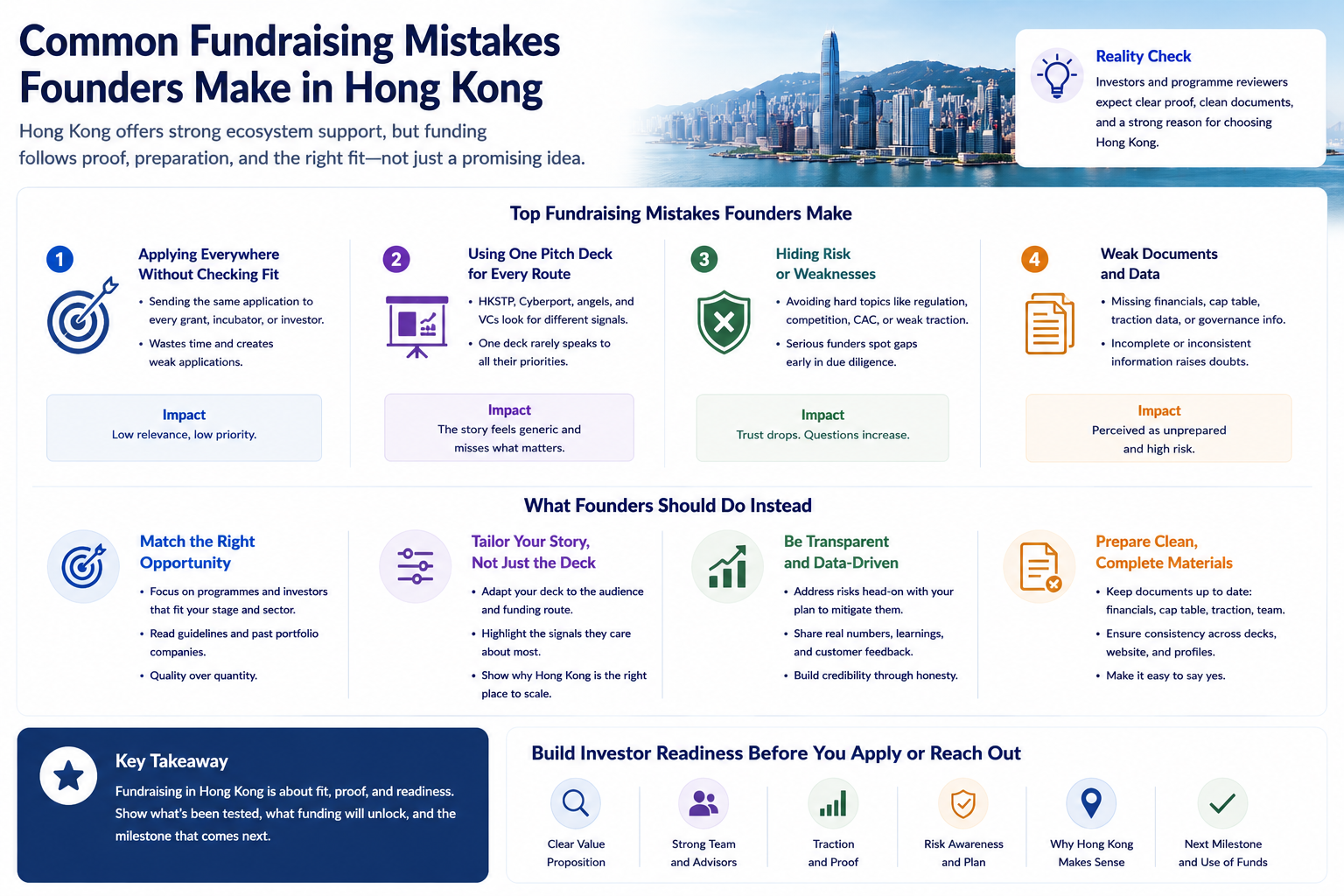
Common fundraising mistakes in Hong Kong often come from moving too quickly. Founders see strong ecosystem support, then assume funding will follow once the idea sounds promising. In reality, investors and programme reviewers still expect clear proof, clean documents, and a strong reason for choosing Hong Kong.
One mistake is applying to every grant, incubator, and investor list without checking fit. This wastes time and creates weak applications. Another mistake is using one pitch deck for every funding route. HKSTP, Cyberport, angel investors, and VC funds each look for different signals. A third mistake is hiding risk. Founders sometimes avoid talking about regulation, competition, customer acquisition costs, or weak traction. Serious funders usually notice those gaps fast.
Instead, founders should match each application to the right stage, sector, and proof level. They should explain what has been tested, what funding will unlock, and which milestone comes next. After these mistakes are clear, the next step is building investor readiness before applying or sending outreach.
How to build investor readiness before applying
Investor readiness in Hong Kong starts before the application form, pitch call, or investor email. Founders should first check whether their materials answer the questions funders already have. A strong pitch does not only explain the idea. It shows proof, timing, market logic, and a clear reason why funding should happen now.
| Readiness area | What funders check | What founders should prepare |
|---|---|---|
| Market demand | Is the problem urgent enough? | Customer notes, pilot results, search demand, sales calls |
| Business model | Can the startup make money clearly? | Pricing, margins, revenue plan, sales assumptions |
| Team strength | Can this team execute the plan? | Founder profiles, roles, advisors, hiring gaps |
| Use of funds | Will the money unlock progress? | Budget, milestones, runway plan, hiring needs |
| Risk clarity | Are weak points understood? | Competition, regulation, traction gaps, mitigation notes |
This structure helps founders avoid vague claims. Instead of saying the company is ready to grow, they can show what has already been tested and what comes next. After that, the funding story becomes easier to review, compare, and trust.
Startup funding checklist for Hong Kong founders
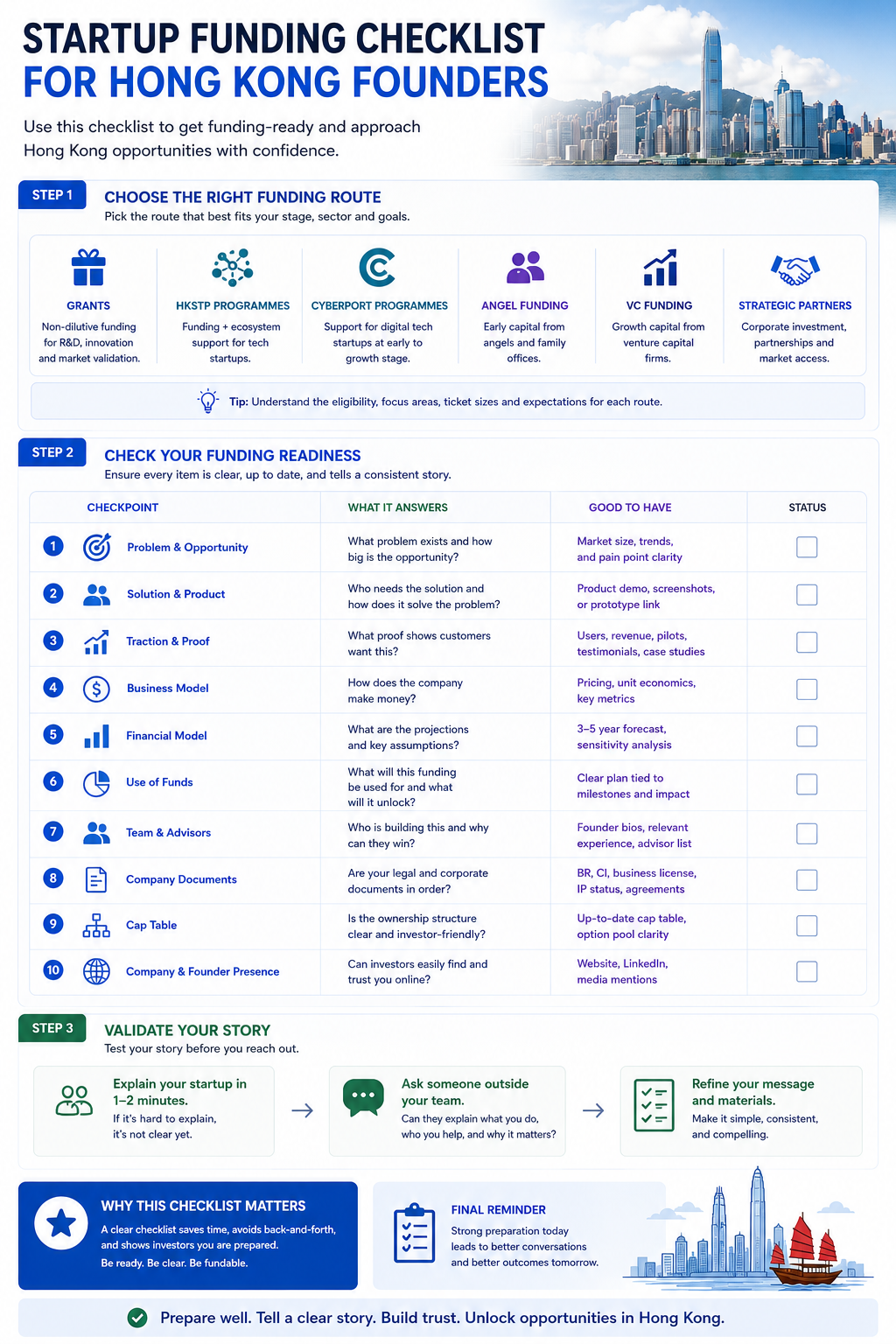
A startup funding checklist for Hong Kong founders should keep the process focused before outreach begins. Start with the funding route. Decide whether the company fits grants, HKSTP, Cyberport, angel funding, VC, or strategic partners. Then check whether the proof matches that route.
Founders should review the pitch deck, financial model, cap table, traction summary, product links, company documents, founder profiles, and use-of-funds plan. Each item should answer one clear question. What problem exists? Who needs the solution? What proof already supports demand? What will funding change?
After that, test the story with someone outside the team. If they cannot explain the startup in simple words, the message needs more work. A clear checklist saves time, strengthens applications, and helps founders approach Hong Kong funding with sharper confidence.
Where outside support can strengthen Hong Kong fundraising
Hong Kong fundraising support works best when it sharpens the founder’s own story, instead of replacing it. Investors still want to hear the real team explain the product, market, and plan. However, external help can make the preparation cleaner, faster, and easier to trust.
This support can include market research, pitch deck structure, investor-facing messaging, financial story cleanup, website clarity, founder profile updates, and proof-building content. For foreign founders, it can also help connect home-market traction to the Hong Kong opportunity in a more convincing way.
The goal is not to decorate weak evidence. It is to organize real evidence so funders can review it quickly. When the deck, website, traction notes, and outreach message all support the same story, fundraising becomes more focused. Next, the article can close with the main lesson for founders raised in Hong Kong.
Final thoughts on startup funding in Hong Kong for 2026
Startup funding in Hong Kong rewards founders who prepare before they ask. The city offers grants, incubators, investors, and regional access, but each route demands clear proof. Founders need to show market demand, traction, clean documents, and a plan that turns capital into progress. For foreign teams, the story should also explain why Hong Kong fits the wider Asia strategy. Strong fundraising does not start with a long investor list. It starts with a focused route, honest evidence, and materials that funders can understand quickly. Build that foundation first, then outreach becomes sharper and far more productive for every serious round.
Frequently asked questions for startup funding in Hong Kong for 2026
Startup funding in Hong Kong raises practical questions about grants, investors, eligibility, foreign founders, documents, and funding readiness in 2026.
What is the best startup funding option in Hong Kong in 2026?
The best option depends on stage, sector, and proof level. Early teams often start with grants or incubators, while stronger traction fits angels or VC.
Can foreign founders raise startup funding in Hong Kong?
Yes, foreign founders can raise in Hong Kong, but funders expect local market logic, clear company documents, regional growth plans, and early validation from buyers.
How do I apply for startup grants in Hong Kong?
Start by checking eligibility, sector fit, required documents, funding scope, deadlines, and review criteria. Then prepare a focused application with clear milestones.
Is HKSTP or Cyberport better for early-stage startups?
HKSTP often fits technology and R&D-led startups, while Cyberport strongly supports digital tech ventures. The better choice depends on sector, product, and stage.
What do Hong Kong startup investors check before funding?
Hong Kong investors usually check traction, market size, revenue logic, founder strength, customer demand, use of funds, legal structure, and realistic growth milestones.
How much proof do pre-seed startups need in Hong Kong?
Pre-seed startups need enough proof to show the problem is real. User interviews, prototypes, pilot interest, market notes, and founder credibility can help.
What documents should founders prepare before fundraising?
Founders should prepare a pitch deck, financial model, traction summary, cap table, company documents, product links, founder profiles, and use-of-funds plan.
How can startups improve fundraising readiness in Hong Kong?
Startups can improve readiness by choosing the right funding route, cleaning documents, proving demand, explaining risks, and matching outreach to investor or programme fit.
