

Austeja Norvaisaite
Growth hacker and strategic partnership coordinator. Passionate about blending creativity with data-driven insights to craft accessible, resonant content for diverse audiences.
2025 Strategies for Chinese Brands Entering Global Markets
- Last Time Updated: 25th of January, 2026
Chinese brands international expansion is becoming one of the most significant business shifts in 2025. With a slowing domestic market and rising global demand, more Chinese companies are going global in 2025. From fashion and beauty to electric vehicles and electronics, new opportunities are opening across Asia, Europe, and North America. Yet growth abroad requires more than just selling products; it takes cultural adaptation, strong branding, and localized marketing. Success comes from blending e-commerce platforms, global SEO, and digital storytelling into a clear strategy. This guide explores the opportunities, challenges, and steps Chinese brands must take to grow worldwide.
Ready to Take Your Chinese Brand Global in 2025?
Table of Contents
Why Chinese Brands Are Going Global in 2025?
The year 2025 marks a turning point for Chinese companies going global. For years, domestic demand fueled growth, but rising competition and slowing consumption at home are pushing many firms to explore new opportunities abroad. Expanding internationally is no longer optional; it’s becoming a survival strategy.
Industries leading the charge include consumer electronics, beauty and skincare, electric vehicles, and fast fashion. Chinese brands expansion in these sectors is driven by innovation, competitive pricing, and strong supply chain advantages. For example, Shein has reshaped global fast fashion with aggressive online strategies, while BYD is becoming a leader in electric vehicles across Europe. Huawei and Xiaomi continue to build global recognition by balancing technology, affordability, and brand trust.
Another reason for international growth is the rise of digital platforms. Markets like Southeast Asia, the U.S., and Europe are more accessible thanks to cross-border e-commerce platforms and social commerce trends. At the same time, global consumers are more open to Chinese brands than ever before. Quality improvements, better branding, and stronger customer experiences are helping shift perception from “low-cost production” to “innovative competitor.”
In short, 2025 is the right moment for Chinese businesses to step beyond their borders. With clear strategies and the right partners, they can transform into global leaders.
Challenges in Global Expansion
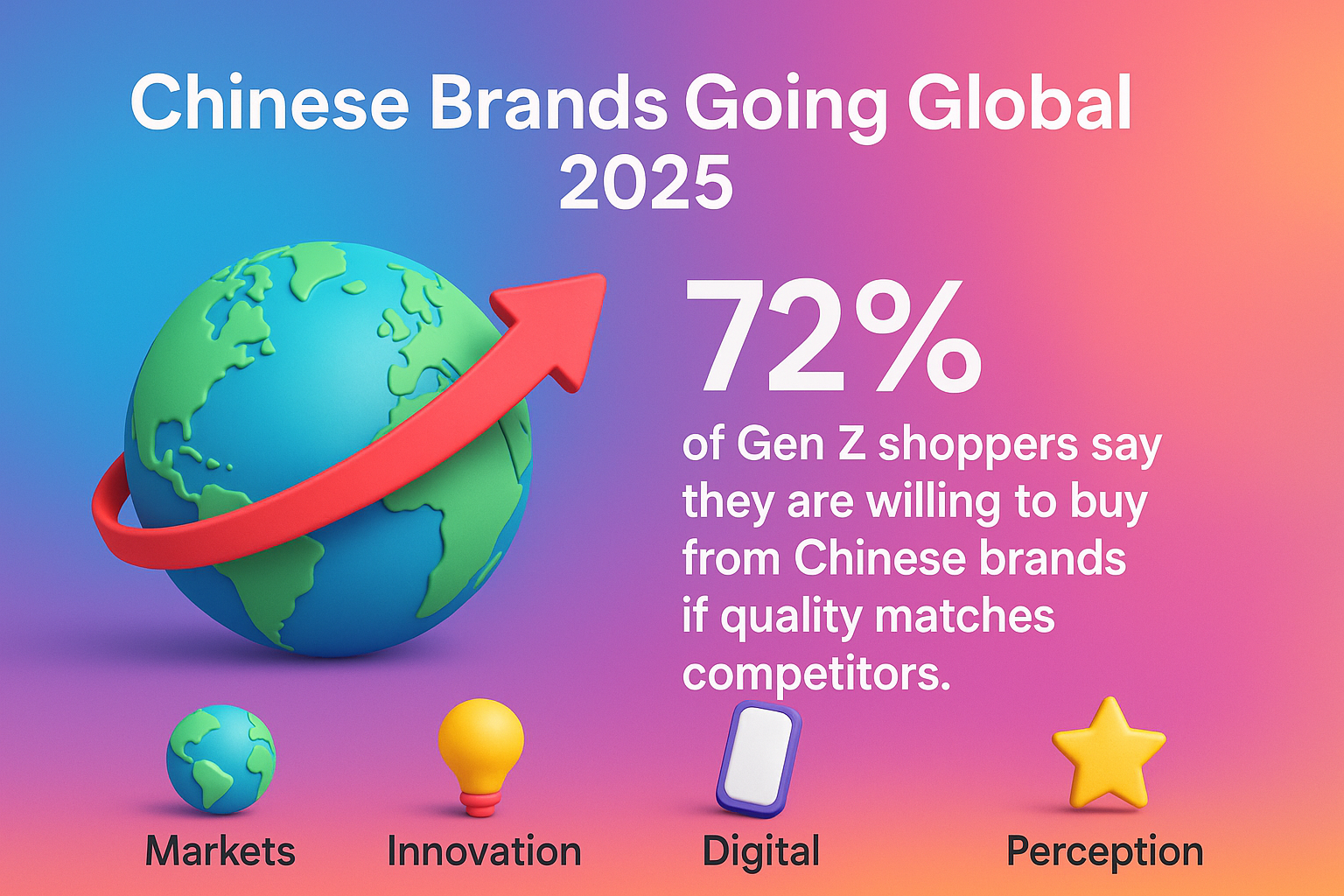
Expanding abroad brings opportunity, but it also comes with major roadblocks. Many challenges for Chinese brands appear once they move beyond the domestic market. These hurdles often determine whether global growth succeeds or stalls.
Cultural Adaptation
Different countries have unique consumer habits, values, and preferences. A campaign that resonates in China may feel out of place in Europe or North America. Without proper cultural adaptation, even strong products can fail.
Regulatory Hurdles
Each market comes with its own set of rules. From advertising standards in the EU to data privacy laws in the U.S., global expansion hurdles require legal knowledge and careful planning.
Brand Perception
Some buyers still hold outdated ideas about Chinese products being “cheap” or “low quality.” Changing this image demands strong storytelling, consistent quality, and visible proof of reliability.
Logistics and Payments
Cross-border sales bring new complexities in shipping, warehousing, and payment systems. Brands must work with local partners to solve delivery times, returns, and preferred payment methods.
Digital Marketing Barriers
Ranking on Baidu is different from competing on Google. International marketing barriers like SEO, content localization, and multi-language ads require expertise in each market. Without it, visibility is lost.
Cross-Border E-Commerce Opportunities for chinese businesses
Cross-border e-commerce in 2025 is one of the biggest drivers of international growth for Chinese companies. Platforms like Amazon, Shopee, Lazada, and TikTok Shop allow brands to reach global buyers instantly. The key is not just listing products but building a strategy that creates trust and drives repeat sales.
Selling on Global Marketplaces
Many firms ask how Chinese brands sell on Amazon effectively. The answer lies in optimization. From product images to keywords, every detail matters. Amazon favors sellers who combine competitive pricing with strong customer reviews. Similarly, Chinese sellers on Shopee and Lazada are gaining traction across Southeast Asia, thanks to localized promotions and fast delivery.

TikTok Shop and Social Commerce
TikTok Shop for international growth is a game-changer. Chinese brands can showcase products through engaging short videos, then convert viewers into buyers instantly. This mix of entertainment and commerce has opened new markets in the U.S., Europe, and ASEAN.
Direct-to-Consumer Strategies
Marketplaces are powerful, but many brands are also building direct-to-consumer strategy websites. DTC stores allow complete control over branding, pricing, and customer data. By optimizing product listings for SEO and investing in localized e-commerce marketing, Chinese businesses can scale faster while building brand equity.
Cross-border e-commerce offers massive opportunity, but competition is tough. Success depends on combining marketplace presence with localized marketing and clear international logistics planning. Done right, it can turn a domestic player into a global leader.
Marketing Strategies That Work in 2025
Chinese brands entering global markets need more than ambition; they need tested strategies. In 2025, the most effective approaches combine digital precision with localized execution.
Digital Strategies for Global Reach
To compete worldwide, Chinese businesses must adapt their marketing to local search engines, social media, and customer behaviors. The most effective tactics include:
Global SEO strategies for Chinese brands – optimizing multilingual websites with localized keywords.
International PPC campaigns – running Google Ads, Meta ads, and TikTok campaigns targeted to regional buying habits.
Localized content marketing – publishing blogs, guides, and videos that connect with cultural values and consumer needs.
Performance tracking systems – using tools that monitor ROI across markets and guide smarter ad spending.
These approaches allow brands to scale visibility while maintaining measurable control over budgets.


Partnerships and Market Entry Support
Going abroad requires more than digital campaigns; it requires local knowledge. Strong moves include:
Partnerships for cross-border growth with distributors, e-commerce platforms, or regional agencies.
Influencer collaborations with trusted voices in target countries to build credibility.
Localized PR campaigns to manage reputation and adapt to regulatory expectations.
Chinese brands that mix partnerships with smart digital marketing can build both visibility and trust. The winners in 2025 won’t be the loudest brands but the ones who combine precision, adaptability, and storytelling into a repeatable growth model.
Role of Incubators & Accelerators
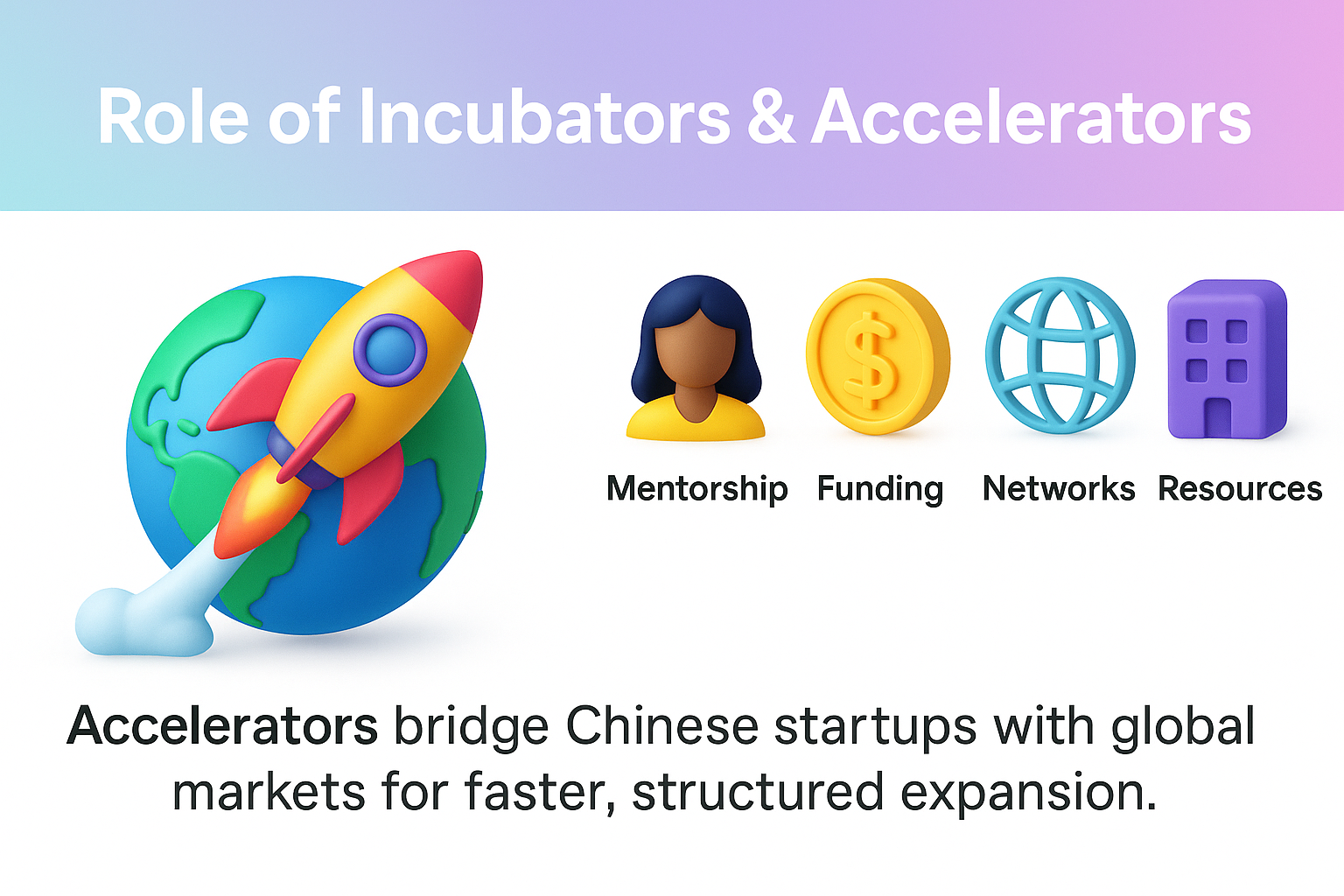
One of the fastest ways for Chinese startups to expand globally is through startup accelerators for Chinese brands. These programs give companies access to mentorship, funding, and international networks that shorten the learning curve. Instead of struggling alone, founders can enter structured environments where experts guide them on branding, market entry, and partnerships.
International incubator programs are especially valuable in 2025 because they provide both strategy and connections. By joining, Chinese founders gain introductions to local investors, legal advisors, and distributors who understand cultural nuances. Many programs also offer office space, cross-border e-commerce guidance, and marketing resources.
Some incubators focus specifically on Asia-to-West expansion, helping Chinese companies adapt products for Europe and North America. Others specialize in sectors like technology, consumer goods, or sustainability. Regardless of focus, these accelerators reduce risk while opening new opportunities.
In short, incubators and accelerators act as bridges. They help Chinese companies test new markets, adjust to regulations, and build early momentum. For brands aiming to expand abroad in 2025, joining the right program can be the difference between slow trial-and-error and fast, structured international growth.
Future Trends in Chinese Global Expansion
The future of Chinese brands abroad is shaped by fast-changing consumer habits, technology, and regulations. In 2025, several trends are defining how companies can win globally.
Sustainability as a Requirement
Global buyers demand eco-friendly practices. From packaging to supply chains, sustainable branding is no longer optional for Chinese companies entering Western markets.AI-Powered Marketing
Brands are adopting AI tools to analyze buyer behavior, optimize campaigns, and personalize customer journeys. Global expansion trends 2025 will rely heavily on predictive analytics and automation.Influencer-Led E-Commerce
Local voices drive credibility. International growth strategies increasingly use micro-influencers and TikTok campaigns to connect with niche communities across regions.Direct-to-Consumer Channels
Beyond Amazon or Shopee, more companies are building DTC websites to own customer data, create stronger loyalty, and scale globally without middlemen.Cross-Border Payment Innovation
Seamless payment methods, including mobile wallets and crypto, are becoming important. Flexible checkout options can make or break conversion rates in new markets.Localized SEO and Content
Ranking on Google, YouTube, or regional search engines requires localized content. Chinese brands investing in multi-language SEO will dominate visibility abroad.
These trends show that global success in 2025 will depend on agility. Companies that adapt quickly and focus on innovation will lead the next wave of Chinese international expansion.

Digital Tools for International Expansion
Expanding abroad is easier when brands use the right technology. The best digital tools for Chinese companies going global in 2025 cover everything from SEO to automation. They help simplify complex tasks, track performance, and scale faster across borders.
Here’s a look at some essential tools for international growth:
| Tool Category | Examples | Purpose | Why It Matters |
|---|---|---|---|
| International SEO Software | SEMrush, Ahrefs | Keyword research, competitor analysis | Boosts visibility on Google and local search engines worldwide |
| Cross-Border E-Commerce Platforms | Shopify, Amazon Global, Shopee | Online sales channels | Connects Chinese brands directly with buyers in multiple regions |
| Marketing Automation Tools | HubSpot, ActiveCampaign | Email flows, lead nurturing | Saves time while personalizing customer journeys at scale |
| Analytics & Tracking | Google Analytics 4, Mixpanel | Data insights, ROI tracking | Shows which campaigns bring the best returns |
| Collaboration & Localization | Slack, Lokalise | Team communication, translation workflows | Ensures smooth teamwork and accurate content across markets |
By adopting these tools, companies avoid common international growth roadblocks. They gain better insights, stronger visibility, and more efficient systems to scale. For Chinese brands in 2025, digital tools are not optional, they are the foundation of global competitiveness.
Common Mistakes Chinese Brands Make Abroad
Going global is exciting, but many companies fail because of avoidable errors. Understanding the mistakes Chinese brands make overseas is critical for long-term success. One major mistake is poor localization. Brands sometimes copy their domestic campaigns without adapting to local culture. What works on WeChat may not work on Instagram. Consumers in Europe or the U.S. expect personalized messaging, not direct translations.
Another pitfall is ignoring regulations. Markets like the EU have strict privacy, advertising, and sustainability rules. Overlooking these can delay launches or even cause fines. Compliance must be planned early.
A common reason why international expansion fails is overreliance on low pricing. Competing only on cost often weakens brand value abroad. Global consumers want innovation, trust, and sustainability, not just cheaper alternatives. Weak global marketing strategies are another issue. Without SEO, content localization, or clear social campaigns, brands lose visibility in search engines and on social platforms. Simply opening a store on Amazon is not enough.
Lastly, many companies expand too fast without solid logistics. Delivery delays, poor returns handling, or missing local payment methods damage credibility quickly. Chinese brands can avoid these global marketing pitfalls by investing in localization, compliance, and strong international SEO. With the right partners, expansion abroad becomes more strategic and less risky.

Why aboveA Is the Right Partner?
Expanding internationally in 2025 takes more than ads or e-commerce; it requires strategy, local insight, and execution. This is where aboveA stands apart. Unlike traditional agencies, aboveA integrates marketing, technology, and business development into a unified system for growth.
The table below shows how aboveA compares to a typical agency when it comes to international expansion:
| Feature | aboveA | Typical Agency |
|---|---|---|
| Focus | International growth, SEO, automation, lead generation | Local ads and campaigns |
| Approach | Startup-friendly, transparent deliverables, measurable ROI | Generalized, often less tailored |
| Market Entry Support | Guidance for Southeast Asia, Europe, and U.S. | Limited local focus |
| Team Structure | Remote-first, global experts, multilingual strategies | Localized staff, smaller market reach |
| Best For | Startups and companies expanding globally | Companies seeking only local traffic |
By combining global SEO strategies, lead funnels, and marketing automation, aboveA helps Chinese brands move beyond short-term sales into long-term international growth. Clients appreciate the clear communication, structured deliverables, and data-driven approach. For companies planning to scale across borders, aboveA offers a modern, lean alternative to traditional high-cost agencies.
Conclusion: The Moment for Chinese Brands
2025 is the year for Chinese brands international expansion. From cross-border e-commerce platforms to global branding and accelerator programs, opportunities are bigger than ever. Still, challenges like cultural adaptation, regulations, and visibility remain. Success depends on smart strategy, not chance.
Agencies like aboveA provide the tools to break into Southeast Asia, Europe, and the U.S. with SEO, automation, and lead generation systems built for growth. For Chinese companies ready to step into global markets, the path is clear – choose the right partner, adapt locally, and expand with confidence.
Chinese Brand Market Entry Frequently Asked Questions
1. Why should Chinese brands expand internationally in 2025?
Chinese companies face slowing domestic demand. International expansion in 2025 helps them reach new consumers, diversify revenue streams, and strengthen competitiveness through cross-border e-commerce and global marketing strategies.
2. What is the best way for Chinese brands to enter global markets?
The best entry strategy combines cross-border e-commerce platforms like Amazon and Shopee with localized marketing. SEO, social media campaigns, and partnerships help build visibility and trust in new markets.
3. How can Chinese startups benefit from accelerators abroad?
International incubators and accelerators provide mentorship, funding, and connections. They help Chinese startups avoid common mistakes, adapt to regulations, and scale faster through structured market entry support programs.
4. Why is aboveA a strong partner for Chinese brands going global?
aboveA specializes in international SEO, lead generation, and automation. Their transparent, startup-friendly approach makes them ideal for Chinese brands looking to scale globally with measurable, structured strategies.
